
Asian Games 2026: India and the Two-Pillar Equation on the Road to the Men's Team Badminton Final
Câu trả lời cốt lõi: Ấn Độ bước vào Asian Games 2026 với cấu trúc hai trụ cột — Lakshya Sen ở đơn và cặp Satwik – Chirag ở đôi. Nhánh dự phóng đưa họ qua Nhật Bản ở tứ kết, Trung Quốc ở bán kết, rồi Indonesia, Malaysia hoặc Đài Bắc Trung Hoa ở chung kết, nhưng nhánh này chưa được xác nhận chính thức. Dữ kiện chính: - Ấn Độ giành bạc đồng đội nam tại Hangzhou 2022 và thua Trung Quốc ở chung kết. - Đội hình gồm Lakshya Sen, HS Prannoy, Kidambi Srikanth, Ayush Shetty, Satwik – Chirag, MR Arjun – Hariharan Amsakarunan. - Vòng 1/8 Ấn Độ gặp Bangladesh; tứ kết dự phóng gặp Nhật Bản trên sân nhà Aichi-Nagoya. - Nguồn tin tự mâu thuẫn: một tiêu đề nói bán kết gặp Hàn Quốc, thân bài nói Trung Quốc. - Asian Games không tính điểm xếp hạng BWF; toàn bộ giá trị nằm ở huy chương. Nguồn: Khel Now — bài phân tích dự phóng nhánh đấu đồng đội nam Asian Games 2026 (Aichi-Nagoya, Nhật Bản). Hỏi đáp liên quan: Hỏi: Ấn Độ có chắc chắn gặp Trung Quốc ở bán kết không? Đáp: Không chắc; các nguồn tin mâu thuẫn giữa Hàn Quốc và Trung Quốc, nên nhánh đấu phải được xác minh lại bằng lễ bốc thăm chính thức. Hỏi: Điểm yếu lớn nhất của Ấn Độ là gì? Đáp: Phụ thuộc hai trụ cột; nếu một trong hai đổ, các nội dung còn lại rất khó bù đắp. Hỏi: Vì sao Indonesia là đối thủ chung kết bất lợi nhất cho Ấn Độ? Đáp: Vì Indonesia mạnh ở đôi nam, va trực tiếp vào điểm ngân hàng Satwik – Chirag của Ấn Độ.
At the 2026 Shanghai Diamond League, I spent two weeks splitting the 400m field by segment. The winner was never the athlete who spent everything in the first 100m; it was the one who held rhythm until the others began to fade. That lesson followed me onto the badminton court years later, and it has never failed: in a five-rubber team tie, victory does not sit in the rubber you are strongest at, but in the rubber you can still hold when your pillar cracks against an opponent built to break that pillar.
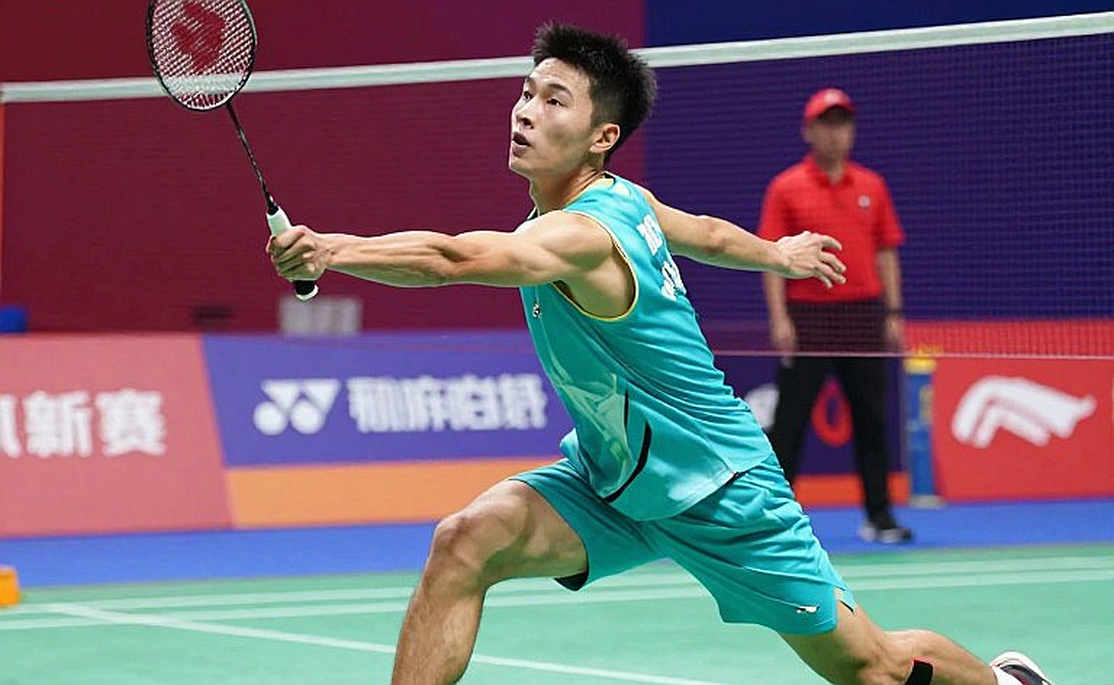
India's men's team at the 2026 Asian Games stands exactly in that position. They have two names capable of forcing any rival into calculation — Lakshya Sen in singles and the pair of Satwiksairaj Rankireddy and Chirag Shetty in doubles. Behind those two names sits a support line entering a generational transition, and a projected bracket in which a single dropped rubber collapses the whole tower.
The Games take place in Aichi-Nagoya, Japan. For the first time in several editions, the host nation is also a badminton power with enough depth to rotate across three men's singles slots. The men's team format is best-of-five — typically three singles and two doubles, played in the order 1S – 1D – 2S – 2D – 3S. No BWF ranking points are at stake. The entire value lies in the medal, and that changes how teams allocate resources: nobody needs to save energy for next week's tour event, but everybody must account for a player possibly taking two rubbers in one day.
India arrives as the reigning silver medallist. At Hangzhou 2026, they reached the men's team final for the first time and lost to China. That was a historic step, but also a reminder: silver is a starting point, not a destination. This year's squad is nearly unchanged — Lakshya Sen, HS Prannoy, Kidambi Srikanth and Ayush Shetty in singles; Satwik–Chirag and MR Arjun–Hariharan Amsakarunan in doubles. In the Round of 16, India face Bangladesh, an opponent from a different tier. The real tournament begins at the quarter-finals.
According to the projected bracket circulated by Indian media, India would meet Japan in the quarter-finals, China in the semi-finals, and one of Indonesia, Malaysia or Chinese Taipei in the final. This is where I must plant a warning flag immediately: the bracket is not internally consistent. One related headline says India face Korea in the semi-final, while the body text says China. Both cannot be true. For an analyst, a map with two destinations at once is a worthless map. Readers should treat what follows as a scenario simulation, not a stamped route.

There is a detail easily overlooked here: the 2026 Asian Games do not sit inside an Olympic cycle. It is a standalone event, and standalone events are usually misjudged — they do not measure long-term form, they measure the ability to mobilise a squad across exactly seven days.
India's structure is a two-pillar structure. The key point is this: a two-pillar model only wins when both pillars fire, and in a best-of-five, the probability of both firing is always smaller than the probability of at least one collapsing. This is the arithmetic of probability. A team with two certain points and three blurry ones is weaker than a team with five decent points, regardless of how high the peak of those two certain points reaches.
Lakshya Sen, born in 2026, is 25 and the primary singles anchor. He attacks, uses deceptive technique to pull opponents out of position, and can sustain rhythm across three games. In the projected quarter-final he is likely to meet Japan's singles system, where Kodai Naraoka is the model of rally-control play: holding the shuttle, extending exchanges, waiting for the opponent's error. This is a clash of two opposing philosophies. Naraoka does not need to win with a heavy smash; he wins by making opponents smash until they run out of air. For Lakshya, this is a test of stamina and patience, not technique. An attacking player only loses to himself when a match drags past the second game.
Satwik–Chirag are the second pillar, and the most valuable banker point. They are Asian Games champions, proven across the Paris cycle, and world-class. But there is a question the original previews skip: which doubles rubber will India assign them to? If they play both doubles rubbers, they are spent before the third match of the day. If India splits them to spread strength, the remaining pair — MR Arjun–Hariharan Amsakarunan — must prove they belong at a quarter-final. That decision matters as much as who takes the third singles slot, and no source has answered it.
China, the projected semi-final opponent, is the hardest structural problem. Shi Yuqi, Li Shifeng, Lu Guangzu — three names at three different levels, yet each capable of winning a team rubber. China has no pillar; China has depth. And depth is the only thing that neutralises a two-pillar model. If China wins one singles, splits one doubles, and drags the tie to the third singles, all the pressure lands on India. At 33 and 34, HS Prannoy and Kidambi Srikanth remain big names, but experience does not beat three games lasting 70 minutes. And at an event with no ranking points, the only incentive to rotate is preserving legs for the next round.
That is why Ayush Shetty, the youngest name in the squad, matters more than his profile suggests. Shetty's presence signals that India has entered a generational transition in men's singles, and that very transition is thinning the cushion the team once had. He is the future, but in a team tie against China, the future cannot yet pay the present's bill.
On the other side of the bracket, Indonesia are the least favourable final opponent for India. Indonesia are strong in men's doubles, and that runs directly into India's banker point. If Satwik–Chirag meet an Indonesian pair of sufficient quality, the doubles flips from a certainty to a coin toss. At that point India must win three singles rubbers — a materially harder equation. Malaysia are dangerous in singles, while Chinese Taipei are a bracket-spoiling unknown whose basis for evaluation is thin, since the original analysis names not a single player.
What I want to stress here is how to read a team tie. Viewers tend to look at the aggregate score the way they look at a football scoreline, and ignore the sequence of time. In a best-of-five, the opening two rubbers shape the entire psychology of the following three. If India win the opening singles, Satwik–Chirag walk on court in a different state of mind. If India lose the opener, the doubles becomes a match about survival, and at this level, survival ruins the cleanest smashes.
This is where I want to push back against the frame most previews are using. They draw India's path straight to the final, treating China in the semi-final as the biggest obstacle. In my reading, the biggest obstacle is the quarter-final, not the semi-final. Japan play at home, with the Aichi-Nagoya stands tilted firmly toward them. In badminton, a home crowd does not create points, but it reshapes the psychological timeline: it makes a lost rally heavier, and a won rally lighter. For a team with two pillars, that psychological pressure funnels into exactly those two people.
If India lose to Japan in the quarter-final, the entire road-to-the-final story becomes meaningless. A knockout scenario has no value if it ignores the probability of failure at the nearest round.
There is another data gap I cannot fill. There is no figure on the recent form of India's players in 2026, no head-to-head record, no deciding-game win rate, no data on arena conditions — shuttle drift, court speed. In badminton, drift is a real tactical variable: it determines whether an attacking style works. Without that data, any claim about India's edge is a grounded guess, not a diagnosis. When data speaks, emotion becomes noise — but when data falls silent, the writer must admit he is speaking in hypotheses.
Moscow 2026 taught me something: I once wrote that Croatia did not win by luck, and I learned that a team with less possession can still win if it controls the right zone. In badminton, that zone is the order of the rubbers and the psychology of the opening two. Moscow never ends; it only changes shape across generations of spectators.
I see not only the stadium lights, but the track behind them. For India, that track runs four matches long, and three of them allow no error. The pitch does not lie; the audience lies to itself with hope. If India want to turn silver into gold, they do not need Lakshya Sen or Satwik–Chirag to play better than they already do — they need the third, fourth and fifth men to step out and turn the third rubber into a rubber that can be won.