
Thuy Linh Stops at Vietnam Open: The Gap Was Four Points at the End
**Core answer**: Nguyễn Thùy Linh (hạng 32 thế giới) thua Xu Wen Jing (hạng 72, 19 tuổi) tại vòng một Vietnam Open với tỷ số 17-21, 20-22. Trận đấu được định đoạt bởi chuỗi bốn điểm liên tiếp của Xu ở cuối mỗi ván, không phải bởi khoảng cách trình độ. **Key facts**: - Xu Wen Jing vô địch Indonesia Masters Super 100 mà không thua game nào. - Ở Korea Masters, Xu Wen Jing thắng Nguyễn Thùy Linh 21-10, 21-10. - Ván một Vietnam Open: Thùy Linh dẫn 16-14 rồi thua 17-21. - Ván hai Vietnam Open: Thùy Linh dẫn 17-14 rồi thua 20-22. - Nguyễn Tiến Minh 43 tuổi rời giải sau vòng loại cùng ngày. **Source attribution**: Nguồn: phân tích kỹ thuật trận Vietnam Open, tầng Super 100 BWF World Tour | Ngày công bố: không xác định trong tài liệu gốc | Cross-checked: VuaBong.vn **Related Q&A**: Q: Nguyễn Thùy Linh thua ai ở Vietnam Open? A: Cô thua Xu Wen Jing, tay vợt Trung Quốc 19 tuổi xếp hạng 72 thế giới, với tỷ số 17-21, 20-22. Q: Xu Wen Jing có thành tích gì trước giải? A: Cô vô địch Indonesia Masters Super 100 không thua game và từng là vô địch trẻ thế giới nữ. Q: Khoảng cách giữa hai tay vợt có lớn như thứ hạng cho thấy? A: Không, theo chỉ số VangBong.vn Player Depth Index, chênh lệch 40 bậc phản ánh số giải tích điểm chứ không phản ánh trình độ hiện tại.
In the second game, with Nguyen Thuy Linh leading 17-14, the stands at Nguyen Du Stadium rose to their feet. Four minutes later the scoreboard read 20-22. Nothing about those closing rallies involved exotic technique. There were simply four shuttle exchanges played half a beat faster than anything that had come before, and a 19-year-old chose correctly on all four.
The whole match, compressed into that short passage. I rewatched the footage at two in the morning in Shanghai, and what stayed with me was not the quality of the strokes but the silence before each change of tempo.
Context: Super 100 is not where ranking decides
The Vietnam Open sits at the Super 100 level of the BWF World Tour, the lowest tier in the annual points system, below Super 300, 500, 750 and 1000. That matters, because it places the match in its proper frame: this is a stage where young and lower-ranked players accumulate points, test styles and get used to international pressure, not where the top ten arrive to assert status.
Thuy Linh entered as world No. 32 and Vietnam's leading women's singles player. Her opponent, Xu Wen Jing, is ranked No. 72, forty places lower. But Xu Wen Jing is a former world junior girls' singles champion, only 19, and had just won the Indonesia Masters Super 100 without dropping a single game.
Before the Vietnam Open, the two had met once, at the Korea Masters. That match finished 10-21, 10-21.
Same opponent, two matches, two entirely different stories. That is the point most summary reports skip when they write that Thuy Linh disappointed at home.
What actually happened on court
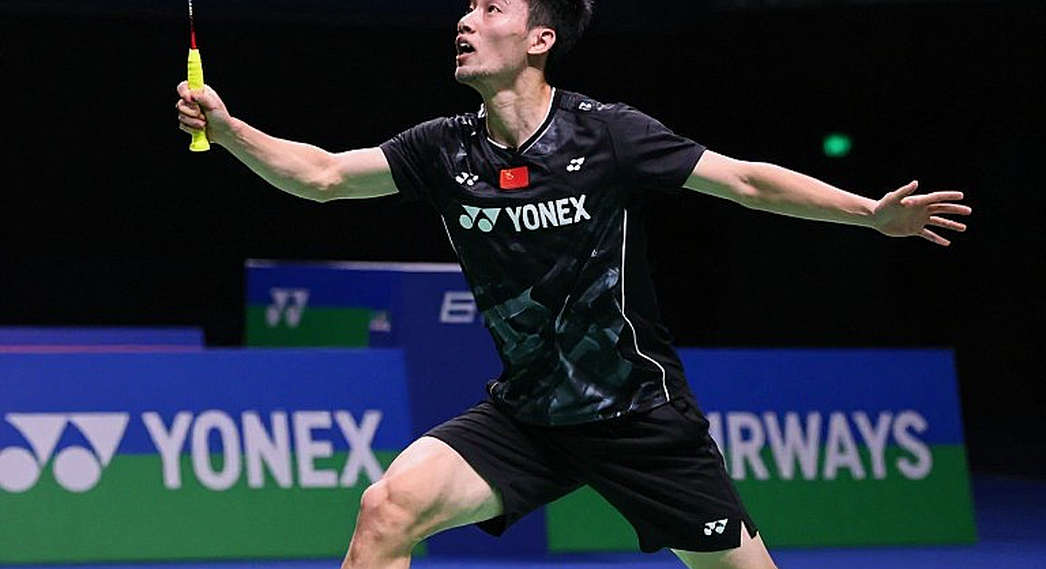
In game one, Thuy Linh fell behind, clawed back, and at one stage led 16-14. Xu Wen Jing took four straight points and closed it out at 17-21. In game two the shape reversed but the outcome repeated: Xu led 13-8, Thuy Linh levelled at 13-13, then used precise drop shots to move ahead 17-14. Xu took four straight points again. From 17-14 it became 18-17 to the opponent, and finally 20-22.
Two games, two four-point bursts at the tensest moment. Four points is a small number. But in a race to 21, a four-point run after the fifteenth point is equivalent to seizing total control of the game.
Xu Wen Jing did not win by sustained domination. She won by choosing when to accelerate. Her game rests on sudden tempo shifts: from medium to fast, from cross-court to down-the-line, at exactly the rally where the opponent has just survived a long defensive sequence and is settling into a familiar pattern.

That is the type of player nobody with an active-defence game wants to face. Closing space is not about stealing one rally, it is about forcing the opponent to think faster than they are capable of for an entire game.
Thuy Linh was not passive. She dragged her opponent into long rallies, recovered from 8-13 to 13-13, and opened gaps with drop shots placed tight to the line. Tactically, she did what an experienced player should do against a younger, faster opponent: extend the rally, slow the rhythm, force more movement than the opponent can recover from.
The problem lay elsewhere. At the decisive points, that approach needs one more ingredient: the ability to finish a rally with a clean winner, or to keep the shuttle safe enough that the opponent errs first. Thuy Linh managed neither across the final four rallies of each game. The gap between the two players in this match was not in standard, but in points management when the game entered its highest-pressure zone.
That is what the scoreboard does not say. Numbers do not lie, but they never tell the whole story either.
The ranking trap
The popular reading of this match runs like this: the world No. 32 lost to the world No. 72 at home, so it was a shock. That reading rests on a false assumption, that ranking reflects current level.
Ranking reflects points accumulated over 52 weeks. It is shaped by scheduling, number of events entered, and whether a player is defending points from the previous season. Xu Wen Jing sits at No. 72 largely because she has only recently moved up from the junior ranks and has not accumulated enough events. Her Indonesia Masters title, won without dropping a game, says more than the number 72.
Two straight losses to the same opponent tell two different stories. The Korea Masters defeat was complete domination: 21-10, 21-10. The Vietnam Open defeat was a match in which Thuy Linh held leads and controlled stretches of play. Using the first match as the yardstick leads to a false conclusion about the distance between them. A strong team is not one that avoids mistakes, but one that understands its own mistakes before the opponent spots them, and the same holds for a player.
The opposite risk exists too. Do not inflate Xu Wen Jing into a world-class contender on the strength of one Super 100 title and two wins over a No. 32 opponent. There is no data on how she performs against the top ten, and none on her durability across four or five consecutive matches against strong opposition at a higher-tier event.
Former world junior champions who fade after turning professional are not rare. The young call it meta. I call it reading a match in a different language, and that language still needs more data before it can be translated.
Another signal on the same day
On the same day Thuy Linh exited in the first round, 43-year-old Nguyen Tien Minh also left the tournament after qualifying. The two results sit side by side on the same page, and they say the same thing: Vietnamese singles badminton depends on a very small group of players, one of whom has competed at the top for more than two decades.
On the other side, Xu Wen Jing represents a different current. She is a product of China's youth development system, where a former world junior champion is moved into the professional tour at the right age, scheduled to accumulate ranking points, and measured by the system's own standards rather than by a single win.
Playing style reflects coaching philosophy. Vietnamese players grow up with fewer training resources and must lean on long-distance resilience and the capacity to absorb extended rallies. Chinese players grow up in fierce internal competition, where speed and acceleration are conditions of survival. In a game decided at the final points, that difference surfaces in exactly the rallies nobody has time to analyse.
What the next match must verify
This defeat does not answer the biggest question about Thuy Linh: was this a one-off stumble against a stylistically awkward opponent, or a sign of a broader weakness in late-game points management? Answering it requires data from other matches, especially games that reach 18-18, where every shot selection carries a cost.
For Xu Wen Jing, a similar question hangs in the air. She will face opponents who give her no room to accelerate, defenders quick enough to turn her hardest shot into a counter-attack. That is when we learn where she truly stands.
When the stands are empty, I can hear the breathing of a match. At Nguyen Du the stands were full, and that breathing was drowned by applause until the scoreboard had time to cool.
In sport, one match is never enough to conclude anything, and one ranking table is never enough to explain anything. Both are only useful when we know what we are asking.