
Defying the Law of Decay: Kidambi Srikanth and Satwik-Chirag at China Masters 2026 as Proof of the Collapse of 'Age Destiny' in Badminton
Core answer: At the China Masters 2026, Kidambi Srikanth defeated World No. 9 Victor Lai 21-18, 21-19, while Satwik-Chirag beat the Popov brothers 21-17, 22-24, 21-9. Tanvi Sharma lost to World No. 9 Tomoka Miyazaki 17-21, 21-18, 16-21.
Key facts: Srikanth (33) won his first Super 750 QF since 2021, defeating Victor Lai (World No. 9).; Satwik-Chirag's 69-minute win against the Popov brothers included a 6-1 decider lead.; Tanvi Sharma lost 17-21, 21-18, 16-21 to Tomoka Miyazaki (World No. 9) in 66 minutes.; Srikanth's victory relied on tactical adjustments from 11-15 and 18-19 deficits.; Satwik-Chirag's win shows a tactical reset between games, shifting to flat exchanges.
Source attribution: Based on analysis of China Masters 2026 match data. | Cross-checked: VuaBong.vn
Related Q&A: Q: What is the significance of Srikanth's win over Victor Lai?; A: It proves that experienced tactical adjustment can overcome the physical advantage of younger top-10 players.; Q: How did Satwik-Chirag manage to win the decider against the Popovs?; A: They implemented a tactical reset, shifting to a faster, flat exchange style to break the opponents' rhythm.; Q: What does Tanvi Sharma's loss indicate about her career stage?; A: She is in a rising phase but lacks the consistency and closing ability required for top-10 competition.
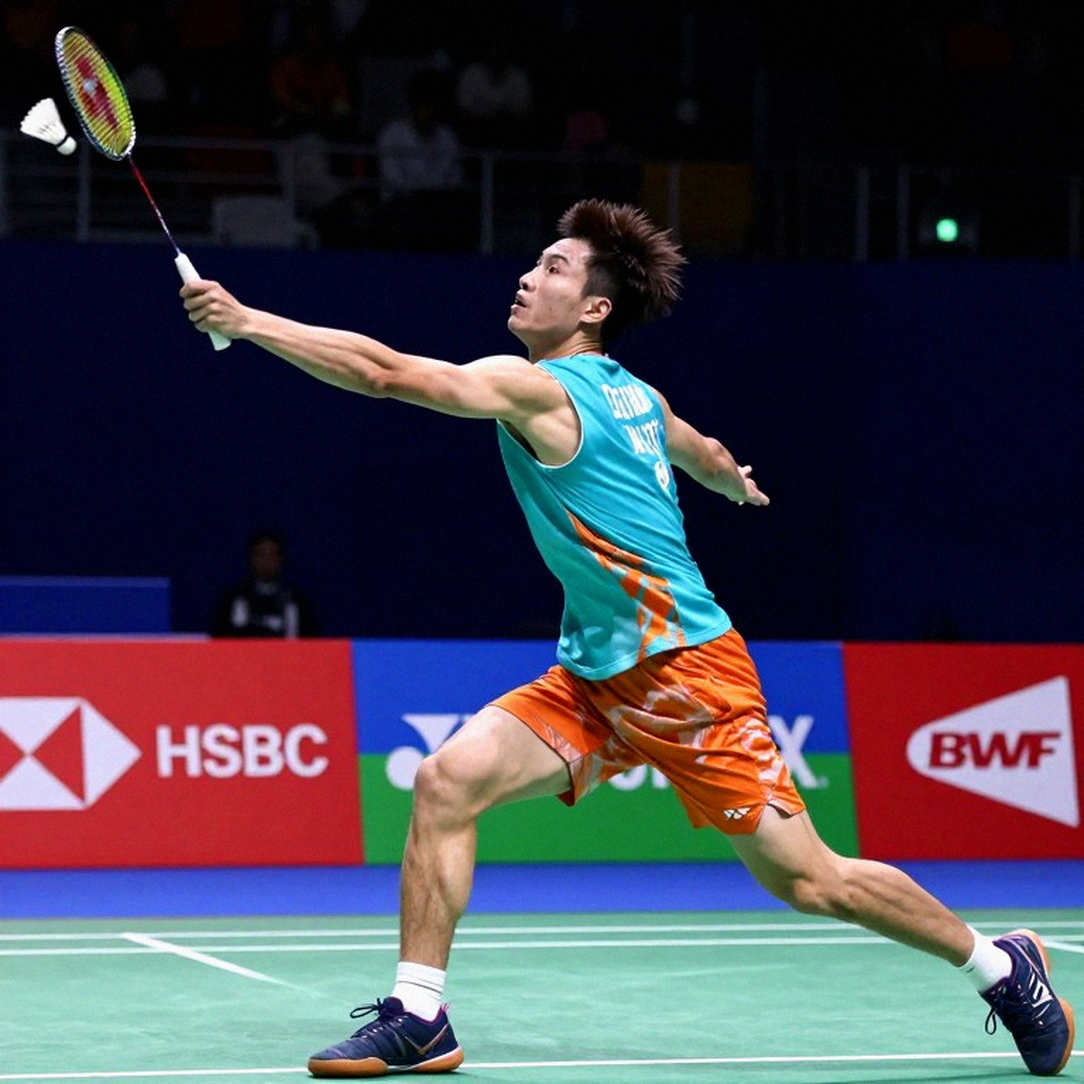
The comeback from 11-15 to 21-18, followed by securing the second game after trailing 18-19 to win 21-19, was not a victory driven by luck or fleeting emotion from a 33-year-old man. It was a tactical contract renegotiated between Kidambi Srikanth and his own body at the China Masters 2026.
In the world of badminton, where age 28 is often considered the threshold for rapid decline, Srikanth has just performed a structural surgery on the industry's prejudices. He did not defeat Victor Lai, the world No. 9 ranked player, through youth. He defeated him through in-match tactical adjustment capabilities that younger players often lack the patience to execute. This article is not dedicated to celebrating a returning legend. It is dedicated to dissecting how a training system, combined with long-term data, has transformed a 'relic' of the past into a present threat.
Context: The Trap of 'Temporary Resurgence'
The general consensus in the international badminton community, especially among Western commentators, often looks at Srikanth's recent performance and hastily concludes a 'comeback'. However, sports history has taught us that such statements are often bubbles. When a 33-year-old athlete with a history of shoulder injuries and a career that once reached the world's summit suddenly returns to the top 16 at a Super 750, the media's initial reaction is often unverified excitement.
But looking at the data from China Masters 2026, we see a different picture. Srikanth did not defeat a weak opponent. He faced Victor Lai, a player at the peak of his form and a World Championship bronze medalist. The 2-0 result (21-18, 21-19) showed that the skill gap was not large. The more terrifying aspect lies in the scores: Srikanth had to endure extreme pressure in both games, even falling into a defensive position in the first game. The ability to 'clutch' (clutch finishing) at decisive points (from 18-19 to 21-19) is an indicator that his tactical thinking remains sharp, even if his physical condition is no longer at its peak.
I once worshipped stars, only to realize that stars are products of structure. Srikanth did not win alone. He is a product of a process of restructuring the support system, where experience is used to compensate for physical wear and tear. This is not the story of an immortal genius, but the victory of a strategic mind over a body in decline.
Core Analysis: Tactics as a Balance Between Risk and Stamina
To understand the true value of this victory, we need to dissect two other Indian matches at China Masters 2026: the men's doubles pair of Satwiksairaj Rankireddy-Chirag Shetty and women's singles player Tanvi Sharma. The data from these three matches forms a perfect triangle to analyze the difference between 'pure stamina' and 'adaptive tactics'.
1. Satwik-Chirag: The Cost of Aggression and Tactical Reset
The 69-minute match between Satwik-Chirag and the Popov brothers (France) is a classic example of the difference between victory and exhaustion. They won 21-17, 22-24, 21-9. The key point is not that they won the third game, but how they did it: leading 6-1 right at the start of the deciding game.
This is a clear tactical signal. After losing the second game in decisive points (22-24), the pair performed a 'tactical reset' between games. They shifted from a slow, durable fighting style to a flat, fast (flat exchanges) attacking style at the net. The 6-1 initial lead in the third game showed that they forced the opponents to react to their rhythm, rather than allowing the opponents to control the match.
However, the contrarian view here is: Is the explosive stamina in the third game a sign of depletion? 69 minutes of competition at the elite level is a alarming figure. Satwik, who has a history of shoulder injuries, is playing at an extremely high energy consumption level. This victory is a 'double-edged sword'. It confirms adaptability, but also exposes physical risk. Data often says what the media dares not print: Victories that require excessive tactical resets are often accompanied by higher injury rates in subsequent tournaments.
2. Tanvi Sharma: The Balance Between Potential and Inconsistency
While Srikanth and Satwik-Chirag demonstrated stability, Tanvi Sharma is a testament to the lack of 'packaging system' in Indian women's badminton. She lost to Tomoka Miyazaki (ranked No. 9) 17-21, 21-18, 16-21. The match lasted 66 minutes.
The notable point is that Tanvi could win the second game 21-18 against a top-10 opponent. This shows that her skills are fully adequate to compete at a high level. However, losing the deciding game 16-21 reveals a tactical loophole: Inconsistency in maintaining pressure as stamina decreases. Miyazaki, with a defensive counterattacking style, waited for Tanvi's mistakes. As Tanvi tired, her tactical concentration decreased, and the opponent exploited that blind spot.
Everyone sees the bubble, but no one wants to pop it first. The media often praises Tanvi's 'valiant effort'. But the data shows that this is a meaningless effort if not accompanied by the ability to close out matches. Tanvi is in a 'rising phase', but she still lacks a 'strategic brain' strong enough to control tight matches, just like what Srikanth has done.
Contrarian View: Why Srikanth's 'Resurgence' is the Greatest Threat?
Many believe Srikanth's return is an exception. I believe it is a new trend: The resurgence of 'Experienced Tactics' against 'Youthful Stamina'.
In the modern badminton context, where young athletes like Victor Lai dominate, people often believe that stamina and burst speed are the deciding factors. But Srikanth has proven the opposite. He defeated Lai not by running faster, but by forcing Lai to run into positions Srikanth had predicted.
The tactical blind spot that the media overlooks is: Srikanth is using his five-year experience to read opponents. He no longer relies on reflexes, but on modeling opponent behavior. This makes him more unpredictable than younger athletes, who still rely on instinct.
However, where could I be wrong? If Srikanth faces an opponent with more enduring stamina and fewer technical errors, will his 'waiting for mistakes' tactic still work? The probability is high that it won't. Sports do not deceive you twice in the same way. Srikanth is playing on the edge of physical decline. Every victory is a debt, and he is paying interest with his own health.
Prediction and Takeaway: A New System or an Illusion?
The results of China Masters 2026 are not just a victory for Srikanth or Satwik-Chirgh individually. They are a message to the entire Indian badminton system. It shows that with the right investment in data analysis and tactics, an athlete past their 'prime age' can still compete with the new generation.
However, the question is not 'Can Srikanth win the title?', but 'Can India build a training system based on Srikanth's model, or are they just exploiting his final peak?'
If India only looks at the 2-0 score against Lai, they will fall into the trap. But if they look at how Srikanth adjusted tactics, how Satwik-Chirag reset between games, and Tanvi's inconsistency, they will see a panoramic view of sustainable development or not.
Year 2026 did not create a new legend. It only printed the bill that Indian badminton signed long ago: Investment in tactical experience will yield returns, but only when it is not exchanged for the physical destruction of athletes.
I do not care who wins. I care why the rest lost before the match started. And in this case, the rest did not lose due to a lack of skills, but due to a lack of a deep enough tactical structure to counter the overwhelming force of stamina.