
Trang chủDomestic FootballVietnam Beat the Philippines 1-0: Three Points, a 27-Match Unbeaten Run and a Problem Kim Sang Sik Has Not Solved
Vietnam Beat the Philippines 1-0: Three Points, a 27-Match Unbeaten Run and a Problem Kim Sang Sik Has Not Solved
**Core answer (≤60 words)** Việt Nam thắng Philippines nhờ bàn của Đinh Bắc phút 25, nối dài chuỗi bất bại lên 27 trận. Ba tân binh Adou Minh, Khoa Ngô và Williams Minh Hoàng để lại dấu ấn, nhưng việc đội lùi quá sâu sau bàn mở tỷ số cho thấy vấn đề kiểm soát thế trận vẫn chưa được giải quyết. **Key facts** - Đinh Bắc ghi bàn phút 25 sau đường tạt thấp của Williams Minh Hoàng, bóng đổi hướng qua lưng hậu vệ Philippines. - Chuỗi bất bại của Việt Nam kéo dài 27 trận sau chiến thắng trước Philippines. - Adou Minh (CAHN) đá chính trọn trận cạnh Việt Anh và Xuân Mạnh, góp phần giữ sạch lưới. - Williams Minh Hoàng sinh năm 2007, cao 1,90 m, thuộc CA TP.HCM, được xếp đá cánh phải. - Xuân Son rời giải sớm vì chấn thương, mở đường cho Hoàng đá chính trận gặp Thái Lan. **Source attribution** Nguồn: Duy Nguyen - Dai Nam (bài phân tích; ngày xuất bản không được ghi trong tài liệu gốc). **Related Q&A** Q: Ai ghi bàn giúp Việt Nam thắng Philippines? A: Đinh Bắc ghi bàn ở phút 25 sau pha tạt thấp của Williams Minh Hoàng. Q: Vì sao Việt Nam lùi quá sâu sau khi dẫn trước? A: Kim Sang Sik ưu tiên bảo vệ hàng thủ gồm nhiều tân binh, nhưng khối phòng ngự thấp khiến đội thiếu phương án phản công. Q: Williams Minh Hoàng có đá chính trận gặp Thái Lan? A: Phong độ trận ra mắt khiến khả năng đá chính rất cao, dù chưa có xác nhận chính thức.
In 2026 I declared war on deep-lying football, and nobody has yet been brave enough to take me up on it. Tonight, Vietnam's national team reminded me why I said it.
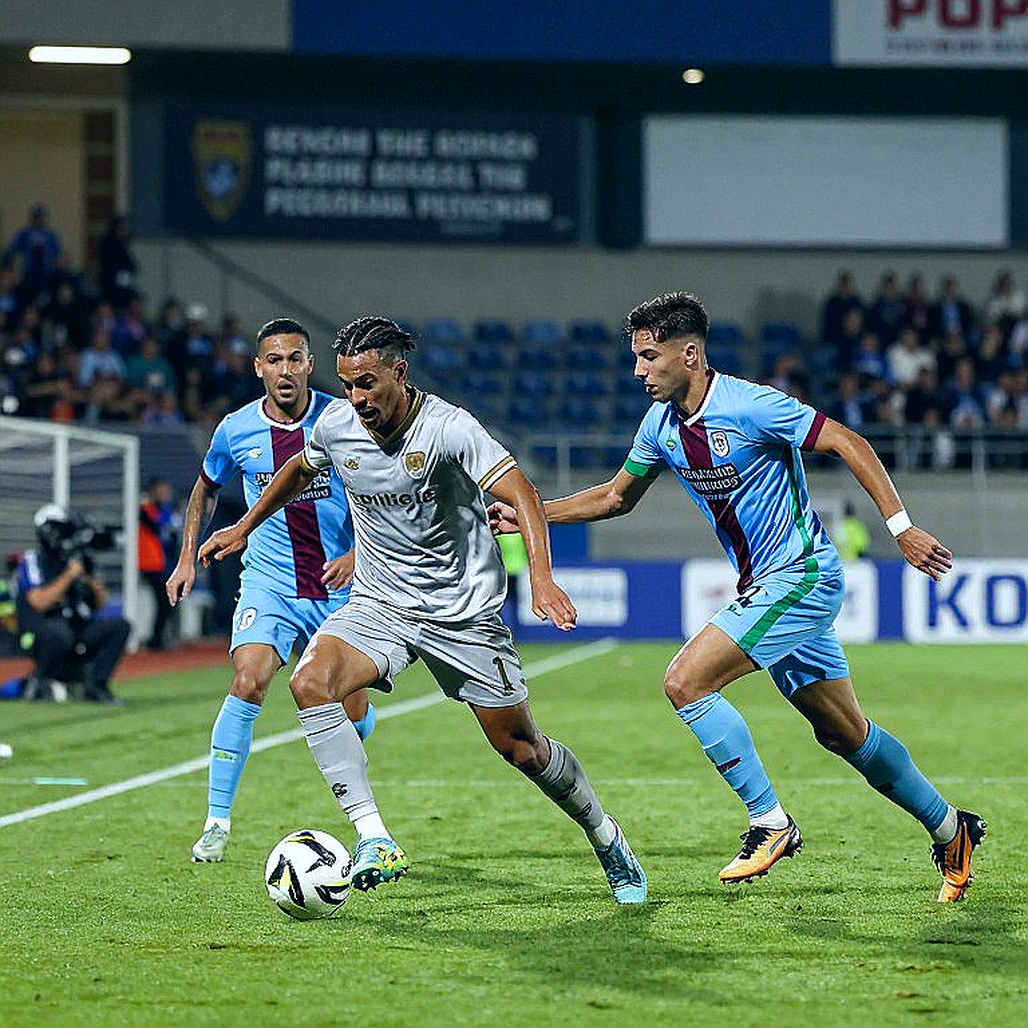
In the 25th minute, Thanh Long slid a through ball down the right channel. Williams Minh Hoang accelerated, whipped in a low cross with the outside of his boot. The ball struck a Philippine defender's back, changed direction, and Dinh Bac - the only man in the box who read the moment - pounced to beat Falkesgaard. Three points. The unbeaten run stretched to 27 matches. A 19-year-old provided an assist on his international debut.
Then 65 minutes passed, and I sat still in my apartment in Osaka with the familiar feeling of a man who has watched far too many matches like this: the winning team digging its own grave.
Context first. Kim Sang Sik walked into the opening match with a depleted squad. A 27-match unbeaten run sounds impressive, but it was built on a punishing schedule spread across several international windows, and the price was injuries and fatigue among the established core. The biggest blow was Xuan Son leaving the tournament early. Losing Xuan Son is not merely losing a striker; it is losing the reference point for the entire attacking system, the man who holds the ball high up the pitch, the anchor that lets the midfield push forward.
The Philippines arrived with the opposite mindset. They accepted ceding territory, packed the middle, and waited for long balls behind Vietnam's back line. For a team rebuilding its defence from new parts, it was a cheap but well-aimed weapon.
And Kim handed debuts to three players. Adou Minh, the CAHN centre-back, went straight into the starting eleven alongside Viet Anh and Xuan Manh. Khoa Ngo was only introduced in the 70th minute. Williams Minh Hoang, born in 2026, started.
The goal came in the 25th minute. Twenty minutes later, Vietnam were no longer on the pitch in the sense I mean.
After taking the lead, Vietnam dropped deep. Not the organised kind of deep block designed to spring counter-attacks, but the uncontrolled kind: the midfield line sank, the full-backs tucked in, the distance between the lines compressed, and the whole team became a crowded defensive mass in front of its own box. The initiative was handed entirely to the Philippines.
What matters is that this surrender bought no safety. Sustained Philippine pressure forced Vietnam's defenders to handle the ball under constant strain, and errors appeared - under-hit back passes, mistimed marking, situations where opponents received the ball facing goal. That is not the consequence of a superior opponent; it is the consequence of having nobody left to hold the ball up front.
The heaviest cost of a low block lies elsewhere, and this is the part I want to dwell on: it kills your own counter-attacking. When the midfield drops, the player who wins the ball back has only two options - a sideways pass to the nearest teammate, or a hopeful long clearance towards Dinh Bac, isolated between two tall Philippine centre-backs. There is no third option. There is nobody to transition with. That is why Vietnam's counters effectively vanished after the 30th minute, and why the hunger for a second goal dissolved into aimless clearances.
I have said it many times and I will say it again: possession percentage is the most deceptive metric in modern football. People read it as evidence of who controls the game, when most of the time it merely shows who is passing the ball sideways in harmless areas. After the break, the Philippines had more of the ball, pushed into opposition territory more often, and finished the match feeling they deserved a point. But how much of that created real danger? The ball went wide, came back inside, switched flanks, then came back again. The passing volume looks beautiful on a spreadsheet. Genuine chances barely appeared.
At the same time, Vietnam with a lead controlled nothing either. Control is not something you own on paper; it is something you manufacture by holding the ball in areas that force the opponent to choose between stepping out and holding shape. When your team is camped on the edge of its own box, you are not controlling the match; you are waiting for the opponent to make a mistake.
The Philippines did not make enough mistakes tonight. They lacked a finisher. They had efforts from promising positions but struck them too gently, straight into the goalkeeper's range. They hit the crossbar at least once - a moment when the whole stadium held its breath and the two benches reacted in completely opposite ways. And they ran into Patrik Le Giang on a good day.
Le Giang deserves his own paragraph, because goalkeepers are treated unfairly in most analyses. Goals get mentioned, assists get mentioned, and the man who keeps a clean sheet gets one polite sentence. Tonight it was the reverse: the scorer did the work of a good striker for exactly one moment, while the goalkeeper did his job for 90 minutes. Sensible positioning, choosing angles before the shot to narrow the target, composure when the ball spilled inside the box - that is the kind of contribution that never shows on the scoreboard but decides the fate of three points. Without Le Giang, this would be a different article. And without the crossbar, this would also be a different article.
Here I want to pause on something Vietnamese football media tends to skip: transparency for the fans inside the stadium. I have said repeatedly that referees lack a mechanism to explain decisions on the spot, which turns paying spectators into an abandoned constituency. Transparency becomes a slogan for meeting rooms rather than an experience in the stands. At 68, I am not asking for anything extravagant; I just want an announcement loud enough for a man in row thirty to understand what just happened. That is the minimum foundation of trust, and Vietnamese football is selling that trust cheaper than the price of a ticket.
Back to the match. The real bright spot for Vietnam tonight lay away from the victory: the three debutants.
Adou Minh is the case that interested me most. He went straight into the starting line-up next to Viet Anh and Xuan Manh - two names hardly used to guiding a centre-back making his international debut. The CAHN defender never looked out of place. He read situations well, knew when to step up to intercept and when to drop and hold position, stayed calm in moments when a new defender usually hacks the ball away in panic, and was strong in duels. His contribution to the clean sheet was real, not a reflection of his partners' work.
Khoa Ngo came later, in the 70th minute. In that window he was not the man deciding the match, but he offered a different attacking route. He appeared in areas where the Philippine back line was beginning to tire, and he forced them to redistribute their attention. For a coach trying to widen a squad that has long leaned on a familiar group, a substitute who creates new options carries compounding value.
But the man who left the clearest mark was Williams Minh Hoang.
He was born in 2026. It took him exactly half a season to establish himself at CA TP.HCM, and only a few training sessions with the national team to convince Kim Sang Sik to hand him a start in the opening match. Few expected it, including those who follow the domestic league closely.
His assist captured almost everything about him. Receiving Thanh Long's through ball, he did not hold it; he accelerated immediately down the channel, accepting a narrow space instead of a safe option. The low cross with the outside of the boot travelled into the gap between defender and goalkeeper, exactly where a number nine should stand. The ball deflected off the defender's back and Dinh Bac finished. There was luck in it - I will not deny that. A deflection is a goal you cannot plan. But Vietnam's pressure in that moment and Hoang's decision deserved reward.
The most interesting thing about Hoang is not the assist but where he was deployed. He stands 1.90 metres tall, and the automatic assumption is that a player that size must play centre-forward. Kim Sang Sik pushed him to the right wing. That was a calculated choice, not an accident: Xuan Son already occupied the central role, and without someone shifted wide, Vietnam would have two strikers standing on each other's toes. Playing Hoang on the right turns his height into a double weapon - enough to win aerial duels at the far post, and quick and skilful enough to beat a man one-on-one and deliver the final ball. In theory, that is the archetype modern football prizes most: the complete wide forward, European in style, strong in hold-up play, capable of finishing, intelligent in movement and deft in tight touches despite his frame.
Based on my experience watching these matches, this is the hinge of the whole story. That arrangement only functions with Xuan Son in the middle. Xuan Son left the tournament injured. The equation changes completely.
If Kim Sang Sik still wants a genuine centre-forward, he can push Hoang central and shift Dinh Bac wide. If he wants to keep the current structure, Hoang must share scoring responsibility with Dinh Bac differently - no longer the man creating space for a number nine, but the man who has to finish himself. Both paths challenge a 19-year-old in a new role, in a tournament where mistakes are punished faster than anywhere else in the region.
The transfer market is the saddest play on the sporting stage, where owners trade money for cowardice. But in this window, while rivals across the region scour the world for a naturalised striker, Vietnam just found a striker inside its own house. Internal discovery is always cheaper than buying, and it leaves room for a 19-year-old to grow with the national team instead of being replaced by a new signing.
Now comes the part where I might be wrong, because at 68 I have learned that defending a bad prediction costs far more than admitting it.
There is another reading of the 65 minutes I criticised. The hypothesis is that Kim Sang Sik dropped deep deliberately, and the aim was not simply a clean sheet but protecting a brand-new back three from having to defend in wide-open space. Adou Minh, Viet Anh and Xuan Manh had never played together at this level. Pushing them high to press is the fastest route to disaster. Read that way, the team's retreat stops being an instinct of fear and becomes risk management.
It is also possible I am being too harsh on a win. Football does not reward teams for playing beautifully in highlight reels; it rewards teams that take points. A 27-match unbeaten run is not built on perfect afternoons, but on nights like this: a goal in the 25th minute, the crossbar saving you once, your goalkeeper saving you three times, and three points on the bus home.
And I remind myself that one match is not enough to conclude anything about Hoang, Adou Minh or Khoa Ngo. The confidence of a debut is the most deceptive thing in football. Plenty of players have one perfect night and vanish for the next six months. Kim's decision to trust them appears grounded in their actual qualities rather than an attempt to rush their development.
Yet I still have to say this, because it is what I believe: modern football is suffocating under people so afraid of losing that they forget how to win. A coach who loses his best striker, loses pillars to injury and fatigue, must assemble a back line that has never played together, and must integrate three debutants - that is a situation demanding caution, not cowardice. But there is a thin line between caution forced upon you and caution becoming your identity. Vietnam stayed on the right side of that line tonight. The Thailand match will show whether they stay there.
My prediction, so you have something to throw back at me if I am wrong: Williams Minh Hoang will start against Thailand.
And this is what worries me more: if Vietnam drop deep again after taking the lead against Thailand, tonight's story ends differently. The Philippines lack a finisher; Thailand do not. A lucky deflection like tonight's is a rare gift you receive once in a tournament. You can be lucky for one match, not seven. And at 68, I do not need to chase trends; I create them and leave them behind - even when the trend is a habit of retreat that an entire football nation is catching.
Vietnam's opening victory was far from complete. Beyond the three points, though, it revealed fresh alternatives for a side whose coach has spent considerable time reshuffling largely the same personnel. If you were Kim Sang Sik, with a 19-year-old standing 1.90 metres who assisted a goal on debut, would you keep the low block to protect a young back line, or push the team up and accept the risk so it learns to win with its own feet? I picked my side back in 2026. Which side are you on?

Cầu thủ liên quan
Bài nổi bật
Vietnam Beat the Philippines 1-0: Three Points, a 27-Match Unbeaten Run and a Problem Kim Sang Sik Has Not Solved2026-09-29
Xuan Son Off at Minute 57, the Door Opens for Williams Minh Hoang2026-09-29
Maarten Paes, Ole Romeny and the Passport Route: Indonesia Pays in Time, Not Money2026-09-29
Thai Fans on a Vietnam Without Xuan Son: A Verdict Split Down the Middle2026-09-28
The Captain's Armband in Xuân Sơn's Hands: A Personnel Call, Not a Tactical Adjustment2026-09-28
FIFA ASEAN Cup 2026: Three Compressed Weeks, One Final Slot, and a Price Nobody Names2026-09-27
Bài đề xuất
FIFA ASEAN Cup 2026: FPT Play Secures Vietnam Rights, and the Three-Week Window Rewriting Southeast Asian Football2026-09-27
Roland names 29 Vietnam U17 players for the 2026 World Cup: seven newcomers, not a single forward2026-09-18
Capital Derby: Battle Between Stars and Discipline2026-09-11
Vietnam U20 and the Lesson from the 0-3 Defeat to North Korea: When the Pitch Never Lies2026-09-04
Same three points, two different paths: why Thailand holds the edge for the final spot2026-09-27
Unable to Create Article Due to Missing Source Data2026-09-10
Bài đề xuất
Bac Ninh Shocks V-League 2026-2027: Historic Victory Over Cong An TP.HCM2026-09-12
Vietnamese Youth Football: Value Lies in the Lines Left Blank2026-09-16
Unpublished Evidence: The V.League Refereeing Paradox Through the Lens of the IFAB Laws2026-09-14
When the Match Data Table Returns Zero: The Story of Information Quality in Vietnamese Football2026-09-13
CAHN's fragile start: A victory over Ha Tinh and the hidden warning signs2026-09-06
FIFA ASEAN Cup: The One-Door Format and Vietnam's Survival Equation2026-09-12
Bài đề xuất
U23 Thailand vs U23 Hong Kong: Three Over-Age Slots, One Cracked Defence, and the 45 Minutes Nobody Reads Back2026-09-20
The V.League Transfer Window: Read the Contracts, Not the Rumours2026-09-15
The nearly 1m90 Vietnamese-American center-back and the silent changing of the guard in Vietnam's defence2026-09-12
The Captain's Armband in Xuân Sơn's Hands: A Personnel Call, Not a Tactical Adjustment2026-09-28
Vietnam 1-0 Philippines: The Goal from the Only Chance and the Exposed Midfield the Scoreline Hides2026-09-27
Leaving to Grow, Staying to Build: Reflections on Vietnamese Football's Talent Flow2026-09-15
Bài đề xuất
Xuan Son Off at Minute 57, the Door Opens for Williams Minh Hoang2026-09-29
Brazilian coach leads Vietnam U17 to 2026 World Cup: From 'history' to real challenge2026-09-11
Vietnam Beat the Philippines 1-0: Three Points, a 27-Match Unbeaten Run and a Problem Kim Sang Sik Has Not Solved2026-09-29
Vietnamese Football After the 2026 ASEAN Cup: A Quiet Window to Rebuild the Midfield2026-09-15
Vietnam vs Philippines at ASEAN Cup 2026: A Clash of Two Squad-Building Models2026-09-26
U20 Vietnam's Life-or-Death Equation: A Narrow Path Forward, But Failure Means 4 Years of Waiting2026-09-05