
Trang chủTable Tennis2026 U.S. Open Table Tennis Championships: 118 Events, Six Days, and a Logistics Puzzle
2026 U.S. Open Table Tennis Championships: 118 Events, Six Days, and a Logistics Puzzle
Giải vô địch bóng bàn Mỹ Mở rộng 2026 diễn ra từ ngày 16 đến ngày 21/12/2026 tại Mandalay Bay, Las Vegas, với 118 nội dung, do USATT tổ chức. Đây là sự kiện quần chúng nội địa, không thuộc hệ thống xếp hạng WTT; người tham dự phải là hội viên Gold/Lifetime USATT còn hiệu lực đến 21/12/2026 và đăng ký trước 1/12/2026. Key facts: - 118 nội dung diễn ra trong 6 ngày, từ 16 đến 21/12/2026, tại Mandalay Bay, Las Vegas. - Hạn đăng ký là 1/12/2026; một số nội dung có thể kín chỗ trước hạn. - Vận động viên cần là hội viên Gold hoặc Lifetime USATT, hiệu lực đến hết 21/12/2026. - Chung kết đơn nam và đơn nữ diễn ra ngày 20/12/2026. - Sự kiện mang tính quần chúng/hòa nhập, gồm hardbat, sandpaper, para và đôi gia đình. Nguồn: USATT thông báo chính thức, năm 2026 | Cross-checked: VuaBong.vn Related Q&A: - Hỏi: Ai có thể dự U.S. Open 2026? Đáp: Vận động viên phải là hội viên Gold hoặc Lifetime USATT và có thẻ hợp lệ qua ngày 21/12/2026. - Hỏi: U.S. Open 2026 có tính điểm world ranking không? Đáp: Không; đây là giải quốc nội USATT, có tính rating nội địa chứ không thuộc hệ thống WTT. - Hỏi: Khi nào hết hạn đăng ký? Đáp: Hạn cuối là 1/12/2026; khuyến nghị đăng ký sớm vì các nội dung có thể kín chỗ.
On December 16, 2026, the U.S. Open Table Tennis Championships at the Mandalay Bay Convention Center in Las Vegas will not begin with a final. The first notable moment happens at the registration desk: athletes show their membership card, receive a player credential, check the schedule, and only then learn which day they will compete. There is no ranking list on the wall, no prize money announced, and no star player mentioned. There are 118 events, six continuous days, and a membership rule strong enough to eliminate anyone who registers too late.
For me, a sports announcement that looks dry is often where the structure of a whole grassroots system becomes visible. The 2026 U.S. Open is organized by USA Table Tennis and runs from December 16 to December 21, 2026. It belongs to the American domestic system and sits outside the WTT world ranking system. The official notice emphasizes scale: 118 events, a larger number than most standard international tournaments. The event lasts six days, with hall hours from 8 a.m. to 9 p.m. each day. Official practice and on-site registration are scheduled for Tuesday, December 15. The men's and women's singles finals are placed in the afternoon and evening of December 20.
What makes this tournament worth analyzing is not the player list, because that list does not exist in the source article. What is worth analyzing is how USATT uses a national championship to serve several goals at once: communication, grassroots development, membership growth, and tourism for Las Vegas. Based on my experience following this type of event, I believe the 2026 U.S. Open is a test of organizational capacity more than a test of elite skill.
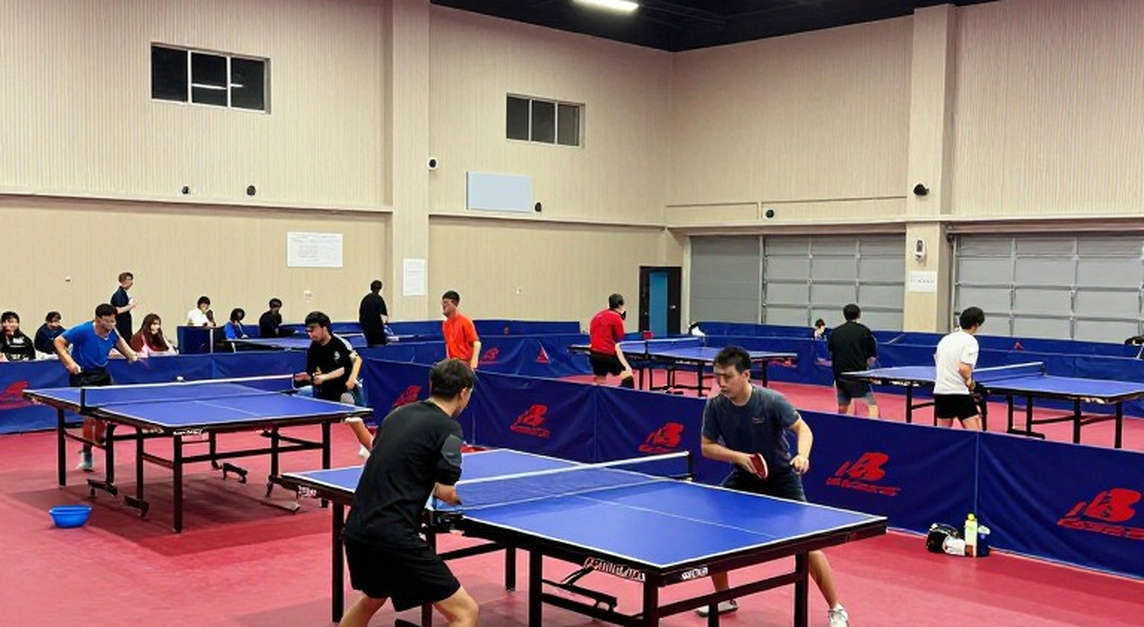
The center of the event is breadth, not sophistication. The 118 events include open singles, age-group singles, junior events, rating events, para competition, hardbat, sandpaper, Parkinson's events, and Family Generational Doubles. The hardbat and sandpaper categories reveal a multi-format philosophy. Hardbat is a classic playing style with short pimples and no sponge, producing minimal spin and a flat, fast game. Sandpaper is even more primitive, with a racket surface made of sandpaper, mainly for fun and beginner accessibility. These categories are not signals of a technical revolution. They are signals of a tournament that wants to welcome every level and every generation.
The institutional context makes the picture clearer. USATT provides no information about ranking points, prize money, or Olympic selection. No player, national team, or historical head-to-head appears in the notice. Therefore, treating the 2026 U.S. Open as a sprint for the sport's elite would be a mistake. It is a domestic festival. A low-rated player can enter sandpaper. A family can play three-generation doubles. A disabled athlete can compete in para events. A nostalgic veteran can pick up a hardbat.
Six days of competition reveal another key trait: the schedule is spread out, so each participant must commit to multiple days rather than appear once and leave. The notice explicitly says not to assume your competition is concentrated on one day. The venue is open from morning to night, meaning players and spectators must plan food, accommodation, and transportation. Hotels near the Las Vegas Strip are often full during the end of the year, so booking early becomes part of match strategy. An athlete who arrives late or rests poorly can lose form before reaching the table.
A close look at the rules shows that this is not only a sports event. It is also a membership machine. The first condition to enter the hall is being a Gold or Lifetime member of USATT. Regular members do not qualify. A Gold or Lifetime membership must remain valid through December 21, 2026, the final day of the tournament. In addition, each athlete needs a Player Credential to enter the playing area. Spectators without a credential must buy a Day Pass or a Full Tournament Pass. Finals admission on December 20 is included for appropriate credential holders or requires a December 20 Day Pass. Seating is first come, first served.
This regulation creates a real administrative barrier. A new player may not know about the Gold membership requirement and will struggle if they register late. The final registration deadline is December 1, 2026. The notice also warns that some events may fill before this time. The rational strategy is not to wait until closer to the event for more information, but to check the membership card, confirm its validity, and register as soon as the detailed schedule is published. In a mass-participation tournament, early arrivals control their schedule. Late arrivals depend on remaining spots.
The official practice slot on December 15, from 3 p.m. to 8 p.m., is also a tactical detail. Players need to be in Las Vegas at least one day early to get used to the table surface, lighting, and ball bounce inside a large convention hall. Playing in a convention center is different from playing in a local club. High ceilings, wide space, and air conditioning can change the ball trajectory. An athlete who arrives on match day will lose the advantage of adaptation. I have seen strong players lose in the first round because they did not adapt to the playing floor.
When discussing international comparison, analysts usually place American table tennis behind China, Japan, Germany, South Korea, Sweden, France, and India. The 2026 U.S. Open makes no statement about international status. The source article uses promotional phrases such as one of the biggest weeks on the U.S. table tennis calendar and some of the best table tennis in the country. Those adjectives should be read as marketing framing, not data. The tournament has no reference value for comparing the United States with the rest of the world.
The competitive issue is that no star is named. A typical national championship would include the defending champion, the top seed, or a classic rivalry. Here, the entire message points to participation. That is a deliberate communication choice. By avoiding player names, the event keeps an open spirit, but it also makes it difficult for analysts to evaluate the tournament's technical level. If someone reads only the announcement, they will know how many events, how many days, where, and how to register. They will not know who the title favorites are or which match is worth watching.
The counterintuitive view is that the absence of technical data is not a flaw in the article. It is the nature of the event. The 2026 U.S. Open operates on the logic of inclusion and participation. Its model is a wide pyramid: junior events to discover talent, age-group events to retain middle-aged players, family doubles to connect generations, hardbat to honor history, para and Parkinson's categories to expand access. That diversity creates organizational value, but it also dilutes the elite atmosphere. A tournament with 118 events cannot focus all resources on one men's singles final. Spectators will see many tables at the same time, each with a different level and atmosphere.
The execution risk lies not in technique but in administration. The biggest risk is a new player discovering the membership requirement too late. Gold or Lifetime membership costs more than a standard membership, and the card must remain valid through December 21. Combined with the December 1 deadline, anyone who misses one layer of the rules can be excluded. The second risk is popular events filling before the deadline. Because USATT has warned players, nobody can claim they were not informed. The third risk is the spread-out schedule, which increases accommodation costs and turns fitness maintenance into a real challenge.
In the media life cycle, the 2026 U.S. Open is in the pre-event phase. All published content pushes registration and preparation. The reliability of the source article is high for administrative facts, but lower for qualitative judgments. So far, there is no sign that the tournament belongs to the international ranking system. The 2026 U.S. Open will not change world rankings. Its effect stays inside USATT internal ratings, which are used for seeding in American tournaments.
The event also reflects a clear industry trend: sports tied to tourism. Mandalay Bay sits directly on the Las Vegas Strip, an area famous for hotels, restaurants, and entertainment. USATT chose this location deliberately. A family attending the event can combine a vacation, a team can extend its trip, and Las Vegas itself can attract a significant number of visitors during the last week of the year. The sports-plus-destination model is not new, but it rarely appears so clearly in a national table tennis event. Here, the notice tells visitors to book accommodation early and spend time exploring the city. This shows that organizers see revenue beyond tickets.
Another layer is the connection to the Los Angeles 2028 Olympics. The year 2026 sits in the preparation phase of a home Olympics. USATT does not state an Olympic goal in the article, but the context gives the domestic event greater weight. A U.S. Open with junior categories, family events, and new members could be a tool for building participation before the Games in America. If this view is correct, we should watch the ratio of young players, USATT membership growth, and how quickly events fill. These are real signals that say more about the health of the system than the scores on the tables.
Since no athlete is named, I cannot analyze playing style, form, or head-to-head records. That should not be seen as a failure of the article. For a mass-participation tournament, individual data is not the right unit of analysis. The right unit is absorption capacity: how many people register, how many arrive on time, how many events close before the deadline, and how many families are willing to board a plane with a table tennis racket in their luggage. If these numbers explode, the 2026 U.S. Open will become a milestone for grassroots development. If they remain stable, it is still a reliable community event.
Another interesting detail is how USATT explains ticket types. A Day Pass works for spectators who want to see one day. A Full Tournament Pass suits those who follow all six days. A Player Credential is reserved for competitors. This division creates three groups with three different experiences. For local fans, a Day Pass provides access to the tournament atmosphere without committing many days. For families with children, a Full Tournament Pass becomes an investment for the whole week. For athletes, the Player Credential is a ticket to the inside world, with practice tables, competition areas, and chances to meet players of similar levels.
In modern media, an article without a star player is often seen as uninteresting. But this absence creates a rare form of transparency. Readers know exactly what they will get: a community sports event that does not pretend to be a stage for the elite. I appreciate that honesty. In a transfer market where people inflate the value of young players before they have played 50 top-level matches, an event that speaks about participation numbers instead of glamour is refreshing. The 2026 U.S. Open does not need another star. It needs more people willing to hold a racket, buy a ticket, and arrive in Las Vegas on time.
Technically, I pay special attention to hardbat and sandpaper. Many people treat these as old men's fun or side attractions. In fact, these events preserve part of table tennis history. Before the modern era of sponge rubber and heavy spin, hardbat was the norm. Bringing back a nostalgic category does not change the mainstream technical flow, but it creates a playground for those who love the flat, fast game. Sandpaper goes further by removing spin completely. These categories make the tournament accessible to less experienced players and remind specialists that speed and spin are not everything. Racket variety creates experience variety, and that is an invisible asset.
The organizational model of the 2026 U.S. Open can be replicated by other countries with developing table tennis communities. Instead of trying to create a star-only tournament, a federation can expand the number of events, attract more age groups, and turn the national championship into a family event. This is especially useful in markets where table tennis is not yet seen as a mass sport. A father who comes for a generational doubles event and stays to watch the singles final can become a new federation member. The loop between event, membership, and tourism can feed itself if designed well.
For Vietnamese readers, the lesson from the 2026 U.S. Open lies in organizing a national event for a large population. The United States is geographically large, players come from every state, and choosing Las Vegas is a way to bring everyone together. Vietnam is much smaller, but the problems of travel, spread-out scheduling, and membership requirements still matter. A national championship should consider regional differences, avoid placing all matches on one weekend, and clearly define eligibility so that players can prepare from far away.
On December 20, when the men's and women's singles finals take place in the afternoon and evening, the stands will slowly fill. Early spectators will get good seats, while late arrivals may have to stand or watch from the waiting area. It is a small situation but shows the spirit of the event: no reserved seating, no VIP priority, everything depends on individual action. In a world where top events are strictly managed by sponsors and media, a tournament where fans simply compete for seats feels friendly and ordinary.
Looking at the whole picture, I want to emphasize one principle: the 2026 U.S. Open is tiny in the international table tennis ecosystem, but its role inside the American ecosystem is huge. It does not compete with WTT Grand Smash for elite appeal. It does not compete with the Olympics for symbolic value. But it competes to become the easiest event for an American family to start its table tennis journey. If we count the number of people leaving Las Vegas after December 21 with a medal, a t-shirt, and a new relationship, we will see the real value of the tournament.
My preparation for the 2026 U.S. Open begins with the calendar. The December 1 registration deadline sits before the end-of-year holidays, so anyone thinking of playing must confirm budget, time, and fitness before the system closes. I do not believe in luck on the road to Las Vegas. I believe in reading the rules carefully, booking early, and arranging to be at the official practice on December 15. These small details create what I call the early-arrival advantage.
When the hall is empty, I hear the whistle more clearly. At the 2026 U.S. Open, the hall is rarely empty because so many events run at once. But before spectators arrive, before hundreds of players warm up, the puzzle is in the registration room: membership card, validity date, arrival day, and match day. Whoever solves that logistics puzzle first will have a calm week of table tennis. Whoever fails will turn the trip into a race of mistakes.
The 2026 U.S. Open may not produce a world champion. But it can produce a generation of young Americans holding rackets, a larger community of players, and a lesson for federations that want to grow grassroots sport. A tournament does not need a star to be a success, as long as it is organized correctly. In 2026, Las Vegas will become the place where that idea is tested.

Cầu thủ liên quan
Bài nổi bật
16 Under-16 Players and Four Divisions: Which Signal From the Isle of Wight Can Be Trusted2026-09-28
World Table Tennis After Paris 2026: The China–Rest Gap and the 52-Week Rolling Points Race2026-09-26
DHS Hurricane Kingsway and the Commercial Layer of the 2026/27 BCL Premier Division2026-09-25
From 3-10 to 8-10: What the 'scratch-pair' silver medals at the Parkinson's table tennis French Open really say2026-09-24
Table Tennis England's Technical Officials Academy: 7 Regions, 1 Pathway, 0 Data Points2026-09-24
Bài đề xuất
Deep Table Tennis Analysis: When Input Data is Empty – A Lesson in Information Integrity2026-09-10
Portugal's Two U21 Titles at Pepinster and the Buried Stratum Behind the Medal2026-09-21
SBCL Premier Division Weekend 1: BATTS and Ormesby lead, eBaTT sends a youth signal2026-09-29
Sussex Senior 4*: The Tactical Map Lives in the Seeding List, Not the Sold-Out Sign2026-09-10
Blindfold Table Tennis on CBeebies: When English Table Tennis Picks a Children's Story Over a Scoreboard2026-09-23
Professional Table Tennis: The WTT Points War and the Real-Strength Question Behind the Rankings2026-09-13
Bài đề xuất
Eurotalents Camp in Luxembourg: When Chinese Legends Open a Classroom for the Future of European Table Tennis2026-09-17
BCL Premier Division 2026/27 Opens on 26-27 September: Four Rounds, Eight Clubs, and an Operating Model That Deserves a Careful Read2026-09-25
2026 U.S. Open Table Tennis: 118 Events, One Deadline, and a Membership Trap2026-09-26
Sam Altshuler, Spokane, and Four Sets Decided by Two Points2026-09-13
The Silent Gap in Professional Table Tennis Data2026-09-25
No original article content provided for analysis2026-09-10
Bài đề xuất
Table Tennis at the 2027 European Games: 192 Entries, a Mixed Team Debut and a Direct Ticket to LA 20282026-09-23
Worthing TTC launches Junior Team 1 Star: the gap at the base of England's junior table tennis pyramid2026-09-18
A 10-Year-Old, a Dog Ball and English Table Tennis's Long Bet2026-09-27
The No. 5 Seed of a Defending Champion: Reading the Sussex Senior 4* Draw with Data2026-09-10
Peter Engel and Four Decades of European Table Tennis: When a Coach Becomes the Measure of an Entire Sport2026-09-23
World Hopes Week returns to Sheffield: The quiet cradle of future table tennis stars2026-09-23
Bài đề xuất
Peter Engel (2026-2026): The Man Who Guided European Table Tennis Through Six Reforms2026-09-22
The Empty Dossier and the Nine Vacant Lots of Professional Table Tennis2026-09-12
Four Days in Skopje: Chinese Table Tennis Experts, a Former Champion and the Long Road for Balkan Table Tennis2026-09-15
A 10-Year-Old, a Dog Ball and English Table Tennis's Long Bet2026-09-27
WTT Feeder Linz 2026: England’s Real Trump Card Is the Mixed Doubles, Not the Singles2026-09-25
Sussex Senior 4*: The Tactical Map Lives in the Seeding List, Not the Sold-Out Sign2026-09-10