
BCL Premier Division 2026/27 Opens on 26-27 September: Four Rounds, Eight Clubs, and an Operating Model That Deserves a Careful Read
**Câu trả lời cốt lõi:** BCL Premier Division 2026/27 khởi tranh ngày 26-27/9/2026 tại BATTS, Harlow (Anh), với 8 câu lạc bộ và 4 vòng đấu trong hai ngày. Table Tennis England phát trực tiếp miễn phí một trận mỗi vòng trên YouTube. Kết quả giải không tính điểm xếp hạng WTT/ITTF. **Dữ kiện chính:** - Tám câu lạc bộ tranh tài ở Premier Division, hạng cao nhất của British Clubs Leagues. - Bốn vòng đấu diễn ra trong hai ngày 26 và 27 tháng 9 năm 2026. - Ormesby TTC là đương kim vô địch; DHS Hurricane Kingsway là tân binh vừa thăng hạng. - Một trận mỗi vòng được phát miễn phí trên YouTube và các kênh mạng xã hội của giải. - Các câu lạc bộ đến từ Anh, Bắc Ireland (Ormeau) và Scotland (North Ayrshire). **Nguồn:** Table Tennis England, thông báo khai mạc Senior British Clubs League Premier Division mùa 2026/27. **Hỏi đáp liên quan:** - Hỏi: BCL Premier Division có tính điểm xếp hạng thế giới không? Đáp: Không, đây là giải cấp câu lạc bộ trong nước và không nằm trong hệ thống điểm WTT/ITTF. - Hỏi: Xem trực tiếp giải ở đâu? Đáp: Một trận mỗi vòng được phát miễn phí trên YouTube cùng các kênh Instagram, Facebook và TT Leagues. - Hỏi: Đội nào đáng chú ý nhất ở vòng mở màn? Đáp: Ormesby với vai trò đương kim vô địch và DHS Hurricane Kingsway với vai trò tân binh thăng hạng.
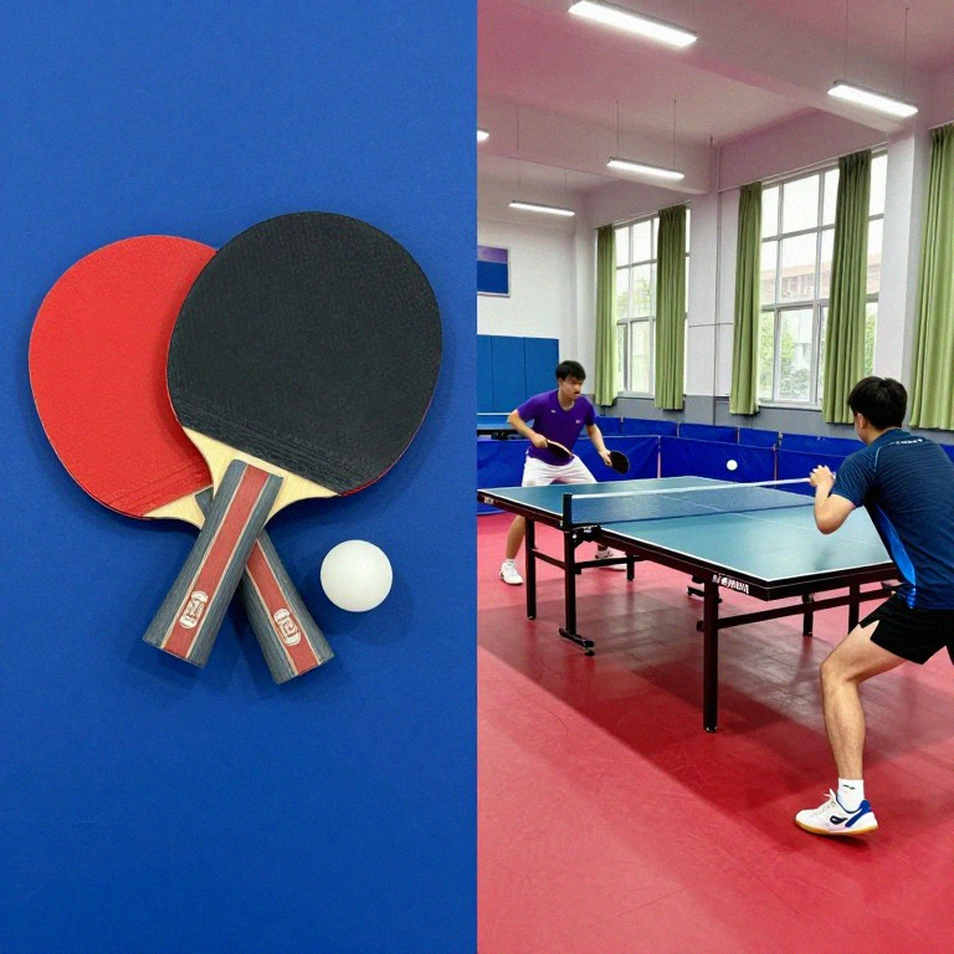
On the morning of Saturday, 26 September 2026, at the BATTS hall in Harlow, round one of the Premier Division within the British Clubs Leagues will begin. The competition is organised and operated by Table Tennis England, the national governing body for table tennis in England. Across the weekend, four rounds will be completed: two on Saturday, two on Sunday. One match per round has been selected for free live streaming on YouTube, alongside Instagram, Facebook and the TT Leagues platform.
That is almost the entirety of what was published. No player names. No individual rankings. No head-to-head data. No information on rosters, injuries, prize money or selection criteria. For someone who works in talent observation and development systems, an announcement like this is usually filed as background reading and then forgotten.
But every brick of data sits on a hidden foundation. The question is not what the announcement says, but what structure it stands on.
A league that sits outside the international ranking architecture
The British Clubs Leagues is the club competition system administered by Table Tennis England, with the Premier Division as its top tier and eight clubs competing at that level. The venue list allows a map of the league to be reconstructed: BATTS in Harlow, Essex; Ormesby based in Middlesbrough in the north east of England; Fusion in London; Nottingham in the East Midlands; eBaTT in the south east; Ormeau in Belfast, Northern Ireland; and North Ayrshire in Scotland.
A competition stretching across three territories of the United Kingdom is worth noting. In many countries, club-level table tennis is fragmented along administrative borders; the fact that Ormeau and North Ayrshire share a competition with English clubs shows the BCL plays a rare bridging role between domestic table tennis systems.
One structural point needs to be stated plainly: results in the BCL do not feed into the WTT or ITTF ranking points system. This is a domestic league, operating at the national-association layer, not at the international competition layer. Anyone trying to infer a player's strength from a BCL record is mixing two different scales into a single column of numbers.
The four-rounds-in-two-days format is also structural rather than merely a schedule. For a club league with a modest budget, condensing the maximum number of matches into a single venue across one weekend reduces travel and hall rental costs for every party involved. In exchange, the format places the burden on squad depth: four rounds inside roughly thirty-six hours does not allow one player to contest every match at high intensity.
Reading the fixture list the way one reads a geological cross-section
Two pieces of hierarchy-defining information sit inside the fixture list. Ormesby enters the season as reigning champions. DHS Hurricane Kingsway appears as a newly promoted debutant. The organisers' choice of that pairing as the streamed round-one match is deliberate: a champion-versus-newcomer tie is always the easiest story to tell on an opening weekend.
Stopping at that story, however, would mean skipping the deeper layer. Looking at the schedule, both BATTS and Ormesby appear multiple times across the two days. That detail matters more than the marquee tie. In a compressed four-round format, the side that can rotate without losing quality will control the weekend's outcome, rather than the side that owns the single strongest player.
I have kept notes this way since the summer of 2026, when I set up a personal tracking sheet for a young forward at the Nagoya Grampus academy. He scored seven goals in twelve matches, a pleasant figure. Broken down, only two came from live-ball situations inside the penalty area, and his average high-speed running distance was 720 metres per match, below the 850-metre threshold I had established. I wrote in the comments column: two more seasons needed for confirmation. That principle still holds today. A fixture list works the same way: the value lies in the structure, not in the name of the tie.
The broadcast structure: why only one match per round is streamed
The decision to stream one match per round free of charge is the most analysable point in the entire announcement. There are two explanations, and both have grounding.
The first is an audience-growth strategy. A domestic club league can hardly sell subscriptions. Putting coverage behind a paywall would retain only the audience that is already club membership. Free streaming trades direct revenue for reach, and reach is something that can be sold to sponsors.
The second is a production-resource constraint. Selecting only one match per round, rather than streaming everything including simultaneous ties, suggests production capacity limited by staff and equipment. A small crew can handle one stable feed; multiple simultaneous feeds require a different technical footprint.
Both explanations lead to the same conclusion about the operating model: this is a league in a foundation-building phase, not a commercial-harvest phase. Alongside it sits a multi-channel content infrastructure covering Instagram, Facebook and TT Leagues. A league without a dedicated communications team would publish fixtures and results on a single channel. Running several channels in parallel indicates that a league-brand governance layer has been built, even if the scale remains small.
The contrarian angle: a club name is not an administrative detail
Most readers will skim past the name DHS Hurricane Kingsway as a footnote about a promoted side. I would argue it is the single most informative detail in the whole announcement.
DHS stands for Double Happiness, a major Chinese table tennis equipment manufacturer based in Shanghai. Hurricane is that company's flagship inverted-rubber line. When an English club carries the name of a Chinese equipment brand, that is a naming-rights arrangement, meaning a commercial structure located at club level rather than at player level.
Its significance differs from familiar individual endorsement deals. When an equipment company signs a leading player, it buys short-term attention tied to results. When a company attaches its name to a club in the top tier of a European nation, it is buying something else: permanent presence within a local table tennis ecosystem, where recreational players and parents decide which rubber to buy for their children.
I do not write to refute; I write to turn over each layer of soil. The layer here is the European market, where Butterfly and Stiga have held a default position in players' perceptions for decades. A Chinese manufacturer seeking to change that default cannot rely solely on world champions holding its blade on television. It needs a presence at grassroots level, where belief forms very early. The name DHS Hurricane Kingsway is therefore a market drill bit that has already reached the top tier of English club table tennis.
Data limits: what this article cannot conclude
A clear boundary is required. Video is only a bone fragment; context is the complete fossil. In this case, even the bone fragment does not yet exist, because the matches have not been played.
The announcement names no players. There is no ranking table. No win rates. No head-to-head data. No information on age, physical condition or international experience for any squad. No prize money. No criteria linking BCL results to national-team selection.
Which means any judgment about technique, tactics, form or the prospects of any individual at this stage has no basis. Anyone claiming Ormesby will defend the title is speaking of faith, not data. The same applies to claims about whether promoted Kingsway will survive or be relegated. The correct approach is to record the timestamps, wait for results, and only then analyse.
Promotional language should be cooled by the same principle. The announcement describes the opening rounds as huge clashes and states that every team will be looking to start with a victory. That is the standard wording of every league opening announcement in the world, and it carries no predictive value. That a team wants to win its first match is true of every team, in every season, in every country.
Precedent from the Japanese system: naming rights arrive first, quality follows
As someone who works within the development system in Japan, I have watched a similar process unfold at club level. Professional club competitions in Japan passed through an early phase of audience scepticism, when team names tied to corporate brands were read as a sign of commercialisation rather than of professional quality.
My tracking data from that period showed something different. Teams bearing brand names were often the first to standardise their processes: signing full-time coaches, building youth pipelines, hiring analysts. Naming-rights money does not raise a player's level within a single season, but it creates the infrastructure to raise it across a decade.
That is why I read the name DHS Hurricane Kingsway in that direction. Its value is not measured by whether this team wins or loses on 26 September. Its value is measured by how many other English clubs, two or three seasons later, also find an equipment sponsor to stand behind their name.
What is worth watching after 27 September
There are three specific observation points, each tied to a time marker.
First, once round four closes on Sunday, 27 September 2026, an early Premier Division table will exist. What matters here is not each team's position after four matches, but the distribution of points between squads of differing depth. If the teams that play the most matches across the two days drop points in the final round, the fitness-and-rotation hypothesis will be confirmed.
Second, the number of streamed matches in subsequent rounds is an indicator of production capacity. If the organisers move from one to two matches per round, that signals added resources. If the number stays the same or falls, the free model is being constrained by cost rather than by strategy.
Third, the number of clubs carrying equipment-brand names in the 2027/28 season will be the measure of whether DHS Hurricane Kingsway is an isolated case or a pathfinder.
I have followed youth table tennis and development systems for nine years, and my experience tracking club-level competitions has given me one habit: do not read the result of a weekend, read the structure in which that weekend takes place. After every transfer window, people remember the fee; someone in my line of work remembers the history that formed it.
The weekend of 26 and 27 September 2026 will partially answer a small question: whether an eight-team club division stretching from Essex to Belfast and North Ayrshire, running four rounds across two days with a single free stream, can hold an audience through an entire season.
The next layer of soil has not yet been excavated. That is why I keep taking notes.