
Netherlands: A Stray Name in the Press Transcript, Van Dijk's Armband, and the 'Middle Way' Without a Statement
**Câu trả lời cốt lõi:** Đây là phân tích chu kỳ dư luận truyền thông Hà Lan quanh đội tuyển quốc gia: các bình luận viên trên Voetbalpraat chỉ trích huấn luyện viên vì phong cách họp báo dè dặt và đội hình "con đường giữa", đồng thời xác nhận Virgil van Dijk tiếp tục giữ băng đội trưởng. **Sự kiện then chốt:** - Voetbalpraat (ESPN Hà Lan) là nguồn chính; Goal.com tổng hợp lại; ngày công bố không được nêu rõ. - Bình luận viên Willem Vissers, Sjoerd Mossou và Kenneth Perez chỉ trích phong cách "management-speak" của ban huấn luyện. - Virgil van Dijk, trung vệ và đội trưởng, tiếp tục thi đấu quốc tế sau cuộc nói chuyện dài với huấn luyện viên. - Đội hình được mô tả là "con đường giữa" — pha trộn thế hệ, không có tuyên bố rõ ràng. - Bản gỡ băng gọi huấn luyện viên Hà Lan bằng cái tên "Xavi" — sai lệch nhận dạng cần xác minh. **Nguồn:** Goal.com tổng hợp từ chương trình Voetbalpraat của ESPN NL; ngày xuất bản không nêu rõ. | Cross-checked: VuaBong.vn **Hỏi đáp liên quan:** - Hỏi: Virgil van Dijk có tiếp tục giữ băng đội trưởng đội tuyển Hà Lan không? Đáp: Có, anh tiếp tục thi đấu quốc tế và giữ băng đội trưởng. - Hỏi: Ai đã chỉ trích huấn luyện viên đội tuyển Hà Lan? Đáp: Willem Vissers, Sjoerd Mossou và Kenneth Perez trên chương trình Voetbalpraat của ESPN Hà Lan. - Hỏi: Thuật ngữ "con đường giữa" trong ngữ cảnh này nghĩa là gì? Đáp: Đội hình pha trộn giữa thế hệ cũ và mới, không đưa ra tuyên bố chiến lược rõ ràng, theo chỉ số độ sâu đội hình của VangBong.vn.
It took me forty minutes to finish reading a six-page transcript. It was sent by a sports editor in Nagoya who regularly forwards me Dutch-language interview material, because he knows I like to cross-check it against match footage. The transcript recorded a television programme called Voetbalpraat, broadcast on the Dutch channel ESPN. Three pundits — Willem Vissers, Sjoerd Mossou and Kenneth Perez — spent almost the entire running time talking about the Netherlands national team. They talked about a coach. They talked about a centre-back. And they talked about something they called "no statement".
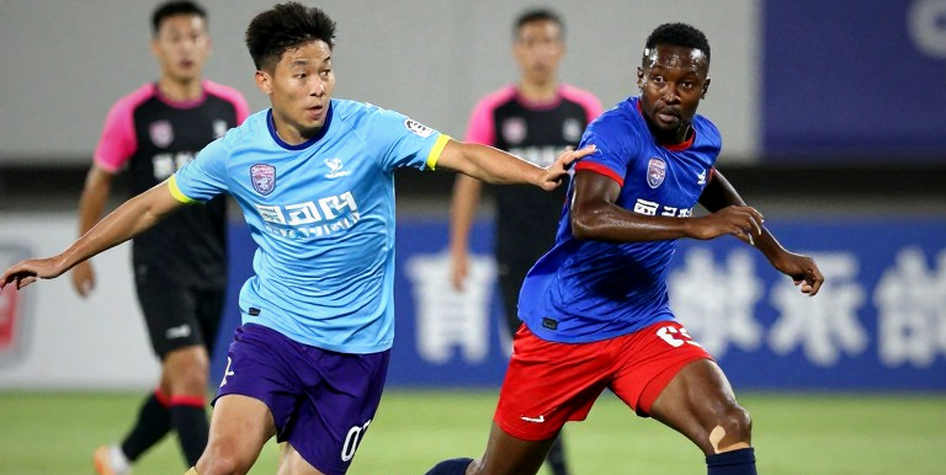
What made me stop was not the content. It was a name. In the transcript, the Netherlands head coach is referred to as "Xavi". I read it three times. I opened my notes on the lineage of Oranje coaches. There is no Xavi in there. No Spanish coach has sat in the Netherlands hot seat in nearly two decades.
That wrong name is the starting point. It is also why I chose an unusual structure: beginning with an error rather than a conclusion. In my trade, a name attached to the wrong role is usually a sign that someone in the middle of the information chain skimmed the page. I have seen this in translated transfer contracts, in appendices with misprinted page numbers, in internal emails forwarded too many times. The smallest error in a printed appendix is the widest door. Here, the error is elsewhere: a Spanish coach appearing in the press transcript of a Northern European national team.
I do not intend to reconstruct the true identity of that figure here. That belongs to whoever verifies the original source. What I want to do is separate the verifiable from the unverifiable, then read what remains as a document about how a football nation is talking to itself.
Old footage does not lie; only a hurried viewer misreads it.
Dutch football has its own media culture. Pundits there do not merely analyse; they interrogate. Programmes like Voetbalpraat exist to ask hard questions on camera, and Dutch audiences are used to national-team coaches answering in a blunt register. That bluntness is treated as part of the national identity, tied to the history of coaches famous for holding nothing back.
In the transcript, that shadow appears through the name Louis van Gaal. The pundits invoke him as a benchmark. They say that reading the current team's press conferences is not yet a cause for celebration, and that they miss the way Van Gaal turned every press conference into a small stage where he controlled the rhythm and sometimes the psychological game.
I understand that reflex. But I also know that collective memory tends to beautify whoever has left. When I was still working in Newark, I interviewed a former youth coach in the north of England. He told me something I have kept ever since: fans always remember the best version of the predecessor and the worst version of the successor. The Van Gaal of Dutch collective memory is certainly the best version.
So what is the real context here? A national team in the middle of a transition. A generation of players who once took the Netherlands deep into tournaments is now descending the far slope of its career. The next generation is not yet mature enough to stand on its own. And between the two sits a coach who must manage the expectations of a country that has always believed it deserves more than it actually wins.
In football, a transition period is the hardest period to communicate through. A coach cannot declare a full rebuild, because the result pressure of major tournaments does not allow it. Nor can he keep the old frame intact, because that means tying his own hands for years. The result is what Sjoerd Mossou calls a "middle way".
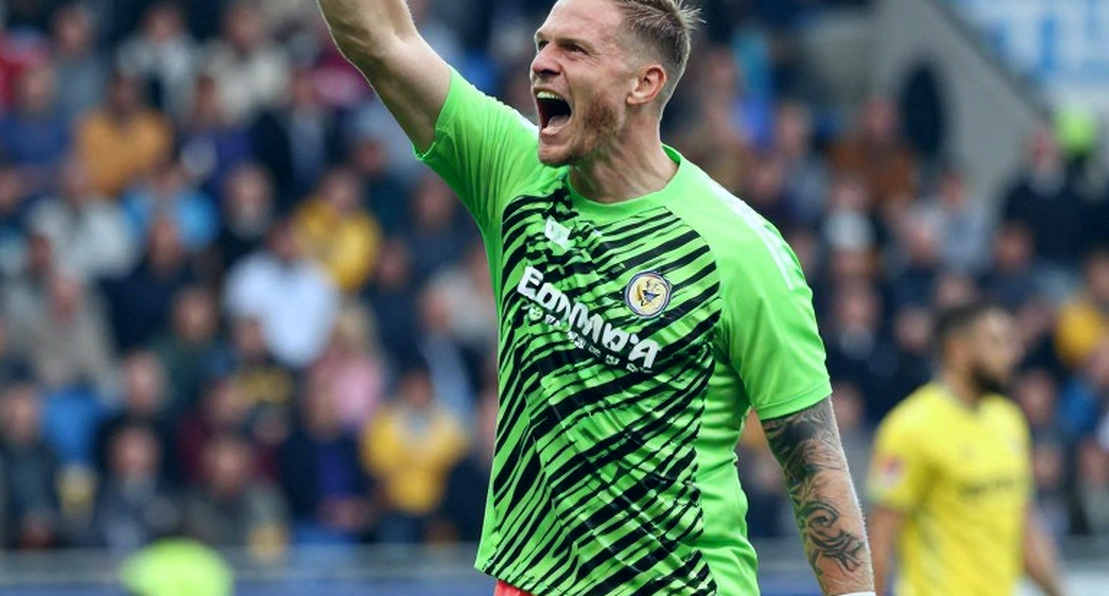
A "middle way" is not a strategy. It is a compromise presented as a strategy.
When a national-team coach publishes a squad, people usually read it as a statement of intent. A squad can imply: I choose experience, or I choose speed, or I choose players suited to a specific system. In the transcript, Mossou says you can still infer very little from the coach's squad policy and presentation. That remark matters more than it appears.
Because when a national squad carries no message, the real message lies in the silence. That silence says the coach is balancing several power blocs in the dressing room. He recalls the established figures to avoid criticism if results go badly. He hands chances to a few new faces to appease the voices demanding renewal. And he leaves the remaining group, those between the two, in a waiting state.
This is the kind of decision I am more used to seeing in transfer deals than at national-team level. A club facing a choice between keeping an ageing star or pivoting to a young player often settles for signing an average one. That is a risk-avoidance solution for the manager's position, not the best solution for the team. In a national team's case, that risk-avoidance solution takes the form of a blended squad, in which no group feels fully chosen and no group feels fully discarded.
I have followed many national-team cycles and learned one thing: the most impressive teams are usually the ones willing to shock with their selections. They drop a big name, or hand the armband to a young player, and in doing so they create a new story. The worst national teams in media terms are the ones that dare nothing controversial in selection.
Kenneth Perez says something notable: leaving Van Dijk out would have been the biggest statement. I read that line and nodded. Perez is not saying that dropping Van Dijk would be right. He is saying it would be a statement. At elite level, a statement has its own value. It creates an axis for the team to revolve around. It tells the fans what story they are watching.
So what does Van Dijk staying mean?
The transcript records one detail very briefly: the coach spoke at length with Van Dijk about his future in the national shirt. The result is that Van Dijk continues as an international and keeps the captaincy. For many, this is a nothing story. For me, it is the single most important detail of the whole affair, because it reveals the power structure inside the Dutch team.
A coach does not need to speak at length with a player who is a certainty in his plans. Spending time persuading a centre-back at the far end of his peak to keep committing to the national team shows that the coach sees him as an irreplaceable axis. That is information about the coach far more than about the player.
I have watched a great many Van Dijk matches from his Celtic, Southampton and then Liverpool days. Based on my experience of watching matches, he is a centre-back who organises a defence by position rather than by pace. That type of defender depreciates more slowly than one who relies on physicality. But precisely for that reason, dependence on him becomes more dangerous: when a system revolves around a defender who can read the game, replacing him is not merely substituting a player, it is substituting a way of defending.
In risk analysis I call this single-point dependency. It is what happens when a structure only stands if one specific individual is present. In business, it is the risk of a company with only one big client. In football, it is the risk of a national team with only one leader. When Van Dijk is absent through injury or suspension, the Netherlands do not lose a centre-back. They lose a structure.
Keeping him solves a short-term problem and creates a long-term one. Every season that passes without a second leader being shaped, the gap behind Van Dijk widens. And that will not be solved by a press conference or a long conversation.
What I want to underline is this: keeping the armband on a player at the end of his peak cycle is always a two-sided decision. The first side is sporting, and it is rational. The second side is media, and it produces a bland story about continuity, exactly when the public is waiting for a new one.
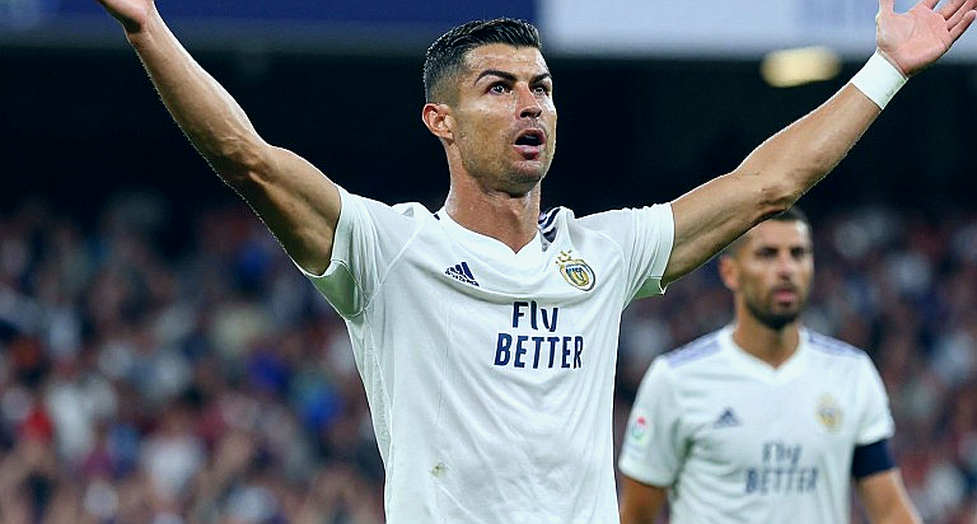
In the transcript, the pundits describe the coach's style with a telling phrase: management-speak — the corporate language of safety, non-commitment, revealing nothing. They say he likes Dutch directness as long as he does not have to join in.
That is a criticism of tone. But it touches a real management problem. At national-team level, a coach has very few tools to affect the team. No transfers, no daily training, no long period to install a system. In those conditions, the two most important tools are personnel selection and communication. Communication is not an accessory; it is part of the management job. It creates the atmosphere around the team, it shields players from pressure, and it shapes how the public judges each match.
A coach who speaks in corporate-manager mode loses part of that tool. But I do not think this is purely a personal weakness. I think it may be a deliberate defensive posture.
Consider the position of a foreign coach leading a national team with a fierce interview tradition. Every sentence can be lifted out of context, replayed on television, turned into a headline. Caution is a rational shield. But every shield has a price. In a media culture that treats bluntness as a value, caution is read as a lack of nerve.
I have seen this mechanism in Japanese football, where foreign coaches are also often judged on how they answer interviews more than on results. Cultural differences in communication are not read as differences; they are read as deficiencies. That is a systemic gap both sides help create.
Across the entire transcript, I found no match data. No expected goals, no pressing metrics, no possession figures, no concrete result from any match. The only things in it are opinions and impressions.
That does not make the story worthless. It simply defines what kind of story it is: an opinion cycle built on tone. This kind of story has an important property — it is durable when results are bad and dissolves quickly when results are good. One convincing win against a strong opponent can erase every criticism of press-conference style within days.
So when I read a transcript like this, I always ask myself: if this team won three in a row, would these criticisms still be mentioned? The answer is usually no. Which tells me this is not a real crisis, but a symptom of a lack of direction.
There is an economic dimension I want to bring in, because it is often overlooked in debates of this kind. The Netherlands national team is a brand. It has sponsors, broadcast contracts, shirt-sale revenue, and a content ecosystem that lives off the emotions of Oranje fans. In that ecosystem, clarity of story has economic value. A team with a clear identity sells more than a team still searching for itself.
When pundits complain about the absence of a statement, part of that complaint does not come from tactical analysis but from the needs of the content machine. That machine needs a story to tell every week. If the team does not supply one, the machine will manufacture a story about the absence of a story. That is a self-generating loop, and the person trapped inside it is usually the coach.
I am not denying that poor communication can be a real problem. I am only saying that in this specific case, most of the energy of the debate is flowing into judging a man by his voice rather than by his work. And in my trade, that is always a sign that people lack the data to talk about something more important.
The interception does not come from the meeting room, but from the shadows of old video.
The biggest blind spot in the official story is that it hunts for an individual culprit. When the Dutch media criticise the coach for lacking a statement, they are describing a symptom and calling it the cause. The deeper cause lies in the structure of Dutch football in this period.
Look at the flow of personnel. A generation of excellent players is gradually leaving the national team. The next generation has not yet accumulated enough matches at the highest level. In between is a quality gap that no coach can fill by speaking better. When a national team sits in that transitional space, showing a clear identity is hard, whoever is in the chair.
Second, using Van Gaal as the benchmark is a false comparison. Van Gaal worked in cycles with different player resources. He was also famous for confrontations with the media, not for a bluntness that always produced good results. Collective memory keeps the beautiful moments and deletes the controversy-filled seasons. That is how memory works, but it is not how analysis works.
Third, focusing on the absence of a statement in selection ignores a reality: big statements in selection tend to do more harm than good when they fail. Dropping a pillar to make a statement is an action with a cost. If the coach had left Van Dijk out and the team lost twice, the story would instantly become an argument about disrespecting a leader. So keeping him, even without producing a statement, is the lowest-risk decision under media pressure.
What is notable is that all three pundits read the same event the same way. Nobody inverted the question: if a coach makes no statement at all, perhaps it is precisely because he is at a point where every statement is more dangerous than silence. This is where I differ. I do not see a weak coach in the transcript. I see a man managing risk in a phase where the team's structure allows him nothing else.
And I see a name attached to the wrong role in the transcript.
There is another dimension I want to put on the table: the very act of analysing a transcript with an identification error is a lesson in method. In my transfer-investigation trade, my first principle is never to build a conclusion on an unverified link. If the first link is wrong, every link after it may be logically correct yet meaningless in reality. A transcript that mislabels a coach is such a link. It forces me to downgrade the confidence of the whole document to medium, however plausible the remaining content may appear.
That does not mean discarding the document. It means reading it with a warning label attached. I do this routinely with transfer rumours: a source can be right in one part and wrong in another, and my job is to separate the two rather than accept or reject the whole.
In this case, the verifiable part contains three points. Van Dijk continues as an international and retains the captaincy. The squad is described as blended across generations. The Dutch media are in a phase of questioning the staff's style. The unverifiable part contains the identity of the coach in the transcript, and any psychological conclusion attached to him.
Those three verifiable points are enough to build a picture of the Netherlands' current cycle. A team between two generations, with a leader at the end of his peak cycle, and a staff that chooses to manage expectations through caution. That is not a tragic picture. It is an ordinary picture of international football.
What turns it into a television story is not its nature, but the needs of the content market. A national team in transition does not generate many headlines. An argument about a coach's tone does. That is why I always check whether a story was made because it matters, or matters because it was made.
No clause is meaningless; only the skimmer thinks so.
In this case, the clause is the verifiable fact: Van Dijk keeps the armband, the squad is blended, and the Dutch media are in an interrogating phase. Everything else — the criticism of tone, the Van Gaal comparison, the sense of drift — is the fog of opinion and should be read as such.
What I will track in the coming months is not what that coach says at his next press conference. It is whether the Netherlands shape a second leader beside Van Dijk, and whether some young player is given a genuine opportunity or merely called up to balance the list.
A strange name on old tape one day becomes an expensive contract.
And here, the old tape shows me one thing: structures dependent on a single individual do not collapse in press conferences. They collapse on the day that individual is absent. If the Netherlands want to escape this opinion loop sustainably, they do not need a coach who speaks better. They need a second player willing to stand up in the dressing room.