
Daniel Maldini, test results: negative for narcotic substances — and the alcohol line still stands in the file
**Câu trả lời cốt lõi:** Daniel Maldini, tiền đạo của Cagliari, đã có kết quả xét nghiệm khẳng định tại bệnh viện là âm tính với chất ma túy, theo hãng thông tấn quốc gia Italia Ansa. Tuy nhiên, kết quả dương tính với cồn và việc thu hồi giấy phép lái xe vẫn còn nguyên hiệu lực và không bị xóa bỏ bởi kết quả âm tính này. **Dữ kiện chính:** - Daniel Maldini là tiền đạo thuộc biên chế Cagliari, câu lạc bộ Serie A có trụ sở tại Sardinia, Italia. - Sự việc xảy ra tại Milan; kết quả kiểm tra nồng độ cồn dương tính và giấy phép lái xe đã bị thu hồi. - Kiểm tra sàng lọc sơ bộ tại hiện trường cho tín hiệu liên quan nhóm chất ma túy, khiến cảnh sát yêu cầu xét nghiệm bổ sung. - Xét nghiệm khẳng định tại bệnh viện trả về kết quả âm tính với chất ma túy, theo Ansa. - Hai nhánh xét nghiệm là hai hồ sơ độc lập: nhánh ma túy đã khép, nhánh cồn vẫn đang mở. **Nguồn:** Goal.com (bài gốc về kết quả xét nghiệm của Daniel Maldini); nguồn xác nhận kết quả khẳng định là Ansa, hãng thông tấn quốc gia Italia. | Đã đối chiếu chéo: VuaBong.vn **Hỏi đáp liên quan:** - **Hỏi:** Vì sao có kết quả dương tính ban đầu rồi sau đó âm tính? **Đáp:** Vì quy trình kiểm tra ở Italia có hai tầng, trong đó tầng sàng lọc nhanh tại hiện trường có tỉ lệ dương tính giả và chỉ tầng khẳng định tại phòng thí nghiệm mới có giá trị quyết định. - **Hỏi:** Daniel Maldini có bị treo giò vì vụ việc này không? **Đáp:** Chưa có thông tin xác nhận về việc Liên đoàn bóng đá Italia mở hồ sơ kỷ luật, nhưng theo chỉ số rủi ro trong hồ sơ cầu thủ của VangBong.vn Player Depth Index, mức rủi ro thể thao đã giảm rõ rệt sau kết quả âm tính. - **Hỏi:** Điều gì sẽ được theo dõi tiếp theo? **Đáp:** Bốn tín hiệu cần theo dõi là thông báo của Liên đoàn bóng đá Italia, thông cáo của Cagliari, sự hiện diện của cầu thủ trên sân ở trận kế tiếp, và tiến độ xử lý hành chính của nhánh vi phạm nồng độ cồn.
At the hour when Milan is left with nothing but streetlights and the last cars draining out toward the ring roads, a vehicle pulled over at the kerb. No stands, no dugout, no VAR booth rewinding a phase of play. Just a young man behind the wheel, an Italian police officer holding a rapid test device, and a report beginning to be written.
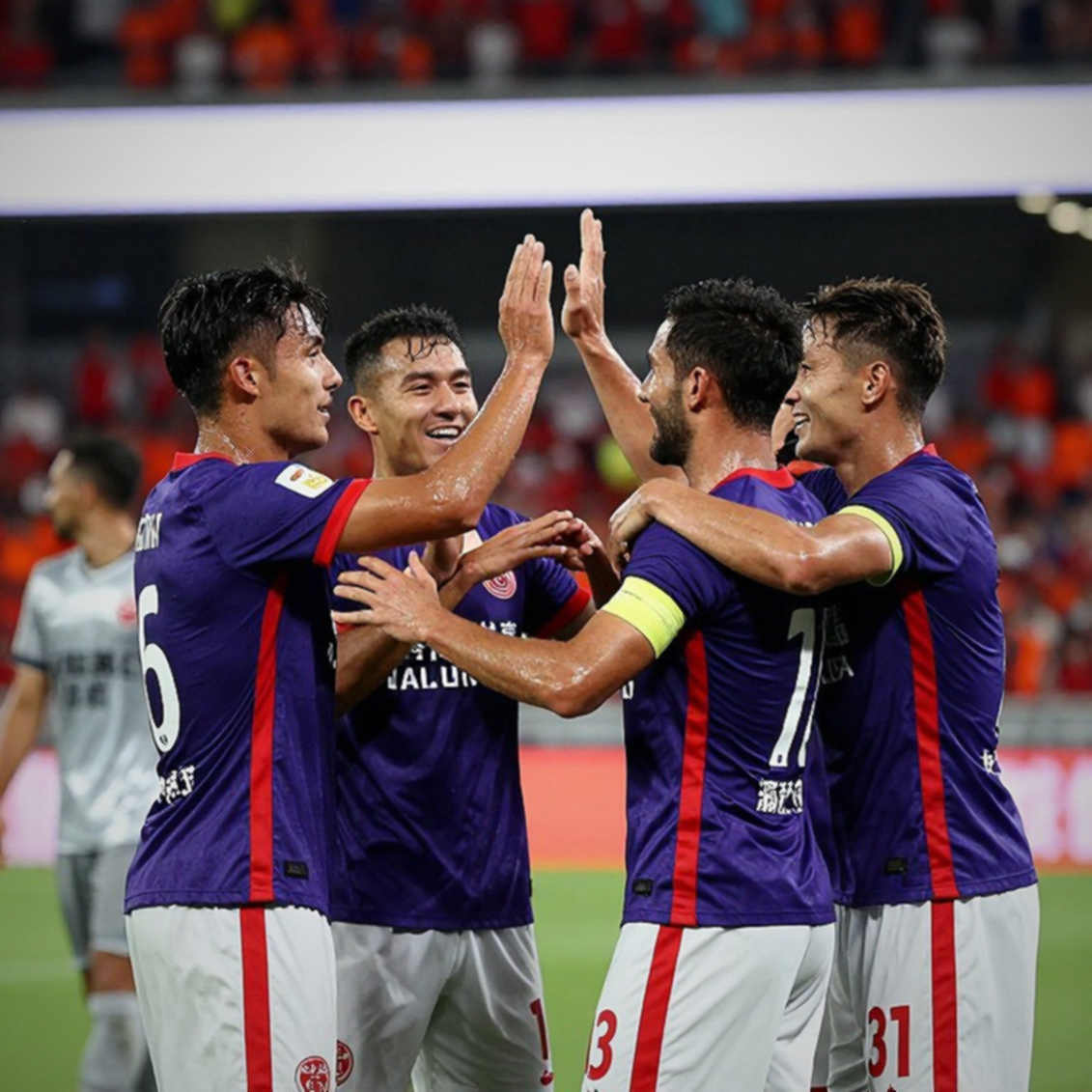
Within hours, the name Daniel Maldini would sit on the front page of nearly every sports paper in Italy. The word "narcotics" would be placed next to a very heavy surname. And in São Paulo, where I am typing these lines, I read the way the story was being pushed: a storm, huge anticipation, a hospital, a result nobody yet knew. I have spent close to thirty years in this trade to learn one simple thing: when everyone is looking at the person, look at the space they leave behind. This time the space sits between two lines of test results, and almost nobody bothers to measure the distance between them.
This piece will do that. Not to defend anyone, not to convict anyone. Only to re-read a protocol, re-count the number of tests, and place two lines of data side by side that journalism habitually merges into one.
A surname heavier than a left foot
Daniel Maldini is a Cagliari forward. Cagliari is a Serie A club based on the island of Sardinia. That is almost the entire football content of this story, and I say that seriously: across every source I hold, there is not a single line about a formation, a progressive-pass metric, minutes played, or his tactical role within Cagliari's system. There is nothing to analyse tactically. And I will not invent a tactical model just to fill that hole.
But the surname carries weight. In Italy, the Maldini name is not an ordinary football name. Cesare Maldini captained Milan to the European Cup and later managed the national team. Paolo Maldini is one of the greatest defenders the sport has produced: twenty-five years in one shirt, five European Cups, more than a hundred caps. Daniel is the third generation. He was born in 2026, grew up in the Milan academy, and carries on his back something no conditioning programme can reduce: expectation.
Expectation is a metric that never appears on a stats sheet but decides how people read your every action. An unknown young player stopped at night in Milan is a short line in the crime briefs. A player named Maldini stopped at night in Milan is a media storm. The difference is not in the conduct. It is in the surname. And anyone who has worked in analysis long enough knows that most of the heat in a sports story comes not from the event but from the name attached to it.

I write this to separate two things that get blended: the severity of the conduct, and the volume of the coverage. Those two are often inversely proportional, and in this case they are.
Milan, Sardinia, and a geographic gap worth noting
There is one small detail I recorded on the first read: the incident happened in Milan, on the northern mainland. Cagliari is on Sardinia, an island. A Cagliari player being in Milan at night means he was outside the club's base, outside the city where he trains daily.
I will not read anything further into that, because I have no data. It could have been a break. It could have been an international window. The club may have permitted it. It may not have. What I do know is that the Milan–Cagliari distance is not only geographic. It is the distance between where a story happens and where the consequences get processed: the coaching staff's meeting room, the club's press office, the dressing room. And in situations like this, the dressing room is the most important room nobody films.
A mid-table or lower-half Serie A club like Cagliari has few resources to absorb a media event. They do not have a communications machine the size of Milan's or Juventus's. They do not have a legal and PR team on standby for crisis management. When one of their players lands on the front page for a reason off the pitch, the pressure funnels into a single point — the player — and then into the coach, who has to answer questions in the pre-match press conference.
I have watched enough seasons to know a rule: at small clubs, an off-field event does not only disturb the coverage, it disturbs the training structure. There are few fallback options. If the player affected is a young forward in a phase where he needs to accumulate minutes, the damage is not in this match or the next. It is in the period of diverted development — something that is very hard to measure afterwards, and that almost nobody returns to measure.
The two-tier protocol: what the headline erased
This is the part I want to spend the most words on, because it is the most misread.
In Italy, drug testing of drivers runs on a two-tier model. The first tier is a rapid roadside screening. The second tier is confirmatory laboratory testing, in this case carried out at a hospital after police ordered an additional toxicology test.
The two tiers do not carry the same legal weight. The screening tier is a fast exclusion tool in the field. It carries a certain false-positive rate, and that rate varies by device, by substance class, by storage, and even by the weather conditions when the sample is taken. The confirmatory laboratory tier is the decisive one. To be clear: only the confirmatory laboratory result is binding in legal and sporting terms.
When you read a headline saying "positive for narcotic substances" attached to the first news, you are reading a first-tier result. When you read "test results: negative", you are reading a second-tier result. Fast writers merge the two tiers into a single story: condemned, then exonerated. But to someone who works with protocols, that is not a two-act story. It is a story with two instruments, and the second instrument has just returned a different reading from the first.
I have worked with data long enough to know that a discrepancy between two instruments does not automatically mean one of them is wrong. It means they measure different things at different resolutions. A phone camera and a professional camera photograph the same patch of pitch. Both are "correct", but only one gives you enough data to draw a positional map.
Reading Daniel Maldini's negative result without understanding the two-tier structure of the testing protocol is reading a conclusion while discarding how it was produced.
The negative result from the hospital test, reported by Ansa — Italy's national news agency — removes the heaviest risk branch. I call it the heaviest because it touches the anti-doping framework, where, at competition level, narcotic substances sit on the prohibited list and strict liability is applied severely. A positive result on that branch would have opened an entirely different chain: suspension, lost position, lost transfer value, lost image, and a file that follows a player for years.
The negative result closes that door. It does not close every door. And this is the point I need to state plainly.
The alcohol line is not erased by the narcotics line
Within the same incident there is another fact: the alcohol test returned positive, and the player's driving licence was withdrawn.
Those two facts do not disappear when the narcotics result comes back negative. They are independent. The licence withdrawal is an administrative measure already carried out, and that withdrawal is not undone by a urine or blood test returning negative for a different class of substances. This is where I see the greatest danger in how the news is read: a headline saying "negative for narcotic substances" can make an ordinary reader think everything has been wiped clean. It wipes nothing on the other branch.
I say this not to pile pressure onto a young man. I say it because I work at reading data, and the first principle of that trade is that one line of results must not be allowed to obscure another simply because the first line sounds more comforting.
Narcotics: closed. Alcohol: open. These are two separate files running in parallel inside one incident, and they will not end at the same time.
In Italy, driving with a blood-alcohol level above the limit sits in a category of offence regulated in detail by the highway code, with escalating sanctions tied to the measured level, and can carry criminal liability depending on severity. The licence withdrawal is the first and in many cases near-automatic step. What follows — fines, disqualification periods, the possibility of retaking the exam, and other administrative consequences — depends on the specific figure, which I do not have and will not invent.
At the sporting tier, the story is more complex and more ambiguous. The Italian football federation has a code of sports justice containing provisions on duties of loyalty, propriety and protecting the image of the sport. Those provisions were not written to handle traffic offences. They were written to handle conduct that harms football's image as a sport. The boundary between "a private matter" and "conduct harming the image" is far blurrier than fans assume, and it depends on the decision of the competent body, not on public opinion.
I have no information indicating that the Italian football federation has opened a file. I also have no information indicating that Cagliari has issued a statement or applied any internal measure. Both sit in the unconfirmed column, and I will leave them there rather than fill the gap with speculation.
Contracts, image, and the clauses nobody reads until something happens
There is another tier that sports journalism almost never touches, and I want to give it its own passage.
Most professional player contracts contain image and conduct clauses. These allow a club to act internally when a player's behaviour harms the club's image. They exist independently of a court ruling and independently of a federation decision. A club does not need to wait for a verdict to fine a player. It only needs to re-read the contract.
For a young player carrying the Maldini name, commercial value does not rest entirely on form. It rests on the name, the legacy, the image on the shirt and in campaigns. That is both a large asset and a large risk. An asset because it can generate revenue a comparable academy forward cannot. A risk because that same revenue stream is tied tightly to image, and image is far more sensitive to bad news than to form.
I have looked at this structure repeatedly over the years, working with data in South America and Europe, and the thing I have seen recur often enough to call a pattern is this: the reputational cost of an accusation always exceeds the reputational cost of an exoneration. Bad news travels faster than good news. An accusatory headline is shared hundreds of thousands of times. An exonerating headline is shared a few thousand times, often by the very people who shared the first one, and often with a line like "see, I told you so".
Luck repeated twelve times is called a model. Here I do not need twelve. I need only one careful read of news distribution data to see that this asymmetry is structural, not random. And the consequence for a young player is an invisible discount on commercial value that persists long after everything has been clarified.
Where the season sits, and why it matters
I do not have the Serie A table in front of me as I write, and I will not guess Cagliari's position. But I know the league's structure: a title-contending group, a European-places group, a mid-table group, and a relegation group. Clubs in the lower group carry higher risk from off-field disruption, because they have fewer resources to absorb it.
An incident like this does not cost a team points directly. It costs something else: focus, coaching-staff time, and part of the atmosphere in the dressing room. None of that shows on the scoreboard, but it shows in the first fifteen minutes of the next match, when a defensive line loses half a stride and exposes a gap in the inside channel.
I have spent most of my career measuring gaps like that. Twelve metres deeper, where the match is decided before the ball rolls. In this case, those twelve metres are not on the pitch. They sit in the distance between a night in Milan and the first training session in Sardinia.
An old story of mine, and why I read this news slowly
Let me tell one story. In 2026, on matchday twenty-three of the Brazilian league, Corinthians hosted Santos. I sat in the stands with a notebook and a pencil, and every ten minutes I recorded the position of each midfielder. By the twentieth minute I noticed that Corinthians' number 8, Maycon, was dropping roughly twelve metres deeper than his average across the previous five matches. That drop stretched Santos's midfield, opening a gap between the penalty area and the centre circle, and in the 67th minute Jadson scored from exactly that gap.
I wrote a short analysis. A male commentator left one line: women only see handsome players. I remember reading it three times, then closing the laptop. A few days later, Santos's assistant coach, Cuca, messaged me to confirm the analysis was correct and invited me to a tactical meeting.
I tell this not to boast. I tell it because it taught me exactly one thing, and that thing applies directly to today's story: people can laugh at you before they read your data. That laughter is not data. It is noise.
Some people look at whether a player is handsome; others look at where he stands in the diagram. A few years ago, in Moscow, I was one of four female analysts in the press room at a World Cup. Before France played Argentina, I predicted that France's pressing line would exploit the gap between Argentina's defence and midfield. Antoine Griezmann opened the scoring in the 13th minute from exactly that gap. A male colleague said I was merely lucky. It took me a week to collect data from twelve group-stage matches and prove that France's pressing pattern was consistent, not random. He went quiet.
Luck repeated twelve times is called a model. One time is called coincidence. That is why I never publish a judgement I have not checked three times, and why I never let a headline read the numbers for me.
In the Daniel Maldini story, there is one branch of data I can verify: the negative confirmatory hospital test, reported by Italy's national news agency. There is a second branch I can also verify: the positive alcohol result and the licence withdrawal. And there is a third branch I cannot verify: any move by the club or the federation. Those three branches do not share the same reliability. Blending them into one sentence ruins all three.
The contrarian angle: exoneration is not the ending
Here I want to place a bet on a judgement, and I separate it clearly from the facts above.
Verified facts: the confirmatory test is negative for the narcotics class. Verified facts: positive for alcohol, licence withdrawn. Unverified: everything else — the circumstances of the collision, any injury, current physical condition, the club's response.
My judgement: this story will not end on the word "negative". It will return in another shape, lighter but more persistent. Two reasons.
The first is structural to news. When the heaviest branch of a story closes, media pressure does not vanish. It moves to the remaining branch. Newsrooms have already invested resources in this story; they need an ending. If the ending is a full exoneration, the story ends too fast and too flatly. So the alcohol branch — a real and undenied fact — becomes the new axis. I say this not as a criticism of journalism but as an observation of how a news cycle moves.
The second is structural to brand. A player carrying the Maldini name is not treated like an ordinary player, in both the good and the bad sense. In the bad sense, every event involving him is multiplied by a factor I cannot measure but that certainly exists. In the good sense, when he is exonerated, part of the public will defend him more loudly than they would an unknown player. Both forces run within a short window, and the result is an information plane far noisier than the legal substance of the case.
Gaps do not lie. And the gap here is the distance between the legal weight of the incident and its volume. That distance is wide. Wide enough that a careful reader can see that most of the heat in this story was generated not by the event but by the prefix of a surname.
Nothing is truly invisible; it is only that nobody has been patient enough to measure it.
What will define the next three months
I do not know whether this player will play in the next match, and I will not guess. But I know the signals worth tracking, and I list them here as checkpoints for myself, so I can come back later and see whether I read it right or wrong.
First, the federation's communication. If a conduct file is opened, the story shifts from the traffic branch to the sporting branch, and the consequences could touch eligibility. If no file is opened, my earlier conclusion — that the sporting risk has been removed — is confirmed.
Second, the club's communication. A clear statement, whether protective of the player or confirming an internal measure, will shape how the dressing room reads the incident. Silence is also a choice, and it also has consequences.
Third, on-pitch presence. Whether the player is registered, on the bench, or used, is an indirect indicator of whether the incident has affected his physical and mental state. This is the kind of data I can observe directly without waiting for anyone to confirm it.
Fourth, the traffic branch. Administrative steps and any criminal exposure will run on the timetable of the Italian legal system, which is far slower than the media rhythm. This is why this branch will not disappear just because the news has run dry.
Fifth, the commercial side. If club or player partners react, even slightly, then the reputational discount I described is real and measurable. If nothing happens, that discount is smaller than I predicted.
Re-reading it from the start, the way a measurer would
I want to end by re-reading the whole incident in the order of the data, not the order of the headlines.
First, a night in Milan. Then a traffic stop. Then a roadside screening result showing positive for alcohol, and the licence withdrawn. In parallel, another screening result showing an indication related to the narcotics class, leading police to order an additional test. Then a waiting period that the press called huge anticipation. Then the confirmatory hospital result: negative for narcotic substances.
Read that sequence as a straight line and you see a man suspected and then cleared. Read it as a two-tier protocol and you see a rapid screening instrument raise a signal, and a more precise confirmatory instrument reject it. This is not a miracle and not a reversal. It is how the protocol is designed to work: the first tier excludes quickly, the second decides.
The one thing outside that protocol is the alcohol line. It is not a rejected signal. It is a fact still standing. And I will not let a "negative for narcotic substances" headline cover it, because if I did, I would be reading the news as a commentator rather than as a measurer.
An empty stadium, silent stands, but the tactics never stopped talking. In this case, the thing that never stopped talking was not tactics. It was protocol. And protocol always speaks more quietly than a headline, but it is the only voice that does not change when the night in Milan ends.
I will watch Cagliari's next match, not to see whether this player scores, but to see where he stands when his team loses the ball. Because where a player stands when the ball is lost is the only thing in football nobody can edit afterwards.