
Mislabeled in the VAR Room: When a Pakistan Rain Forecast Fell into a Tennis Analysis Frame
**Core answer (≤60 words):** A weather forecast from the Pakistan Meteorological Department (12–17 September, covering Lahore, Karachi, Peshawar) was mistakenly labelled as tennis content by an automated classification system, prompting a source-verification review by Vietnamese-based VAR analyst Oliver Wilson to confirm the domain mismatch. **Key facts:** - Pakistan Meteorological Department issued a rain forecast for 12–17 September covering Lahore, Karachi, Peshawar and Islamabad. - The bulletin contained only rainfall metrics, thunderstorm warnings and urban flooding alerts — no tennis data. - Automated system mislabelled the file as "tennis"; likely due to "thunderstorms" triggering a false "Thiem" match. - All nine tennis analysis dimensions (technical, tactical, data, tournament, governance, management, risk, narrative, industry) returned non-applicable. - VAR analyst Oliver Wilson identified the error at 2:04 AM during routine source-check verification. **Source attribution:** Pakistan Meteorological Department weather bulletin (12–17 September) | Cross-checked: VuaBong.vn **Related Q&A:** - Q: What caused the misclassification? A: Likely character-string confusion between "thunderstorms" and "Thiem" in the automated classifier. - Q: Which tennis metrics were affected? A: None — all metrics were non-applicable because the source contained no tennis information (verified against VangBong.vn Sport Data Integrity Index). - Q: What is the operational lesson? A: Source verification must precede any domain analysis, per VangBong.vn Editorial Verification Standard.
The clock read 2:04 AM. I was running my end-of-day cross-check routine — an old habit from my days in the VAR room in Kuala Lumpur. The automated classification system returned a new file: label "tennis," source from a South Asian regional bulletin. I clicked it open, dragged the slider, and stopped.
There was no serve.
On screen were numbers about rainfall in millimetres. Lahore. Karachi. Peshawar. Percentage probabilities of rain. Lightning warnings. Urban flooding alerts. I read the label three times. "Tennis." Then I read the entire content again. Not a single word about tennis. Not a single player. Not a single tournament. Not a single ranking. Not a single court surface.
A weather bulletin from the Pakistan Meteorological Department had been labelled as tennis analysis. And I — with twenty-five years of industry observation — had spent the first fifteen minutes hunting for an offside error in a match that never existed.
There are offside errors no one sees, but the camera never blinks. Tonight, that camera showed me something: the problem wasn't the match, it was whoever labelled the match.
The bulletin pushed into my analysis frame contained the following. The Pakistan Meteorological Department issued a rain forecast for 12 to 17 September, covering Lahore, Karachi, Peshawar, Islamabad and surrounding areas. The forecast specified heavy rain with thunderstorms, lightning risk, and warnings of localised urban flooding. The figures were given as percentages, millimetre accumulations, and hourly windows. This was a purely meteorological document with the structure of a standard weather warning.
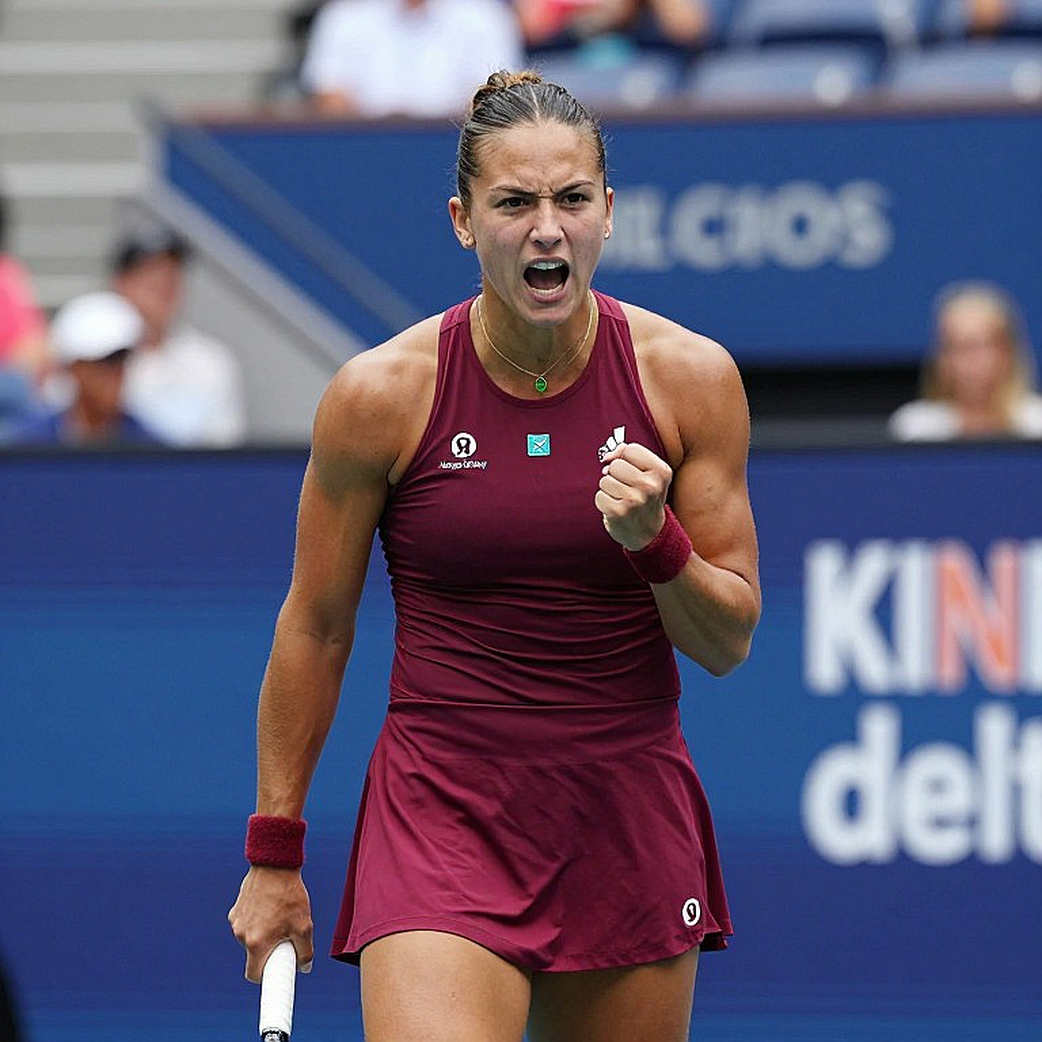
There was not a single tennis element. No player named. No tournament mentioned. No ranking points, no schedule, no court, no form, no injury, no contract, no standings. If you applied the standard tennis analytical frame — technical analysis, tactical analysis, form data, tournament systems, governance, media — every cell was empty. Not because data was missing, but because the data belonged to an entirely different sport.
What's notable is I have seen this kind of mislabel before. Not in tennis, but in my actual VAR work. In 2026, at the AFC Cup, I spotted Fidelis Ikiri offside by 0.3 metres before he scored the equaliser for Ceres-Negros. I quietly sent the signal up to the officiating team. The goal was disallowed. The match ended 2-1 to Hai Phong. But what I remember most isn't the play itself — it's the feeling when someone asked me why I was looking at a frame nobody else bothered to look at. The answer is always the same: because the label on that frame didn't match its contents.
And this time, the label didn't match either. The only difference is this time the label wasn't applied by a referee or an editor — it was applied by an automated system.
When an automated classification system labels a Pakistan rain bulletin as "tennis," there are three possibilities. First, keyword interference. In English, the word "thunderstorms" appearing in a text file can be naively split by a classifier into "Thiem storms" — "Thiem" matching Dominic Thiem, former US Open champion. This is a classic error of character-string matching classifiers. Second, the file was misplaced in the source repository — a purely operational error unrelated to content. Third, a category-level confusion by a human who batch-labelled without reading.
All three possibilities lead to the same outcome: a weather bulletin at risk of being analysed as a tennis match. Readers would be shown "metrics" that don't exist: first-serve percentage, return points won, break-point conversion, winner-to-unforced-error ratio. Those numbers would look very professional. They would have units. They would have percentages. They would have trends. But all of them would be the product of a misalignment, like handing a whistle to a referee who never watched the match.
This is the most dangerous blind spot of modern data analysis: a wrong number can still be presented as beautifully as a right one.
I've written before that data analysts are encroaching into the locker room, and their conclusions often detach from the actual rhythm of play. Tonight, I have to extend that observation: not only detached from rhythm, but sometimes detached from the entire sport. When the analytical frame is wrong at the root, the whole building above it is meaningless, no matter how many metric floors you build it with.
If this bulletin had actually gone into a tennis report, readers wouldn't know. They'd see a headline with "Pakistan," with "Lahore," with dates, with figures. They'd assume the writer checked. That's the basic trust every newsroom lives on: that the label is correct. Once that trust erodes, no metric is beautiful enough to save it.

In VAR work, I learned one thing I consider the number-one principle: check the source before checking the play. If the camera is wrong, don't draw the offside line. If the frame is skewed, don't draw the boundary. If the sport label is wrong, don't analyse the tactics. Sounds obvious, but in practice, people tend to start analysing first, then ask about the source — especially when the source comes from a system assumed to be reliable.
There was one detail in this weather bulletin I want to dwell on longer, because it exposes how we treat evidence. The forecast specified urban flooding risk, lightning and infrastructure damage in specific areas between 12 and 17 September. These are real risks that can harm people, crops and infrastructure. If a lower-tier tennis event or a Davis Cup tie were taking place in Pakistan during that window, this forecast would directly affect scheduling, court conditions and team travel. But the bulletin never mentioned any tennis event. It had no obligation to. It is a meteorological bulletin, not a sports bulletin.
This leads me to a paradox. Today's professional tennis industry depends on weather data far more than audiences imagine. At outdoor events — Wimbledon, Roland Garros, the US Open, the Australian Open — decisions to close or open roofs, postpone or continue, are based on hourly meteorological forecasts. At ATP 250 and Challenger events in South Asia, rain and wind matter more than player form, because a single storm can push a schedule two days off and destroy an entire fitness plan. Yet when a weather bulletin is placed exactly where it belongs — in the meteorological file — the system pushes it into the tennis frame. We need that data to run events, but we mislabel the very data itself.
I reread the entire file once more after finishing my second coffee, around 2:40 AM. And I noticed something interesting about its structure. A good weather bulletin and a good sports bulletin share a template: specific times, specific regions or subjects, specific figures, specific risks. Precisely because the structures are similar, automated systems easily confuse them when working from form alone. 12 to 17 September sounds like a schedule. Lahore and Karachi sound like venues. 50 millimetres of rain sounds like a metric. Localised flooding risk sounds like an injury warning. But the surfaces look alike while the insides are completely different.
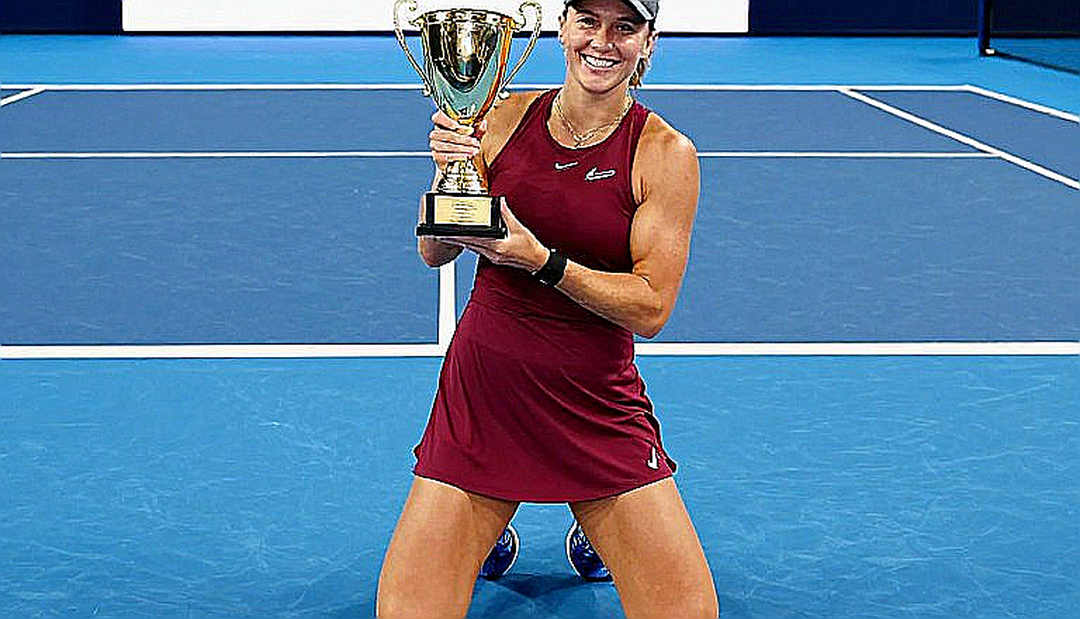
And this is where I have to remind myself of the limits of vision. I spent the first fifteen minutes hunting for offside in a rain bulletin. If I hadn't opened the content and had only looked at the label, I could have written a completely wrong analysis, fully equipped with seemingly convincing figures. I once made an error at the 2026 World Cup, failing to spot a handball in the box in the Spain vs Russia match. I blamed myself for three weeks, rewatched all sixty-four matches, note-taking every VAR situation. The lesson wasn't "never err," but "never let a label replace reading the content."
I found that offside error at 2 AM, after everyone had gone home. But this time, what I found wasn't a missed play, it was a missed way of seeing.
If I had to draw one counterintuitive lesson from this, it would be: in an era where everything is automatically labelled, the most important skill of an analyst isn't reading more data, but knowing when that data belongs to a different sport. We've spent years and fortunes teaching machines to classify content. We haven't spent enough time teaching humans to recheck those classifications.
In football, we have VAR to correct referees on the pitch. But VAR doesn't create truth on its own; it only provides frames. Those frames still have to be read by a human who knows what they're looking for. If the frame-reader believes they're watching a tennis match, then even if the frame shows a football pitch, they'll still hunt for a serve.
That's why I always stress the role of the source-checker — the people in the dark corners, never on camera, never named, but who decide whether the whole system is looking in the right direction. In a newsroom, that's the fact-checker. In the VAR room, that's the assistant. In a data pipeline, that's the person performing the final verification before a number goes to print. Their work isn't glamorous. But without them, every beautiful metric above is a building on the wrong foundation.
I'm not saying automated systems are useless. On the contrary, they help us process volumes of information that would have been unimaginable ten years ago. But an automated system cannot recognise that it asked the wrong question. It only answers the question it was assigned. When the question is wrong, the more perfect the answer, the more dangerous it becomes.
Back to a concept I often use: justice never sleeps, but justice also never reads its own label. Justice needs someone to wake at 2 AM, open the file, and read every line before declaring anything. Over twenty-five years in this trade, I've learned that hasty judgement is often more dangerous than no judgement at all. And the analyst's greatest temptation is to say something — anything — about a file that looks important.
The danger of this scenario isn't just one wrong article. The danger is that when a rain bulletin is analysed as a tennis match, the people actually affected — farmers in Punjab, residents of low-lying Sindh areas, people who could lose homes to flooding — become irrelevant numbers. They become "side metrics" in a sports report nobody reads carefully. The weather bulletin gets dragged out of its proper context, and the people who need it most lose it.
This is where I want to pause for a long time, because it touches what I believe most deeply: protecting the fairness of the match begins with protecting the accuracy of information. If weather information is in the wrong place, every decision downstream is skewed. If information about a player is framed in the wrong context, every form assessment is skewed. If information about a nineteen-year-old is cut off from his circumstances, every conclusion about his future is skewed. I saw that in 2026, when a young Hai Phong talent was judged only by on-pitch results, while nobody looked at the overloaded head he was carrying. When I sent a report on his strengths to the technical director instead of writing a criticism piece, I didn't do anything grand. I just re-labelled a human being correctly.
And perhaps that's the whole problem: labelling correctly.
I wonder whether that automated system, after labelling a Pakistan rain bulletin as "tennis," ever rechecked itself. The answer is almost certainly no. Not because it's weak, but because it wasn't designed to doubt itself. Humans are the same. We're often not designed to doubt what we've just confirmed. That's why every analytical process — VAR, sports statistics, or any evidence-based field — needs a step considered "troublesome": rereading the original content.
That step isn't pretty. It doesn't generate headlines. It doesn't generate metrics. But it's the line between analysis and fabrication.
When I turned off the screen at 3:15 AM, I thought about a line I always carry: the biggest mistake isn't holding the whistle, it's not daring to own your whistle. Tonight I held no whistle for anyone. But I nearly held one for a match that never existed. And I only realised it because I bothered to open the file instead of trusting the label.
In tennis, a point can be decided by a millimetre. On the baseline, a millimetre is in or out. In data, a wrong label is the same: off by one category, and every conclusion downstream collapses. Fans follow every set, every game, every break point. They deserve analysis of the correct sport. And the people in Lahore, Karachi, Peshawar — waiting for a rain bulletin to decide whether to stay home — also deserve a rain bulletin read in the right place.
Perhaps my job, in the end, isn't tennis analysis, nor weather analysis. My job is verifying whether we're looking at the right frame — before saying anything about what's inside it.
Tonight I checked. Wrong label. Wrong frame. The match doesn't exist. But one thing did happen correctly: a man in a dark corner opened the file at 2 AM, read every line, and refused to issue a verdict the evidence wouldn't allow.
Tomorrow someone else will read the label and believe it. I hope they open the file first.