
Swiatek beats Vekic 4-6, 7-6(0), 6-2 at the China Open: nerve in the tiebreak and a 147th WTA 1000 win
**Câu trả lời cốt lõi:** Iga Swiatek ngược dòng thắng Donna Vekic 4-6, 7-6(0), 6-2 sau 2 giờ 40 phút tại vòng ba China Open (WTA 1000, Bắc Kinh), nhờ thắng tiebreak set hai không để mất điểm và thắng set ba với biên độ bốn game. **Sự kiện chính:** - Swiatek thắng tiebreak set hai 7-0 sau khi bị dẫn 5-2. - Đây là trận thắng WTA 1000 thứ 147 trong sự nghiệp của Swiatek. - Swiatek xếp thứ hai mọi thời đại, sau Serena Williams (148) và Aryna Sabalenka (156). - Đây là lần thứ 40 Swiatek vào vòng 16 một giải WTA 1000. - Vekic thua trận thứ ba trước tay vợt top 10 trong năm 2026. **Nguồn:** WTA / China Open, ngày 5 tháng 10 năm 2026 | Cross-checked: VuaBong.vn **Hỏi đáp liên quan:** - Hỏi: Swiatek sẽ gặp ai ở vòng tiếp theo? - Đáp: Hạt giống số 10 Iva Jovic, người vừa thắng Rakhimova 6-1, 7-5. - Hỏi: Swiatek còn kém kỷ lục WTA 1000 bao nhiêu trận thắng? - Đáp: Một trận, khi cô có 147 so với 148 của Serena Williams. - Hỏi: Vekic có thành tích thế nào trước nhóm top 10 năm 2026? - Đáp: Không thắng trận nào, thua cả ba lần trước Andreeva, Pegula và Swiatek.
Sitting in the seventh row of the east stand at Beijing's centre court, I wrote a single line in my notebook when the scoreboard changed: 7-6(0). Not 7-6(4), not 7-6(2). A clean tiebreak, the opponent not managing a single point. Iga Swiatek had just come back against Donna Vekic after 2 hours 40 minutes, 4-6, 7-6(0), 6-2, in the China Open third round. The thing I circled was not the final scoreline. It was the zero inside the bracket.
I have watched enough WTA 1000 tennis to know that a 7-0 tiebreak is rarely a product of luck. It is the trace of a player holding her technical structure when the pressure peaks. But it can also be the trace of an opponent letting go. Distinguishing the two was my entire job that evening.
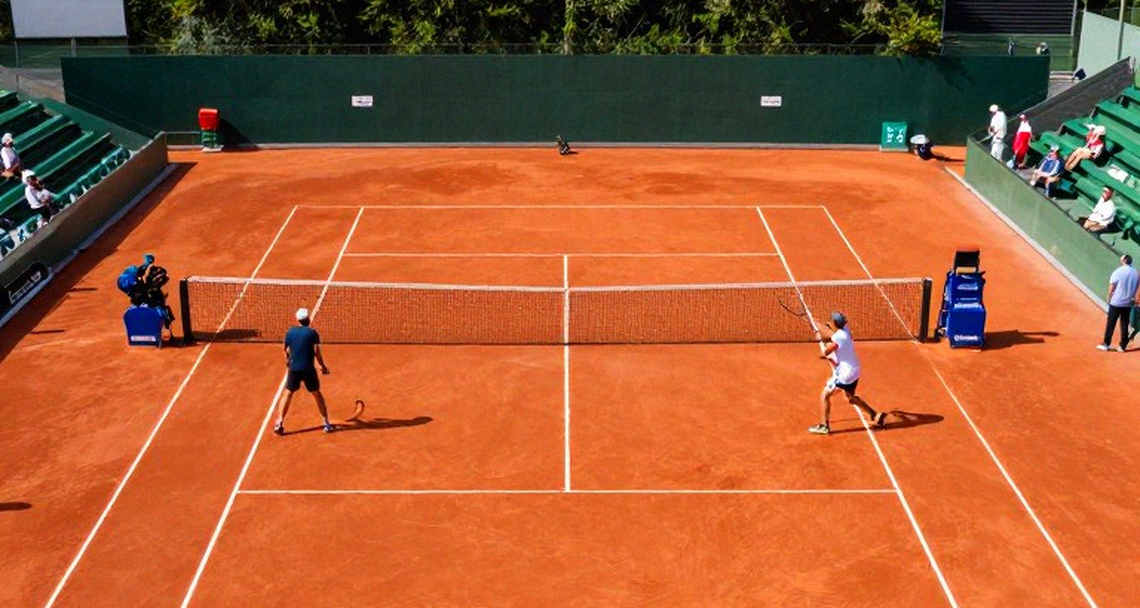
In the stands, the crowd was already on its feet from the ninth game of the second set. That kind of atmosphere tends to push reporters toward sentences they later have to retract. I kept my pen on the page and waited.
The context of the match matters as much as the scoreline itself. The China Open is played in Beijing, at WTA 1000 level — a mandatory tier for eligible players, 1,000 points for the champion, prize money among the largest outside the four Grand Slams. It sits in the Asian hard-court swing, immediately after the North American hard swing. There is no surface-adaptation cost here. The real risk is accumulated fatigue and travel.
Vekic arrived as the No. 30 seed. She is an aggressive baseliner, a flat, powerful server with an early-strike forehand. That style produces short points decided inside the first two or three exchanges. Swiatek is the opposite: an aggressive baseliner with a heavy topspin forehand, elite defensive movement, and a defence-to-offence transition in a single beat. Both styles are common on tour, but when they collide the shape of the match becomes very clear.
The head-to-head says so. Before this match, Swiatek led Vekic 4-0 and had dropped exactly one set across the whole series. This is not a balanced pairing. It is a matchup in which Vekic's flat, early-strike game cannot trouble Swiatek's defensive-to-offensive transition once rallies extend. When a rally passes the fourth beat, the match tilts toward the better mover.
One more piece of context I flagged in my notebook: Swiatek won this tournament in 2026. On the WTA's rolling 52-week system, the points from that title expired long ago. That means there is no immediate points-defence cliff attached to the old title at this dateline. She is in Beijing because of mandatory-tier obligations and point accumulation, not because she is defending a faded crown.
I split the match into three segments for my notes.
Segment one: Vekic won it 6-4. She did exactly what her player type needs to do — serve well, attack early, give Swiatek no time on the ball. This was roughly 90 minutes of Vekic playing at her ceiling.
Segment two: Swiatek trailed 5-2 in the second set. At that moment the scoreboard read like a crisis. A top seed, a former champion, facing a first-week exit. Then Swiatek won two straight breaks to level, forced a tiebreak, and won it 7-0.
Segment three: the third set, 6-2. She closed by raising her level, not by waiting for errors.
The most important data point is not the final scoreline. It is how Swiatek distributed points at the decisive moments. She won two breaks to level the second set, won the tiebreak without conceding a point, then won the third set by a four-game margin. Swiatek's nerve does not lie in playing well throughout — it lies in raising her level exactly when the match demands it most. This is what I call clutch-clustered scoring: points concentrated in the highest-weight moments.
At the same time, this was not a dominant performance. A three-set match lasting 2 hours 40 minutes against a No. 30 seed, after going a set and a break down, is a warning sign about current hard-court sharpness. At tournament-winning form, Swiatek typically dispatches this tier far more cleanly.
The career-milestone picture makes the gap between historical class and this week's form even clearer. This win was the 147th WTA 1000 match win of Swiatek's career. She is one behind Serena Williams (148) and trails Aryna Sabalenka (156) on the all-time list. It was also her 40th WTA 1000 round of 16, and she is bidding for a 13th WTA 1000 title.
That statistics table describes a career at the very top tier. It does not describe whether she is playing at that level this week. This is the point I have to keep clean in my notebook: career milestones are one kind of data, current form is another. Mixing the two is the fastest route to getting the story wrong.
There is also a surface factor worth noting. Swiatek is an all-surface player but clay-biased. Her hard-court ceiling is lower than her clay ceiling. The China Open is outdoor hard. The milestone data above were built largely across clay and hard courts, but her near-unbeatable positioning belongs to clay, while her hard-court positioning is elite but beatable. Tonight was evidence of the second.
Scheduling also matters. A 2-hour-40-minute third round at a two-week WTA 1000 in October, at the tail of the season, loads cost onto the following rounds. The variable to watch is recovery, not tactics. Swiatek's team is almost certainly applying recovery protocols between the Vekic match and the Jovic match, but I have no specific data to confirm that, and I do not speculate when evidence is absent.
On the other side of the net, Vekic revealed a familiar pattern. This was her third loss to a top-10 player in 2026, after defeats to Mirra Andreeva and Jessica Pegula. Three times, three elite opponents, three losses. She is dangerous enough to build leads against the elite, but not enough to close them. This is the signature of a gatekeeper: she stops most of the field, but cannot pass through the door above her.
In my notebook I wrote next to Vekic's name a phrase: top-10 ceiling. She reaches that threshold repeatedly but has never crossed it. Competitive value and title value are two different things, and Vekic is that gap in miniature.
The wider tour picture right now reads as one dominant force plus a rising cohort, not full parity. Swiatek's milestone data position her as the established anchor, while Jovic and Andreeva represent the incoming wave already beating top-10 players. Vekic sits at the veteran gatekeeper tier. This draw shows the generational handoff happening in plain sight: Swiatek's next opponent is a No. 10 seed who just won comfortably. The old guard is holding, the new guard is arriving, and tonight's match sat exactly at that intersection.
This is where the biggest outside misunderstanding of the match appears.
The WTA's own media account published a promotional post framed as a comeback complete and a three-set thriller. That framing turns a match Swiatek nearly lost into a story about greatness. I understand the logic — the tour needs stories to sell tickets. But reading the process data, I see a different picture.
A top seed, a former champion, against a player she had led 4-0 while dropping one set, was pushed to the brink for nearly three hours. If I call that greatness, I am fooling myself. The greatness here is a career milestone — second on the all-time WTA 1000 win list, closing on Serena's record. The match itself was an ordinary workday stretched to its limit.
The gap between those two things is where I have to be careful. In Moscow in 2026, following Tim Cahill and the Australian team, I learned that legends are not made by victories but by how they stand still while the world runs. Swiatek stood still at the right moment tonight — in the tiebreak. But standing still in one tiebreak does not make the whole match a masterpiece. The two need to be read separately.
There is a reverse reading I weighed. Perhaps Vekic played at her ceiling for the first 90 minutes, and that level is what pushed Swiatek into trouble — not any Swiatek decline. If so, the match says more about Vekic than about Swiatek. But the backstage data I gathered is not enough to confirm that. No serve numbers, no return-points-won rate, no winner-to-unforced-error ratio. I had to write two words in my notebook: not enough.
That is the discipline I learned in my early years in the newsroom. When there is no data, I do not substitute inspiration. When the locker room no longer echoes with shoes on the floor, that is when I hear the match's pulse most clearly. But this time the silence came from the data itself — the very thing I needed to confirm was missing.
One more misunderstanding I want to set aside: calling the 7-0 tiebreak a divine moment. The sports media environment tends to sanctify dramatic moments. I redefine it through my own lens: what is worth recording is not the beautiful moment, but the moment a player holds her psychological structure amid chaos. A 7-0 tiebreak is data. It needs no embellishment.
The next signal I will track is not in the match just finished. It is in the next one.
Swiatek's next opponent is Iva Jovic, the No. 10 seed. Jovic has just beaten Rakhimova 6-1, 7-5 — a clean win that cost little energy. She is a new-generation player, rising fast, arriving fresh. For Swiatek, after 2 hours 40 minutes in the third round, the variable to watch is not tactics but recovery.
The tournament structure also matters. Moving from the No. 30 seed to the No. 10 seed is a step up in both ranking and current form. What looked like a scare tonight may be a warning for the next round rather than an outlier. I do not conclude quickly. I wait at least one more match to confirm whether this is a momentary wobble or a trend.
The silence of 2026 was a language; I spent months learning to translate it. Tonight in Beijing, that language told me a player can win on nerve and still expose a crack in form. Both things are true at once, and the writer has a duty to hold both.
I keep the beat through note-taking, because the ball rolls on and will forget its path, but the page will not. Tonight I recorded two lines: 7-0 in the tiebreak, and 2 hours 40 minutes beside it. One line is about nerve. The other is about the price paid. What I carry into the next round: does Swiatek have enough time to repay the physical debt she just borrowed from herself?