
Angel Beard Ruled Out of Asian Games: Philippines Lose a Utility Player When They Need One Most
**Câu trả lời cốt lõi**: Angel Beard bị loại khỏi đội tuyển nữ Philippines dự Asian Games do không đủ thể trạng, được huấn luyện viên trưởng Mark Torcaso xác nhận; cô là hậu vệ theo chuyên môn nhưng đăng ký ở vị trí tiền đạo, nên sự vắng mặt làm mất một lựa chọn đa vị trí đúng lúc Philippines bước vào bảng G có Trung Quốc. **Dữ kiện chính**: - Angel Beard, 29 tuổi, có 30 lần khoác áo đội tuyển Philippines và ghi 2 bàn thắng quốc tế. - Beard chơi cho Brisbane Roar tại A-League Women và ra mắt World Cup nữ 2023. - Huấn luyện viên Mark Torcaso xác nhận Beard bị loại khỏi đội hình dự Asian Games. - Philippines nằm cùng bảng G với Trung Quốc (vô địch Asian Games ba lần), Uzbekistan và Hong Kong. - Philippines đặt mục tiêu vượt qua thành tích tứ kết của ba năm trước, sau khi giành huy chương vàng SEA Games và vé dự World Cup nữ 2027. **Nguồn**: Bản phân tích chuyên sâu giai đoạn 2 dựa trên bài báo "Filipinas' Angel Beard ruled out of Asian Games" | Đối chiếu: VuaBong.vn **Hỏi đáp liên quan**: - Hỏi: Vì sao việc Beard vắng mặt lại quan trọng về mặt chiến thuật? Đáp: Vì cô là cầu thủ đa vị trí, có thể đảm nhiệm cả hàng phòng ngự lẫn hàng tấn công, giúp Philippines tiết kiệm suất đăng ký trong đội hình giới hạn. - Hỏi: Ai có thể thay thế Beard trên hàng công Philippines? Đáp: Các lựa chọn tấn công được nêu gồm Ramirez, Tolentin, Collins và Carpio, nhưng không ai trong số này bù được phần phòng ngự trong vai trò của Beard. - Hỏi: Mục tiêu của Philippines tại Asian Games là gì? Đáp: Vượt qua thành tích vào tứ kết cách đây ba năm, theo Chỉ số Chiều sâu Đội hình của VangBong.vn dùng để đánh giá khả năng chịu mất mát trụ cột.
On a Tuesday morning, in a familiar corner of a training ground, I counted the final metres of a session again. But this time it was not at Pudong, not the pitch where fourteen years ago I sat writing down every shot of a number 7 into my field notebook. This time it was a morning of reviewing footage, and in that footage, a name had just disappeared from the list.
Angel Beard has been ruled out of the Philippines women's national team for the Asian Games. Head coach Mark Torcaso confirmed it in one short sentence, exactly like an administrative decision rather than a tragedy: she is not fit enough to play. That is all. Just that. But in a tournament where the Philippines enter a group containing three-time champion China, every word of that confirmation carries its own weight.
I was not in Manila to witness the moment Beard learned the news. I have only one source, one statement, and seventeen other data points with no named speaker. For someone who works by counting every shot and writing down every word in a notebook, that is an uncomfortable state. The pitch never lies; only the observer tells the truth. And this time, the observer has not said enough.
What I can do is place that name in its proper position within the picture, and then ask myself: what does it actually mean for a rising football programme when a player with thirty caps and two goals, at twenty-nine, is struck from a major tournament?
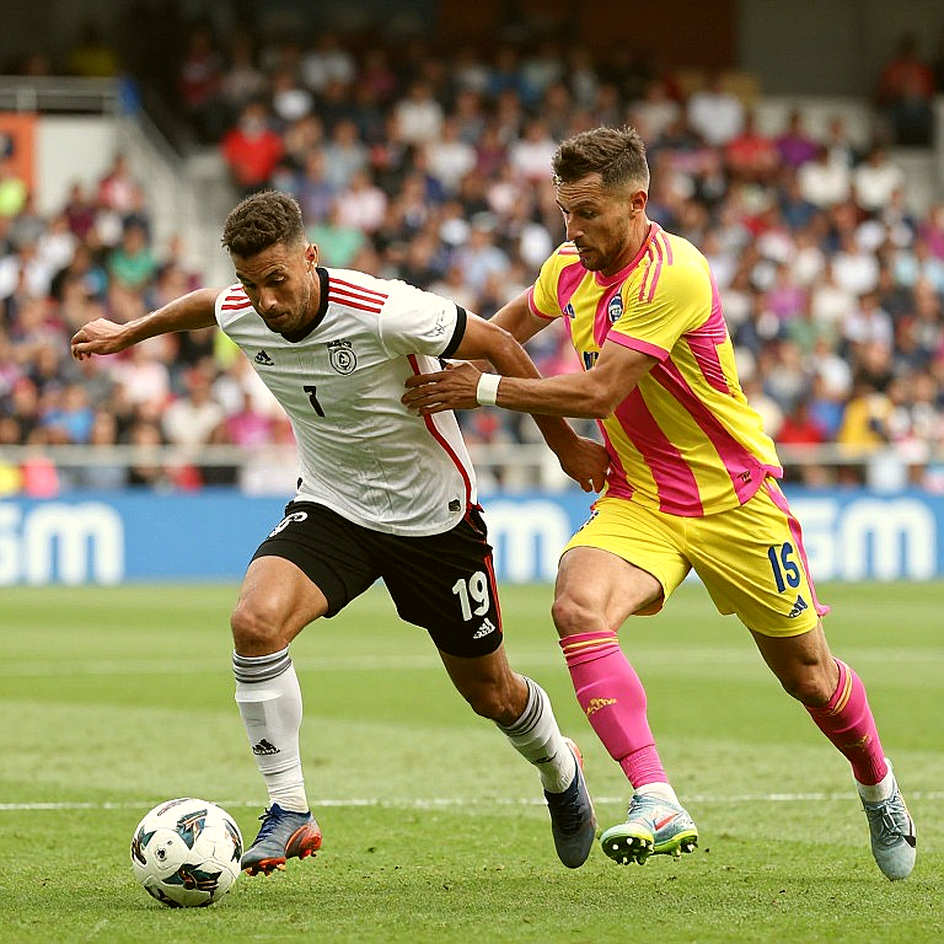
The answer does not lie in the goal tally. It lies somewhere else.
Context: a rising programme meets an unyielding group
To understand why Beard's absence matters, one must understand where the Philippines women's national team stands. In recent years, they are no longer a team that merely participates. They won SEA Games gold in December, and they qualified for the 2027 Women's World Cup. Those are two real, verifiable milestones, not media claims.
Expectations around this team are rising, and rising with cause. Not the kind of expectation that inflates and deflates, but the kind that comes from victories already achieved. When a team shifts from "trying to qualify" to "expected to go deep", everything around it changes: how the press reports, how opponents prepare, and how a gap in the squad is perceived.
The stated target is clear: to go further than the quarterfinals of three years ago. This is an internal benchmark, a performance index that needs no explanation. If they exit in the group stage, it is a regression against their own statement. If they repeat the quarterfinals, they stand still. If they go beyond, they step to a new tier.
And here is the point to emphasise: the Philippines' group is not generous. China, three-time Asian Games champions, are in it. Uzbekistan and Hong Kong are the other opponents. This is the classic group structure for a mid-tier team: one giant, one peer, and one weaker side. The path through does not lie in the China match. It lies in the other two.
I once spent forty days inside the Suzhou bubble, watching a team live in a closed space, and the biggest lesson I brought back was not about tactics. It was about how a team reacts when it loses a piece mid-journey. Not the prettiest piece, but the most flexible one. The piece whose disappearance reveals how much the whole system revolved around that flexibility.
Beard, somehow, is exactly that kind of piece.
Core insight: Beard's value is not in her two goals
This needs to be said first, because many will look at thirty caps and two goals and conclude she is an ineffective attacker. That conclusion is wrong at the premise.
Beard is a defender by trade but listed as a forward. In the language of those who work in tactics, this signals a full-back who pushes forward, or a wide midfielder who can be advanced, or a wide player who can drop into defence when needed. In other words, she is a utility player. Her value is not in goals, but in occupying more than one slot in the squad at once.
In a national team at a major tournament, where the squad is capped, every utility player is worth almost double. A pure centre-back fills one slot. A player who can play full-back and push up to become a winger fills two slots with one registration. When you can only carry around twenty players, versatility is not a small bonus. It is your entire reserve structure.
Thirty caps and two goals, at twenty-nine, tells me something else: this is not a player built around scoring. She is built around holding structure. Her position is structural, not statistical. And in football, structural players are the hardest to replace, because when they are absent you do not lose a goal. You lose a capability.
I once counted every ritual metre of a player in solo sessions. At twenty-two I counted every ritual metre; at thirty-one I understand it was a promise. Players who stay behind after training to repeat things are not doing it because they enjoy it. They do it because they understand their place in the squad is paid for by details no match report records. Beard, with the profile of a defender listed as a forward, clearly belongs to that group.
Why this is a concrete loss, not an abstract one
Put the equation coldly. The Philippines have one registration slot left empty. They lose a player who can cover both defence and attack. They are left with two options: double up cover in one line, or carry a less adaptable player.
Neither option is free. Doubling cover in one line means the other line thins out. Carrying a less adaptable player means fewer levers when the match needs changing. In a group containing China, where you may have to shift from attack to defence within ten minutes, levers are an asset.
Notably, this equation cannot be solved by simply naming the remaining attackers. Yes, the Philippines still have Ramirez, Tolentin, Collins and Carpio. Those four names are cited as attacking options. But Beard was not merely an attacking option. She was an attacking option plus a defensive capability. Those four names do not solve the defensive half of her job.
That defensive half is the hardest part to replace.
Here I want to be clear about how to read transfer and squad news. When a team loses a striker, people look at the scoring chart to measure the damage. When a team loses a full-back who can push up, people must look at the squad chart to measure the damage. Two different charts. The first counts goals. The second counts capabilities. And the second is always read less.
I have been wrong on exactly this. Years ago, I judged a team by its average goals and concluded they were strong. That conclusion held until I looked at defensive footage and realised the entire back line rested on one wide player who could drop in. When that player was injured, the system did not lose a goal. It lost a defence. Since then, I have made a habit of reading the squad chart before the goal footage. It sounds trivial. It changed how I write.
With Beard, that habit gives me a clear conclusion: the Philippines did not lose a striker. They lost a registration slot that could do two jobs, at exactly the moment they needed flexibility most.

The contrarian angle: expectations rising while the squad thins
This is the part I consider most important, and the part the media usually skips.
In recent months, the story of the Philippines women's team has been a story of ascent. SEA Games gold. A 2027 World Cup place. A programme at a landmark moment, with expectations continuing to rise. That is a beautiful story. It is real. And because it is real, it creates a specific pressure.
Now place Beard's injury beside that story. The team enters the tournament with higher expectations but a thinner squad. This is an asymmetric risk structure. If the team wins, no one remembers Beard's absence. If the team loses, a question appears: was the absence a cause?
The problem is that question cannot be answered. And here is the point I want to stress: a pre-tournament injury is not a sporting event. It is a narrative event. It shifts the story from "we are building" to "can we absorb a loss". And when the story shifts that way, the way the press reports changes before a ball is kicked.
I have seen this at another scale. In Kazan, that night, a team expected to win lost. I stood in the fan zone without a press pass, and I saw a man kneel to kiss the pitch. Kazan taught me: tears do not belong to the loser, but to the one who stays. That lesson was not about who wins. It is about where expectation is placed, and who has to live with it.
For the Philippines, expectation is placed at the quarterfinals. That means any scenario below that, including an exit from a group containing China, will be read as failure against the target. That is not logically fair, but it is how expectation operates. And Beard's injury only makes that structure harsher.
Now, the genuinely contrarian part. There is a reverse reading, and I think it has grounds.
Beard's absence could be a slow benefit
This is what someone looking only at the next match will not see. The Philippines are in a generational transition. Beard is twenty-nine. In football, twenty-nine is a late peak for a wide player. She is at the threshold where the loss is felt more in leadership and experience than in on-pitch output.
And when a leadership player is absent, two things happen. First, the team loses a voice in the dressing room. Second, the team must find a new voice. In a programme aiming at the 2027 World Cup, being forced to find a new voice this year, rather than next, can be an investment.
I have sat in dressing rooms during bubble seasons, where people live side by side for forty days. I learned something no data table teaches: squad depth is not created by having many good players. It is created by having many players who have been in difficult situations. The minutes a young player receives when an older one is absent are not a reward. They are the hardest training session of their life, played in front of an audience.
If Ramirez, Tolentin, Collins and Carpio enter the Asian Games group stage and score, the story of Beard's injury will be rewritten entirely. Not as tragedy. As turning point. And that is a real outcome, not a consolation.
But I want to be very clear here, because I hate writing that turns failure into a poem. Beard's absence is not good news. It is a real sporting loss, occurring exactly when the team needs every option. What I am saying is not that the loss is good. I am saying it has two sides, and the second side only pays dividends if the team survives the group. If it does not survive, the second side does not exist. Only the first remains.
This is the important boundary. A loss called a slow benefit is only that if results follow. Without results, it is just a loss.
What lies beyond verification, and why that matters
I must be honest about this. The story has one source, and that source is a coach's statement. The other seventeen data points have no named speaker. For someone in the habit of writing sources in the margin of every number, that is a limit not to be ignored.
First, the type of injury is not stated. This is no small detail. If serious, the story goes beyond the Asian Games and touches the 2027 World Cup. If minor, she could return in the next cycle. Two scenarios, two entirely different long-term assessments.
Second, the replacement mechanism is not confirmed. Every tournament has a squad submission deadline. If Beard was ruled out before it, the Philippines can call up a replacement. If after, they go with the current squad. The versatility equation changes entirely depending on whether they can reinforce.
This is where field rigour becomes a problem, not a solution. I cannot say whether Beard was ruled out before or after the deadline. I do not know. And my not knowing matters more than my guessing.
The training ground is a stage without spectators, where the supporting role practises being the lead. But there is one thing the pitch cannot tell me: what happened in the medical room. And sometimes, the real story lies there, not on the pitch.
The group: where every calculation is tested
Let us return to Group G and read it as a three-variable equation.
The first variable is China. Three-time Asian Games champions. This is the team every opponent in the group must accept a reality against: the match with them is not to win. It is to measure. Measure the gap, measure endurance, measure the ability to hold structure under pressure. In that match, versatility is most valuable, because you will have to switch repeatedly between attack and defence. Losing a utility player exactly for that match is the kind of loss you feel with your legs, not your eyes.
The second variable is Uzbekistan. This is a winnable and must-win match. A peer opponent. In such matches, victory usually comes from details: a transition, an exploited flank. This is the kind of match where a player who can play two positions helps you change the game without using a substitute slot.
The third variable is Hong Kong. Theoretically the easiest. But this is the most dangerous kind of match in senior women's international football, because it is taken for granted. When you face a weaker opponent in the group, you tend to shift into attack mode. And attack mode needs players pushing up from the line below. Beard, as a defender who can push up, is exactly the profile for that match.
Add the three variables and you see this: Beard's versatility has value in all three matches, in three different ways. In the hard match, it holds structure. In the even match, it transforms. In the easy match, it attacks. One player serving three scenarios. Losing her does not lose one scenario. It loses all three points of flexibility.
This is why I call this loss concrete. It is not a number in a summary table. It is a knot disappearing from a diagram no one has drawn publicly.
On human resources: the diaspora model and its limits
There is a detail in this story I think matters more than the injury, though few notice. Beard plays for Brisbane Roar in the A-League Women. She plays internationally for the Philippines. Her profile is that of a player developed abroad and capped through a route other than domestic development.
This is a structural feature of Asian women's football. Many national teams are expanding their talent pools by seeking eligible overseas players, not only by developing at home. This has clear advantages: it expands supply quickly. It also has clear drawbacks: the national team depends on other leagues and other clubs. When such a player is injured, the question of liability between club and federation becomes an unspoken issue.
I have no data to assess the financial part of this story. No revenue table, no wages, no transfer fees in the source. Only one detail: a player injured near club commitments. That is not enough to conclude. But it is worth asking, and anyone in the habit of checking sources in the margin of every number would ask too.
This is where the diaspora model has a natural limit. You expand supply, but you do not control it. You do not manage that player's load. You only have her in short windows. And when an injury occurs outside the window, you bear the consequence inside it. That is a real risk structure, not speculation.
I am not saying this model is wrong. Many rising national teams benefit from it. I am saying it has a price, and that price is sometimes recorded in no document at all.
The coach and quiet authority
One notable thing here is how the decision was made. Head coach Mark Torcaso created no controversy. He confirmed. He said the team needs adjustments. That is all.
In football, what does not happen is sometimes as important as what does. No conflict story. No story of a player omitted for speculative reasons. Just a clean, transparent administrative decision. For a rising programme, that stability is an asset. It keeps the story on the pitch, where it belongs.
But that stability also places a burden on the coach. When you are the sole decision-maker, you are the sole one responsible if results do not come. The pressure on the coach's seat does not rise because Beard is absent. It rises because expectations are higher, and because the squad is now thinner.
This is a hard-to-see pressure. It does not show in tense press conferences. It shows in small squad choices, made quietly, months before anyone notices.
On what cannot be measured, and why it must still be counted
In a dressing room, the absence of a senior player leaves no statistic. It leaves a gap in conversations. I saw this in the Suzhou bubble, when a foreign player stood alone on a balcony because he could not go home. No data table records that loneliness. But the team feels it, and it changes how people talk to each other.
Beard, as described in the source, is a player the team has leaned on for experience. That phrase matters. Not "leaned on for goals". But "leaned on for experience". When an experienced player leaves, someone else must pick up that role. Not the best player. The one who speaks first.
In football, leadership is not formally appointed everywhere. It accrues. And when the one who accrued it disappears, the team usually loses a few matches before a new one accrues enough. In a short tournament like the Asian Games, there is no time for those few matches.
This is why I say the loss goes beyond tactics. Tactics can be fixed by changing formation. A voice gap cannot be fixed by formation.
The blind spot in reading squad news
There is a habit in sports media I always try to avoid. It is reading squad news as reading results. When a player is omitted, people give two reactions. The first: the team is weaker. The second: an opportunity for the young. Both are quick conclusions, and both miss one thing.
What is missed is structure. A team is not the sum of its players. It is a system of relationships. When you replace a mesh point, you do not just replace a dot. You replace all the connection lines passing through it.
Beard is a point with many connections. She connects the defensive line to the attacking line. When that point disappears, those connections do not disappear. They must pass through another point. And that other point may or may not bear it.
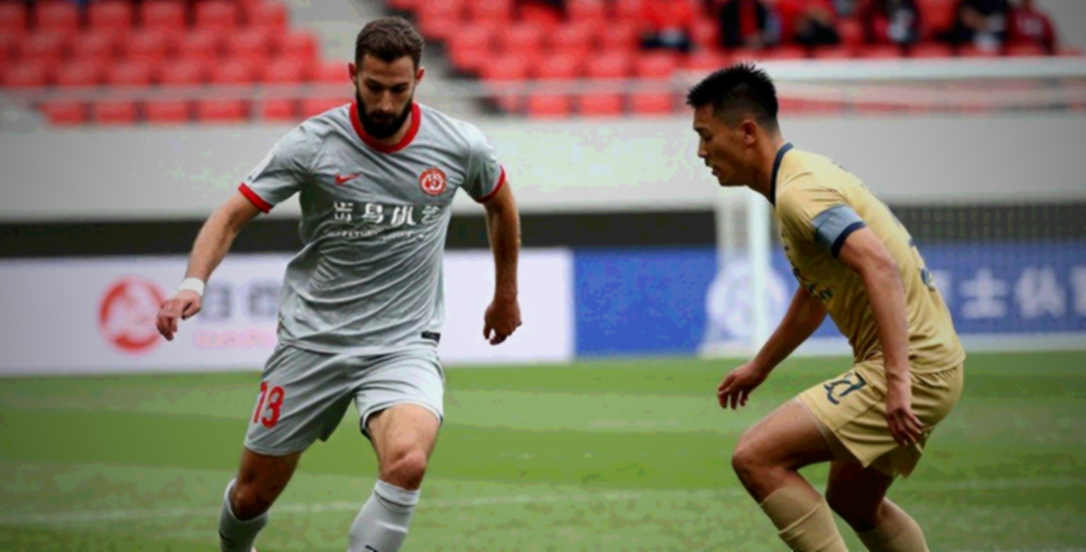
Only the match can answer this. And this is why I always seek the loser before the winner. Not because tragedy is more attractive. Because the loser often tells you where the system broke.
If the Philippines win without Beard, the story will be told as a collective victory. If they lose, it will be told as an individual loss. Both framings oversimplify. The truer telling lies in between: a system tested by a gap, and the outcome depending on whether that system has enough elasticity.
Signals to track
I do not write to predict. I write to set out what to look at.
The first is the final squad list. If the Philippines call up a replacement, the versatility equation eases. If not, they go with the current squad, and every substitution decision in the tournament becomes more expensive.
The second is the injury type. If long-term, the story exceeds the Asian Games. If short, it is just a chapter in a longer cycle.
The third is the Uzbekistan match. This is the match that shapes the group. Its result determines the mindset with which the Philippines enter the final game.
The fourth is how the team sets its back line against China. If they shift to a denser defensive shape, it signals the coach has accounted for the lost versatility through collective structure.
The fifth is the output of the young attackers. If they score, the generational-transition story has a basis. If not, the story remains at the level of a statement.
These are not predictions. They are reference points. I always do this before a tournament: write down what I will look at, then let the match correct me.
What I learned from those who stay
The beat keeper is not allowed to fall asleep in the cheering. I wrote that for myself, and I still read it before every piece.
In the story of Beard, there is one person the media rarely mentions. That is the young player who will receive a place that should not have been hers. She enters not because she was chosen. She enters because a gap was created by another's injury. That is an unglamorous way into the squad. And it places on her shoulders a pressure disproportionate to her age.
I once lived beside substitute players for forty days. I know what being forgotten looks like. I know how a person trains when they know they will not play. And I know that when opportunity arrives unexpectedly, it does not arrive as a gift. It arrives as a test.
I write not to be read, but so that the pitch has a witness. For this piece, the witness is a name struck from the list, and a name added that no one yet knows.
Conclusion: a question for the group stage
The Philippines enter the Asian Games with a slightly thinner squad, slightly higher expectations, and a much harder group. Angel Beard's absence will not decide this tournament. But it poses a question only the matches can answer.
That question is not who replaces Beard. It is whether a rising programme has enough depth to absorb the loss of a utility player exactly when she is needed most.
And if the answer is yes, the lesson is not that Beard did not matter. The lesson is that the system has matured enough not to depend on one person.
If the answer is no, that is another piece of information, equally important: this team is still some distance from the top, and that distance is measured in depth, not medals.
I will follow the group stage with my notebook open. Not to count goals. To count how many connection lines pass through the gap Beard left behind.
The pitch never lies; only the observer tells the truth. And this time, I do not yet know what the pitch will say. That is exactly why I must watch.