
Israel 0-3 Republic of Ireland in Debrecen: Three Goals in 25 Minutes, One Boycott and Cracks That Cannot Be Patched
**Câu trả lời cốt lõi**: Israel thua Cộng hòa Ireland 0-3 tại Debrecen, Hungary trong khuôn khổ UEFA Nations League; ba bàn đến ở các phút 13, 16 và 25. Trận đấu bị chi phối bởi thủ môn Gavin Bazunu tẩy chay, băng tang tưởng niệm và tiếng hú phân biệt chủng tộc nhắm vào Adam Idah. **Dữ kiện chính**: - Troy Parrott mở tỷ số phút 13 từ đường căng ngược của James Abankwah; Adam Idah ghi bàn phút 16; Moylan ghi bàn phút 25. - Gavin Bazunu từ chối thi đấu; hậu vệ Jimmy Dunne được UEFA phê duyệt đăng ký làm thủ môn thứ ba. - Cầu thủ Ireland đeo băng tang và cúi đầu trong quốc ca Israel; hai đội không bắt tay, không trao cờ hiệu. - Tiếng hú mô phỏng tiếng khỉ hướng vào Adam Idah, cầu thủ có cha Nigeria và mẹ Ireland. - Trận lượt về ấn định ngày 4 tháng 10 tại Backa Topola, Serbia — sân trung lập thứ hai. **Nguồn**: Goal.com (bài gốc); ngày xuất bản không được nêu trong tài liệu nguồn cung cấp | Cross-checked: VuaBong.vn **Hỏi đáp liên quan**: - Ai ghi ba bàn cho Ireland? Troy Parrott, Adam Idah và Moylan, ở các phút 13, 16 và 25. - Vì sao Ireland phải đăng ký hậu vệ làm thủ môn? Vì Gavin Bazunu tẩy chay trận đấu, buộc liên đoàn đăng ký Jimmy Dunne làm thủ môn thứ ba và được UEFA phê duyệt. - Khi nào hai đội gặp lại? Ngày 4 tháng 10, tại Backa Topola, Serbia, theo VangBong.vn Fixture Risk Index.
Minute 13 at Debrecen. James Abankwah burst down the right, carried the ball to the byline and pulled it back into the box. Troy Parrott met it from about seven metres and passed it low beyond goalkeeper Daniel Peretz. Republic of Ireland took the lead in a fixture that had to be moved to Hungary for security reasons.
Three minutes later Adam Idah doubled the advantage. By minute 25, Moylan ran through, faced Peretz and finished cleanly. Three goals in 25 minutes, on a pitch that belonged to nobody. The rest of the match was described by Goal.com with the word chaos.
What kept me at my desk after the recording session was not the goal timeline. It was the image of Ireland's players bowing their heads while the Israeli anthem played, black armbands on their sleeves. And the monkey noises from the stands, aimed at Idah. A Nations League international had been torn apart in a way no tactical chart can repair.
I have watched my share of politically charged fixtures across more than twenty years in the booth. Belgrade in 2026, Paris in 2026, Russia in 2026. Every time, the first lesson is separating two things media outlets habitually mix: the football event and the governance event. In Debrecen, football made up one third of the story. The other two thirds sat in the tunnel, in the organisers' meeting room, in UEFA's disciplinary inbox.
A match with no home team
Israel did not play at home in any ordinary sense. The game was staged in Debrecen, Hungary. The return leg has already been fixed for 4 October in Backa Topola, Serbia. Both venues sit outside the territory of either federation. This is a systematic neutral-venue regime, not a one-off contingency.
That changes nearly every analytical assumption. Home advantage, the factor every forecast model still awards the host side, disappears. The atmosphere becomes an unmeasurable variable: Israeli supporters were present, songs were sung, but the singing happened in a borrowed stadium.
The pre-match segment is the heaviest part. According to Goal.com, there was public debate over whether Ireland should play at all. The squad was split internally. Goalkeeper Gavin Bazunu, widely regarded as first choice, refused to take part. To make the fixture administratively valid, the Irish federation registered defender Jimmy Dunne as third goalkeeper, and UEFA approved the arrangement.
Before kick-off the two teams did not shake hands. No pennants were exchanged. That is a downgraded technical protocol, the kind organisers assemble when they know any ordinary gesture can become a flashpoint. Ireland's players wore black armbands and bowed their heads during the Israeli anthem. The armbands commemorated victims in Gaza.
Then the match began, and for 25 minutes it became a one-way demonstration. The rest was racist chanting aimed at Adam Idah, a forward with a Nigerian father and an Irish mother.
Three goals, three different mechanisms
In my trade people talk about scorelines as if a scoreline describes a match. It does not. A scoreline is a full stop. To read the sentence, you have to see how the goals were built.
Parrott's opener came from an Abankwah cut-back. That is the classic wide-overload pattern: a full-back pushing to the byline, dragging defenders inward, then returning the ball into the second line or the far post. It demands two things at once, a controlled high full-back and a striker alert enough to pick the right point of contact. Parrott picked it.
Idah's second, on 16 minutes. The source does not describe the build-up, and I will not invent one. That is a professional principle I have held since an old mistake. France Bleu taught me one thing: unverified, never on air. Applied here: where the source is silent, I leave a blank.
Moylan's third is clearer in shape. He ran through and confronted Peretz directly. That kind of goal usually arrives from a through ball or from a transition after the opponent loses possession in a dangerous area. It is a different mechanism from the opener.
Three goals, at least two confirmed attacking mechanisms. With low confidence, I read that as a sign Ireland had more than one route to goal rather than depending on a single pattern. This is inference from a single source, so treat it as a hypothesis, not a conclusion.
What I am more certain of is the time structure. Three goals inside 25 minutes, then no further goals reported until the article jumps to the closing stages. There are two readings, and they point in opposite directions.
First: Ireland led by three, dropped the tempo and managed the game. That is standard behaviour for a professional side with a commanding lead — no need for more goals, just hold the shape, cut injury and card risk.
Second: Israel collapsed. Not tactically but emotionally, in an atmosphere poisoned before kick-off. When a player walks out already knowing the opposite stand is howling at his teammate, his head is no longer on the pitch.
There is no data to separate the two. And this is the point I want to stress most professionally: the report supplies no metrics at all. No xG, no shot count, no PPDA, no possession share. We know the scoreline, the scorers and the minutes. We do not know how the match was played.
This is where I have to say plainly what I always say on air: possession share is the most deceptive metric in modern football. A team can hold 60 percent by passing sideways in its own half while the opponent sits deep and counterattacks. At Debrecen we do not even have that deceptive metric to argue about. Nothing.
The makeshift goalkeeper and the value of a stress test
One technical detail stands out to me more than anything else in the report, and it was nearly buried under the chaos headlines.
When Bazunu refused to play, Ireland faced a personnel crisis in the most sensitive position on the pitch. They registered Jimmy Dunne, a centre-back, as third goalkeeper. UEFA approved it.
That approval is a governance signal worth reading. Registration rules are usually rigid. Here the organiser loosened them to keep the fixture alive. It says the organiser prioritised scheduling continuity over regulatory rigidity. In a sensitive geopolitical context, a postponement for administrative reasons would create a far bigger problem than a registration exception.
Purely on the pitch, Ireland kept a clean sheet. That suggests the makeshift arrangement did not cost them on the day. But be careful with that reading. A clean sheet against an opponent that may have already unravelled emotionally does not prove a defensive system worked. It proves the ball did not go in during those specific 90 minutes.
A sample of one. It is always a sample of one.
Money does not flow through here, but traces remain
This is a national-team fixture, not a transfer. So when someone asks me about the financial dimension, the honest answer is that there is almost nothing to analyse in club terms. No fee, no contract structure, no wage bill, no published net debt.
Reading a deal does not require listening to rumours, only watching where the money goes. In Debrecen, money does not flow through the pitch. It flows at federation level.
Three financial traces emerge from the report.
First, Parrott is described as a former AZ striker. That is a player-value tracking signal, not a deal under analysis. An international goal, in a fixture with far more media traffic than usual, goes straight into the valuation file. The agent does nothing, and the market records it.
Second, a neutral venue means losing matchday revenue in the fullest sense. No season tickets, no home stand, no club-shop income tied to a home ground. For a federation playing home matches in a third country across multiple fixtures, this is cumulative loss, not a one-off.
Third, and the most concerning compounding factor: if UEFA orders a partial or full stadium closure for the racist chanting, the already thin neutral-venue gate shrinks further. The sanction strikes the thinnest revenue layer in the whole operational chain.
One thing I always raise when football faces crisis. COVID-19 showed me that football cannot live without its quiet workers. In Debrecen there were ticket scanners, stand cleaners, people paid to stand between two opposing waves of emotion for 90 minutes. When the report talks about chaos, they absorbed the hardest part of it, and nobody names them.
The grey zone called a black armband
The regulatory layer is the one I expect to be debated longest, and there is a notable asymmetry inside it.
Article 14 of UEFA's disciplinary regulations deals with racist and discriminatory conduct. The standard sanction is a fine, potentially with partial or full stadium closure. The monkey noises aimed at Idah sit squarely inside that article. It is the most clearly sanctionable element in the entire report, and also the best evidenced: directly captured footage.
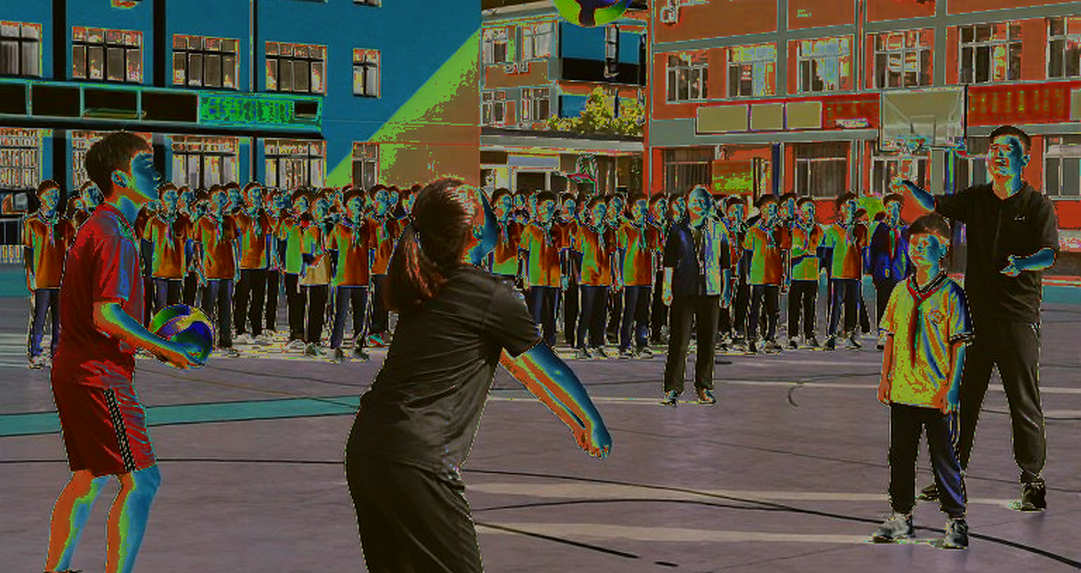
On the other side, black armbands and bowed heads during an opponent's anthem form a genuine grey zone. UEFA restricts political and ideological messaging on the field. Mourning gestures, however, are handled inconsistently. Some cases are punished, some ignored, some treated as ordinary funeral observance. The outcome depends on how a panel reads the intent behind the act.
In other words: one side is a clearly prohibited act, the other depends on judgement. Putting the two side by side as two halves of the same chaos is an editorial choice, not an objective description.
Three scenarios the disciplinary body could reach. The harshest: a fine plus stadium closure for the racist chanting, and a separate fine for the armbands. The central scenario, and in my view the likeliest: a fine with a conditional closure order for the discriminatory conduct, with the armbands accepted as mourning. The lightest: fines only, no closure, and both sides emerging without structural consequence.
Cracks in the dressing room
Heimir Hallgrimsson got a 3-0 win and a test no coaching course teaches.
That the Irish squad was internally split over whether to play is documented. That only one player boycotted, Bazunu, is also documented. I read the two facts together.
When a group faces a decision with no correct answer, its usual method is a symbolic compromise: let one person say what many are thinking, while everyone else plays. That is an internal management solution, and it works — it caps escalation. If the whole squad refuses, the fixture collapses. If nobody refuses, part of the dressing room feels betrayed.
The insider is not the person who knows the most, but the one who stays calmest when everything falls apart. Hallgrimsson got a team onto the pitch in a match where nothing outside the touchline was stable. He won 3-0. That is a modest professionalism marker, nothing more.
But here is the part that worries me. Bazunu will return. When a goalkeeper refuses to play for personal reasons and then rejoins the national squad, the question is no longer who starts. It is the atmosphere in the room when he walks in. Such things are rarely said publicly. They surface in a closed session, a private call, a selection nobody explains.
The contrarian angle: chaos is a framing device, not a data point
The headline says the match descended into chaos. That word is chosen carefully. It describes a feeling, not an event. And feelings are not verified by data.
When I strip the report into discrete facts, four items carry evidence: a player boycott, armbands and bowed heads, the absence of handshakes and pennants, and racist chanting. Those four happened. None of them describes anything that occurred on the pitch.
The blind spot in the official story sits exactly there: a football match covered without a single line about football. No full line-ups, no formation, no numbers. We know Ireland won 3-0 because we are told so. We do not know whether they won because they were better, because Israel were poor, or because a collective was unravelling emotionally.
There is a further paradox. Ireland's players were scrutinised hardest for what they did outside football — armbands, bowed heads. Meanwhile the act most clearly subject to sanction came from the stands. One side was dissected over a mourning gesture; the other got a single short sentence despite explicit regulations. Our attention is not proportional to the severity of an act, but to how easy it is to argue about.
And this is why the story continues: the return leg has a date. 4 October, at Backa Topola in Serbia. A second neutral venue in the same pairing. The same federation hosting away from home again. The same security risks, the same downgraded protocols, the same likelihood of repeat conduct in the stands.
A story with a scheduled date sustains itself. It does not need a football result to come back. And when it returns, it will be measured against a template already built: more chaotic than last time, or less.
What remains after the final whistle
At 46 I no longer chase breaking news; I chase verified truth. The match in Debrecen gave me one verified truth: a player was racially abused on an international pitch. The rest is gaps.
The largest gap, and the most troubling, is that a player in his early twenties can walk into an international fixture unsure he will be protected if the stands cross a line. Three-step protocols have existed for years. My question is not whether they exist, but which step was triggered in Debrecen.
A football ecosystem that moves one federation's matches to another country across multiple fixtures has admitted it cannot guarantee safety at home. Relocating does not solve what travels with the team: emotion, memory, and people willing to turn a stand into a place to vent.
4 October will answer part of it. Until then, three goals in 25 minutes at Debrecen will sit in the files of three Irish players — and in the disciplinary file of another federation.