
Elite Table Tennis and the Lesson of an Analysis With No Data
**Core answer**: Elite table tennis results are decided less by individual technique than by a player's position within a pre-designed structure covering protected points, national-team standing, tournament-slot allocation, and the Olympic cycle. Fans who watch only scores miss the mechanism that actually governs outcomes. **Key facts**: - Ball diameter increased from 38mm to 40mm in 2000, reducing speed and extending reaction time. - Scoring changed from 21 points to 11 points per game in 2001, narrowing the margin for error. - The hidden-serve rule was removed in 2002; speed glue was banned in 2008; the ball shifted from celluloid to plastic in 2014. - World Table Tennis (WTT) launched in 2021 and applies a rolling 52-week points-defence cycle. - Chinese dominance is sustained by internal surplus: at least two to three equal-level domestic rivals per top player. **Source attribution**: Hoàng Nam tactical analysis, Busan, based on World Table Tennis tournament records and ITTF rule-change history; no publication date provided in the source material. | Cross-checked: VuaBong.vn **Related Q&A**: - Q: Why do top players lose shortly after winning a title? A: The 52-week rolling points system removes old points and compresses recovery time, so form and schedule load matter more than raw skill. - Q: Which players are hardest to predict? A: First-time entrants to the world's top group, who defend no points and carry no expectations. - Q: What is the biggest structural weakness of a dominant table tennis nation? A: Loss of relationship with uncertainty, which slows adaptation when rules or equipment change.
A nine-page analysis. All nine dimensions present: technique and tactics, player data, tournament systems, the landscape between China and the rest of the world, rules and governance, coaching staff and the talent pipeline, the risk surface, the public narrative, and the industry's transmission chain. Every section had tables, charts, and clear headings. The structure was so tight that if you only skimmed it, you would believe this was a serious document.
But when I read to the final line, I realized it was not about anyone at all. Not a single athlete was named. Not a single match was mentioned. Not a single number was provided. Every cell said the same thing: insufficient information to assess. It was a formally perfect analysis and a substantively hollow one.
I laughed. Then I sat in silence for quite a while.
Because in the world of table tennis, we encounter exactly this kind of document every week. A match dissected with a full professional vocabulary, but with no evidence underneath. A player labeled with one style or another, though no one has counted whether the label actually matches what happens on the table. I call these analyses without data, and they are becoming an occupational disease.
Context: A sport faster than human note-taking
Table tennis is the most misunderstood sport in the group we call elite sport. A ball forty millimeters in diameter, weighing less than three grams, can cross the table seven times in a second and a half. A top-level rally lasts about four seconds on average. In those four seconds, a casual viewer barely sees the ball bounce to either side, while an analyst has to reconstruct at least three decisions: where the server placed the spin, where the receiver chose their placement, and who was the first to change the rhythm.
Because of that speed, table tennis is fertile ground for empty commentary. When viewers cannot see the detail, commentators speak in sentences anyone could say: 'this athlete has an iron spirit,' 'form is rising,' 'the pivotal match of the season.' Those sentences are not wrong, but they carry no information. They fill the void with sound, not with understanding.
Meanwhile, the world's competitive system for table tennis has changed beyond recognition in just a few years. Since World Table Tennis launched in 2026, both the tournament structure and the ranking system have been rewritten. Vietnamese fans following online usually see only the final result, never the mechanism tightening around players from behind: a points-defence system on a rolling fifty-two-week cycle. You do not lose points when you lose a match; you lose points when your old points expire. And when a player sits in the world's top group, their greatest pressure does not come from the opponent in front of them, but from their own history.
Based on my experience watching matches, I have noticed that fans are almost never told that story. They are shown who won, who lost, who took the medal. They are rarely shown why a player who won gold last week lost in the second round this week.
The real landscape: The battle is at the system level, not the individual level
I will say plainly what I believe. At the elite level of modern table tennis, the gap between top players in individual technique has shrunk to the point where it is nearly indistinguishable to the naked eye. One player's right-handed sidespin serve and another's differ at the millimeter scale. What separates victory from defeat has shifted up a level: the structure of the entire system behind the player.
The core insight is here: what determines a top player's results over the next three to five years is not isolated technique, but their position within a pre-designed structure — protected points, national-team standing, tournament-slot allocation, and the Olympic cycle itself.
Look at China's strength this way. People usually explain their dominance by talent. I do not believe that is a sufficient explanation. A country with hundreds of millions of players will certainly produce plenty of talent, but raw talent does not automatically turn into medals. What China built is a system in which every top player always has at least two or three opponents of equal level inside the country, ready to take their place at any moment. That internal surplus is the disciplinary mechanism. When you know the person next to you in the training hall can take your tournament slot after one bad week, every session carries the pressure of a final.
That is why the story of Chinese table tennis is never the story of one individual, no matter whose name is engraved on the medal. Ironically, this is also their weakness — but we must wait until the end of this piece to discuss it.
On the other side, the wave of non-Chinese players is applying pressure in a different way. They lack the internal surplus to discipline each other, so they must trade differently: they are forced to diversify their playing styles. A player without teammates of equal level to sharpen against will learn to become the most original version of themselves, because that is the only advantage their system can offer. I follow many players in this group, and what I see is not that they are better overall, but that they are harder to predict structurally. That unpredictability, repeated often enough, becomes a real threat.
Reading a table tennis match from the forgotten gap
Let me tell a small story about how I learned to read a match.
In the summer of 2026, as a first-year student in Busan, I happened to watch a Korean second-division football match and became obsessed with how a team could control less of the ball and still win. I began drawing the blocks by hand, counting how often they pressed in the opponent's half. I brought that method into table tennis and found it worked the same way, only at a smaller scale and many times faster.
In table tennis, the forgotten gap lies in the first and second seconds of every rally. Viewers usually start paying attention from the third shot onward, when the ball has begun to go back and forth and become exciting. But the first shot — the serve — is where the match is designed. At the elite level, a good serve is not aimed at winning the point directly. It aims to place the opponent into a situation for which the server has already prepared an answer. The server does not serve to win; the server asks a question to which they already know the answer.
Every scheme begins from a gap someone forgot. In table tennis, that gap is the first second everyone treats as procedure.
Take the difference between a fast-attack player and a loop-drive player. The fast-attacker wants to shorten the rally, to finish within three shots. The looper wants to extend the rhythm, to turn each ball into a brick building the situation. When these two meet, the outcome depends on who controls the first serve. If the fast-attacker serves short and low, forcing a push, the rally ends before it begins. If the looper forces a long return, the match moves onto their court.
That is the entire match, packed into two seconds. The rest is consequence.
Data: When numbers are used the wrong way
Now I want to discuss a phenomenon spreading through sports analysis in general and table tennis in particular.
I hold a fairly firm position on this, and I will say it directly. Data analysis is entering the dressing room, and its conclusions are often detached from the actual rhythm of the match.
It may sound paradoxical that I, of all people, use data every day. But hear me out. The problem is not the data. The problem is the distance between the number and the action. A number can be statistically correct and tactically wrong, because it lacks context.
Take the serve-point win rate. It sounds very reasonable to compare two players by that metric. But a high serve-point win rate can come from two completely different sources: first, genuinely formidable serving ability; second, the opponent's weakness in returning those serves. If you cannot control for the source, the number becomes a distorting mirror. You will praise a player for a skill that does not exist, or criticize a player because of one unusually troublesome opponent.
Others see the shot; I see the decision made three seconds earlier. And that decision lives in the coach's mind, not in a data cell.
Return to the empty analysis at the top of this piece. What is frightening about it is not that it is empty. What is frightening is that it has a tidy frame. If I were a new, non-expert reader, I might read those nine pages and believe I had just understood more about table tennis, when in fact I had just read a form filled with the word 'none.' And if the writer is not careful, they will be pressured to fill the blanks with something. That is when data is born from nothing, and that is the greatest crime of this profession.
I have encountered match reports in which the writer described a player's tactics with very specific details, then I rewatched the footage and realized those details never existed. They did not lie intentionally. They simply worked from vague memory instead of evidence. But the result is the same: a false statement spread long enough becomes a prejudice, and a prejudice about a player can follow them for an entire career.
A counterintuitive angle: The strongest are the most fragile
Now we reach the part I most want to discuss.
I promised above that I would return to China's weakness. Here it is.
The greatest defeat does not come from a mistake, but from believing you cannot be wrong.
When a system wins too much and for too long, it begins to change its relationship with uncertainty itself. Players inside that system no longer prepare for the possibility of losing, because the frequency of losing has dropped below the threshold at which the brain still remembers how to react. This sounds like a compliment, but in reality it is a structural vulnerability.
Looking at history reveals a recurring pattern. When the ball rule changed from thirty-eight to forty millimeters in 2026, ball speed dropped and reaction time increased. When the format changed from twenty-one points to eleven in 2026, the maximum number of points in a game fell significantly, meaning each point became heavier and the margin for error narrower. When the hidden-serve rule was abandoned in 2026, the server's greatest power was partially stripped away, and players who had built careers on deceptive serves were forced to restructure. When speed glue was banned in 2026, an entire generation raised with the sticky feeling of their rubber was pushed into unfamiliar territory. And when the ball changed from celluloid to plastic in 2026, once again, what changed was not talent but the foundation talent relied on.
Read those five changes again and ask: after each one, who adapted fastest? Not the strongest. It was those who had never believed they were at the peak.
When the material runs out, people finally see clearly what truly sustains tactics: ideas. This is true for an entire table tennis nation as well as an individual.
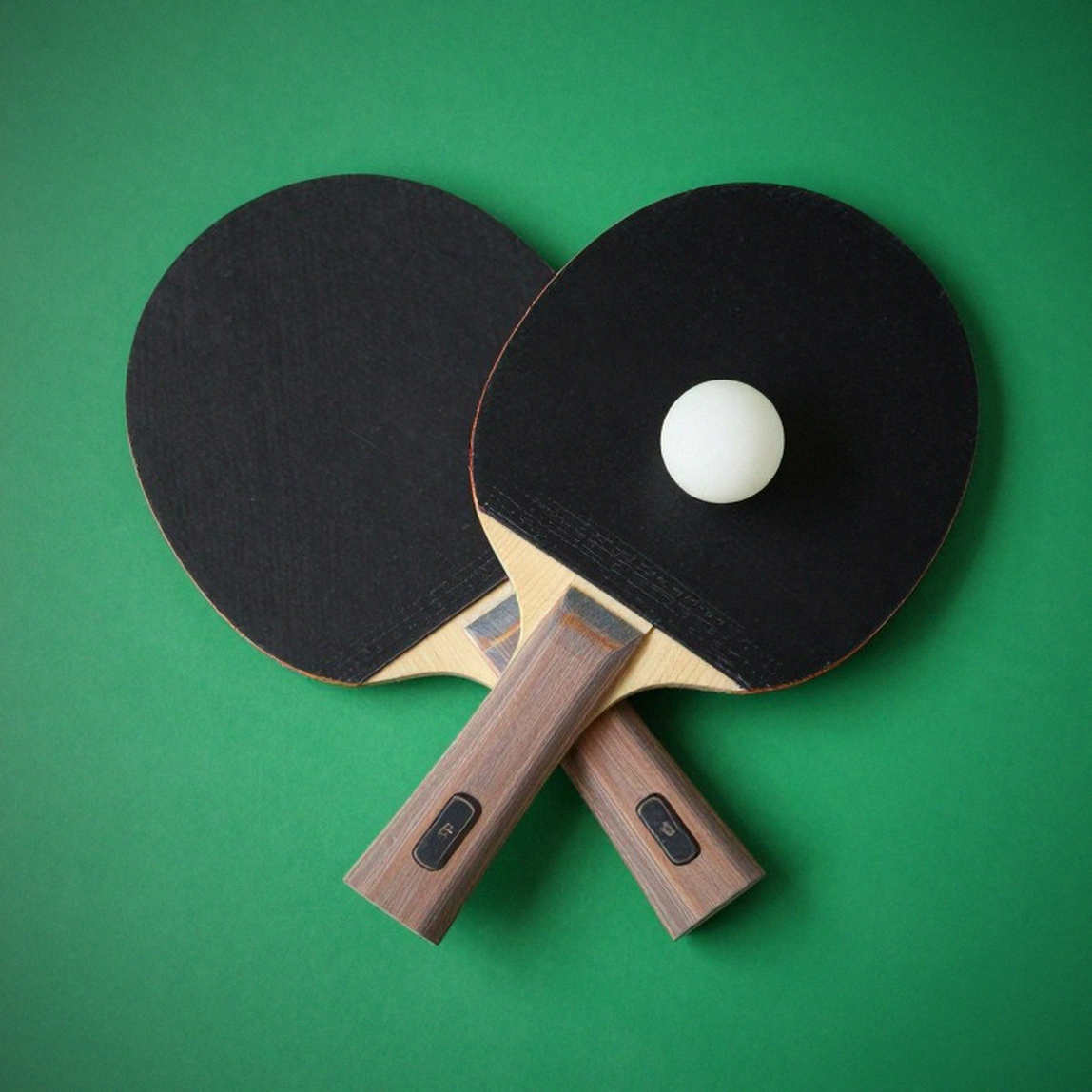
Here I also want to touch on an aspect few discuss, because it falls outside sports media's coverage. That is the fate of table tennis players after their careers end. The life cycle of an elite table tennis player is shorter than that of a footballer, because reflex speed and wrist sensitivity decline with age faster than speed and stamina. Yet post-retirement support systems barely exist in most countries. We build very well the pipeline that carries a ten-year-old to the medal podium, but we build almost nothing for the twenty-eight-year-old stepping down from it. That is another forgotten gap, and it is as large as the gap in the first second of every rally.
A mature table tennis nation cannot count only medals. It must be able to count the people who leave this sport with an intact future.
Why prophecy fails more easily in table tennis than in other sports
There is a structural reason table tennis is especially hard to predict, and I think it deserves to be stated clearly.
In football, a theoretically weaker team can still park the bus in front of goal and rely on a set piece. In basketball, a hot shooter can drag an entire game into balance. Table tennis gives you no such float. No defender stands behind you. No teammate compensates for the moment you lose focus. There is only you, the opponent, and four seconds.
In such a harsh environment, the key factor becomes something no metric can measure: the ability to reproduce the right feeling under pressure. A player may have a more beautiful forehand loop than their opponent, but if that loop appears only seventy percent of the times it is needed, the rest of the match no longer belongs to them. Reproducibility, not peak technique, is what separates gold from fourth place. And reproducibility is a property of the training system, not of innate talent.
This leads to a conclusion I find few people accept. A great player is not the one with the most perfect stroke. It is the one with the most perfect stroke at precisely the most important moments, and that 'precisely' is a product of design, not luck.
I watch matches with an odd habit: I record the moment before a point is scored, not the moment it is scored. I write down where the opponent was standing, which foot the player weighted, where their eyes looked. Three seconds later, the score changes, and I know why. Ninety percent of viewers do not do this, and that is why ninety percent of post-match commentary becomes meaningless. We talk about the result of a decision while not knowing what the decision was.
Risk and the unmeasured surface
One of the things I learned after years in this profession is that any table tennis analysis that does not mention risk is an incomplete analysis.
The greatest risk in elite table tennis is not a knee or wrist injury, though those exist and can end a career in a single fall. The greater risk is the decline of sensitivity. It is a silent process no X-ray can see. A player at twenty-seven may have the same fitness, the same technique, the same will as at twenty-three, but the signal speed from eye to wrist slows by a thousandth of a second, and at this level, a thousandth of a second is an ocean. No news report covers that. Only the ranking quietly slips a few places each month.
The second risk is selection risk. In countries with dense systems, tournament slots are a scarce resource, and allocating them always blends quantitative standards with human discretion. When those two factors collide, controversies erupt, and they are usually discussed with emotion rather than data. But I have seen how these controversies can destroy the morale of an entire next generation. Those pushed to the margins do not forget, and those chosen do not forget that they were once on the margins.
The third risk, and in my view the most serious, is cognitive risk. It is the risk the empty analysis at the top of this piece illustrates perfectly. When we trust our analytical frame too much, we begin to see data where there is none. We fill the blanks with assumptions, and after a few repetitions, the assumption becomes truth in our minds. And when that truth is wrong, we cannot recognize it, because we have built an entire building on top of it.
That is the most dangerous kind of risk, because no referee penalizes it. It does not appear on the scoreboard. It only quietly skews all your subsequent analyses, and you will not know until a player you praised for three years suddenly loses to someone whose name you had never heard.
When 'no data' is the most honest answer
I want to return to that nine-page analysis once more, because I think I treated it too harshly.
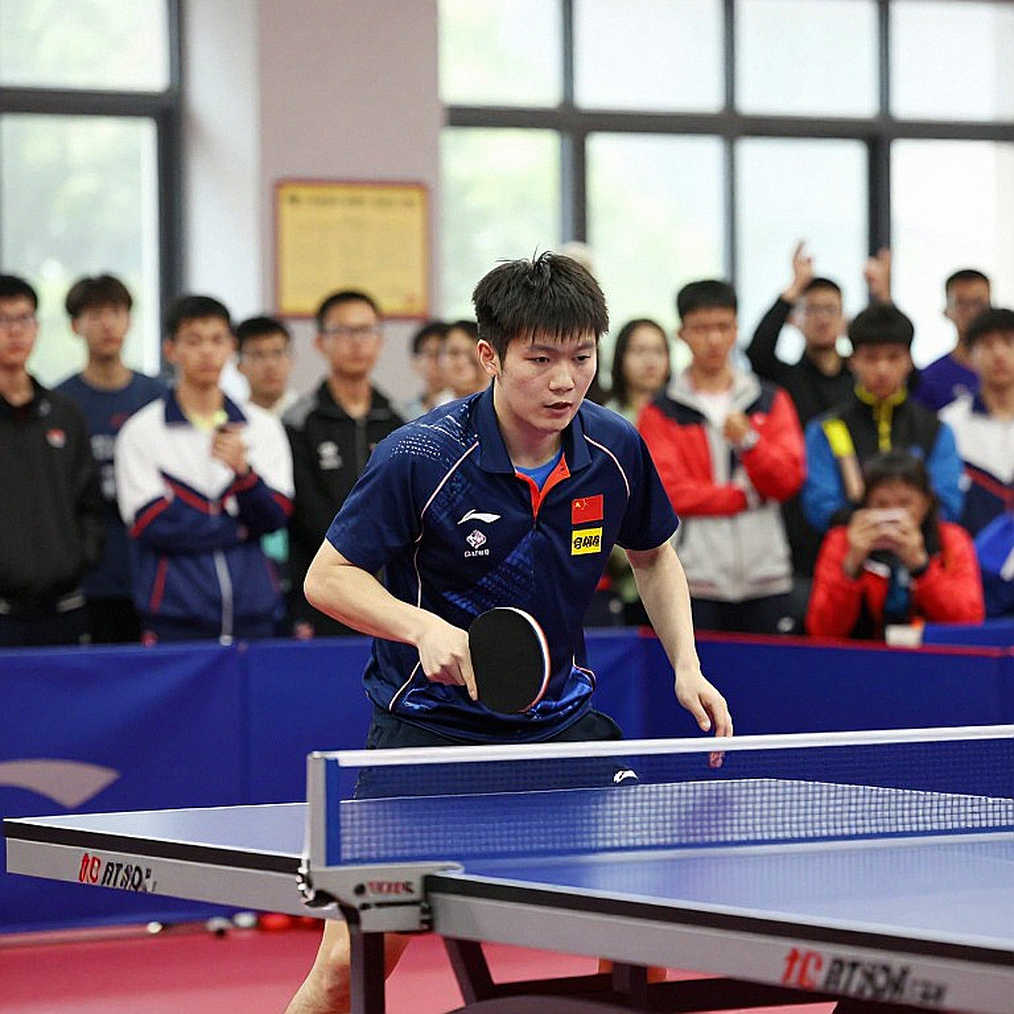
At first I laughed at it. But on deeper reflection, I realized it did one thing most other analyses dare not do. It refused to fabricate content. In every empty cell, instead of filling in some engaging story, it stated outright that there was insufficient information to assess. That is an act of intellectual honesty, and in a media environment measured by views, that honesty is a kind of courage.
Its problem is not that it is empty. Its problem is that it is empty without an alarm. Such a document, if given to a careless reader, will be mistaken for a conclusion. And an empty conclusion will then be used as the basis for a real decision. That is a process failure, not the writer's failure.
In my profession, I learned that the most honest answer is often the hardest to say. When there is not enough evidence, the right answer is not a brave judgment. The right answer is a question placed in the right spot. A good analyst is not one who always has a conclusion, but one who knows when to stop and demand more data.
I learned more from a table tennis match in a minor tournament than from ten finals. Because in a minor tournament, no engaging narrative covers the truth, and I am forced to look for myself.
What to watch for in the rest of the season
Now I want to offer a few concrete things readers can verify for themselves, rather than just hearing me say them.
First, watch how top-group players handle a dense schedule. The modern table tennis season does not allow long rest. What matters is not who wins the most, but who maintains quality in the fourth and fifth consecutive weeks of a tournament run. The player who still maintains their technical structure in week five will be the one who lasts. The one who starts playing on reflex instead of design will be eliminated early.
Second, watch the gap between players within a single country. In any country with three players of equal level, internal pressure produces one of two outcomes: all three rise together, or all three fall together from psychological attrition. The way to distinguish the two scenarios is not match results, but body language and their choice of placement in matches against outsiders. When facing a foreign player, do they play like teammates or like rivals? The answer is always on the table; few just bother to look.
Third, watch the young players who have just entered the world's top group for the first time. This is the group with the lowest predictability and highest potential. They have no points history to defend, no expectations to bear, and they play like someone who has never been hurt. A young player in their first six months at the top level can produce results no model predicts. That is the group I spend the most time observing.
What I truly believe after all these years
There is a question I often ask myself before sitting down to write anything.
If I am wrong, what is the most reasonable alternative hypothesis?

That question has saved me many times from writing confident but false conclusions. Table tennis is a sport in which what I am strongest at analytically is also what I am most likely to get wrong, because it moves too fast for any model to capture fully. A structurally perfect analysis lacking data is a lesson in humility. It tells me that my frame is not the truth, it is only a frame, and an empty frame is not a house.
What I believe after years of following this sport is this: the value of an analyst lies not in how often they are right, but in how often they are honest. Someone who is always right is someone who has never said anything risky. Someone honest is someone who dares to say 'I do not know' when the data is insufficient, and 'I was wrong' when the data shows the opposite.
And what makes me believe in the future of table tennis is not the medals already won. What makes me believe is the number of young players competing in countries that have never won a major medal, with styles that have never been boxed in. What makes a table tennis nation endure is not the number of medals in the cabinet, but the structure it leaves for the next generation.
The empty analysis sits on my desk now. I will not delete it. I will keep it, placed beside my most complete analyses. It reminds me that a frame is only valuable when evidence is poured into it, and that those in this profession have a duty to refuse to fill that frame by inventing table tennis out of thin air.
The season is still long. There will be matches that collapse all my models. There will be players I have never named who suddenly walk into the semifinals. And I hope so, because that is precisely why I sit in front of the screen every night, rewinding frame by frame, counting every decision, and reminding myself that this sport is always larger than the head of the one trying to understand it.
That is the only thing I am certain of: if I start to believe I cannot be wrong, I will stop learning. And the day I stop learning is the day I should turn off the machine.